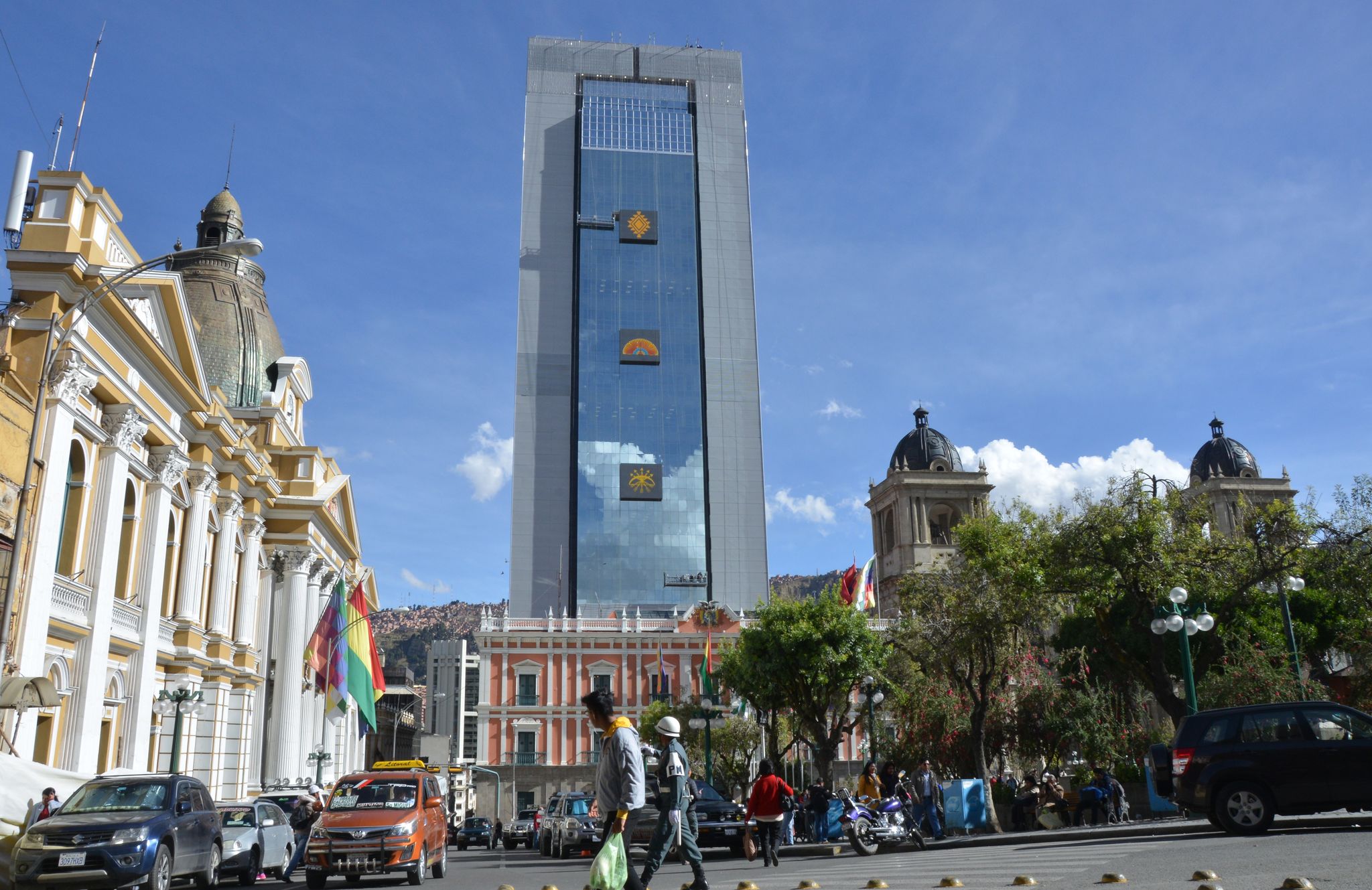
In Plaza Murillo, in La Paz, two palaces face each other. One, stocky and colonial, governed Bolivia for one hundred and sixty-five years. The other, a twenty-nine-story tower, crushes it with all its height. Behind this architectural duel lies a question that few States have dared to ask: what if we governed from above?
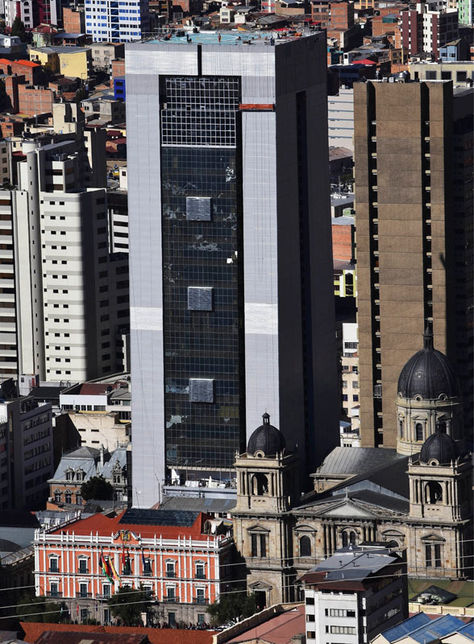
In the center stands the Casa Grande del Pueblo, current seat of the Bolivian Presidency. At its feet, the pink building is the Palacio Quemado, the former presidential palace.
On the right, the Metropolitan Cathedral of La Paz completes this ensemble which concentrates the main symbols of Bolivia’s political and religious power.
Two palaces, one square
You have to stand in the center of Plaza Murillo to capture the scene. On one side, the Palacio Quemado — the “burnt palace” — a low and noble mass, witness to the coups d’état, fires and crises that have marked Bolivian republican history. On the other, standing just behind it, the Casa Grande del Pueblo, inaugurated on August 9, 2018 by Evo Morales: a twenty-nine-story contemporary tower which literally dominates its colonial elder.
The choice of location is not trivial. The new seat of power could have been built elsewhere, on open ground, far from the old one. On the contrary, it was planted in the immediate shadow of the Palacio Quemado - or rather, it is now the old palace which lives in the shadow of the new one. The height of the tower is not an urban planning accident: it is a statement. The modern plurinational State overlooks the colonial State, and the balance of power between the two eras can be read at a single glance, vertically.
But once this symbolic face-to-face meeting has been made, another question, rarer and more profound, arises. Because by building high, Bolivia not only wanted to dominate its past. She did something that almost no state had done before her: she chose to govern from a tower.
The Architecture of Power: The Horizontal as a Symbol of Stability and Permanence
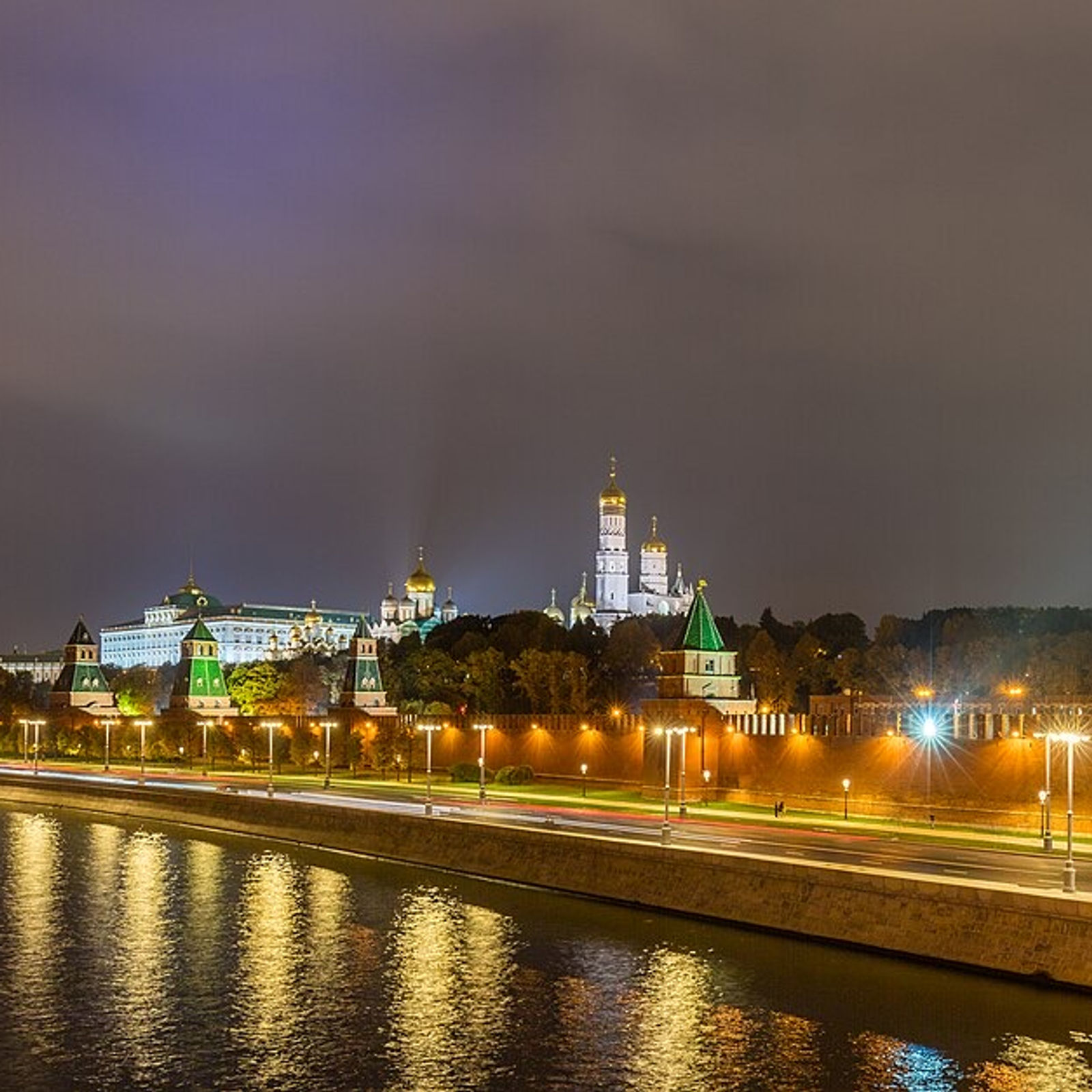
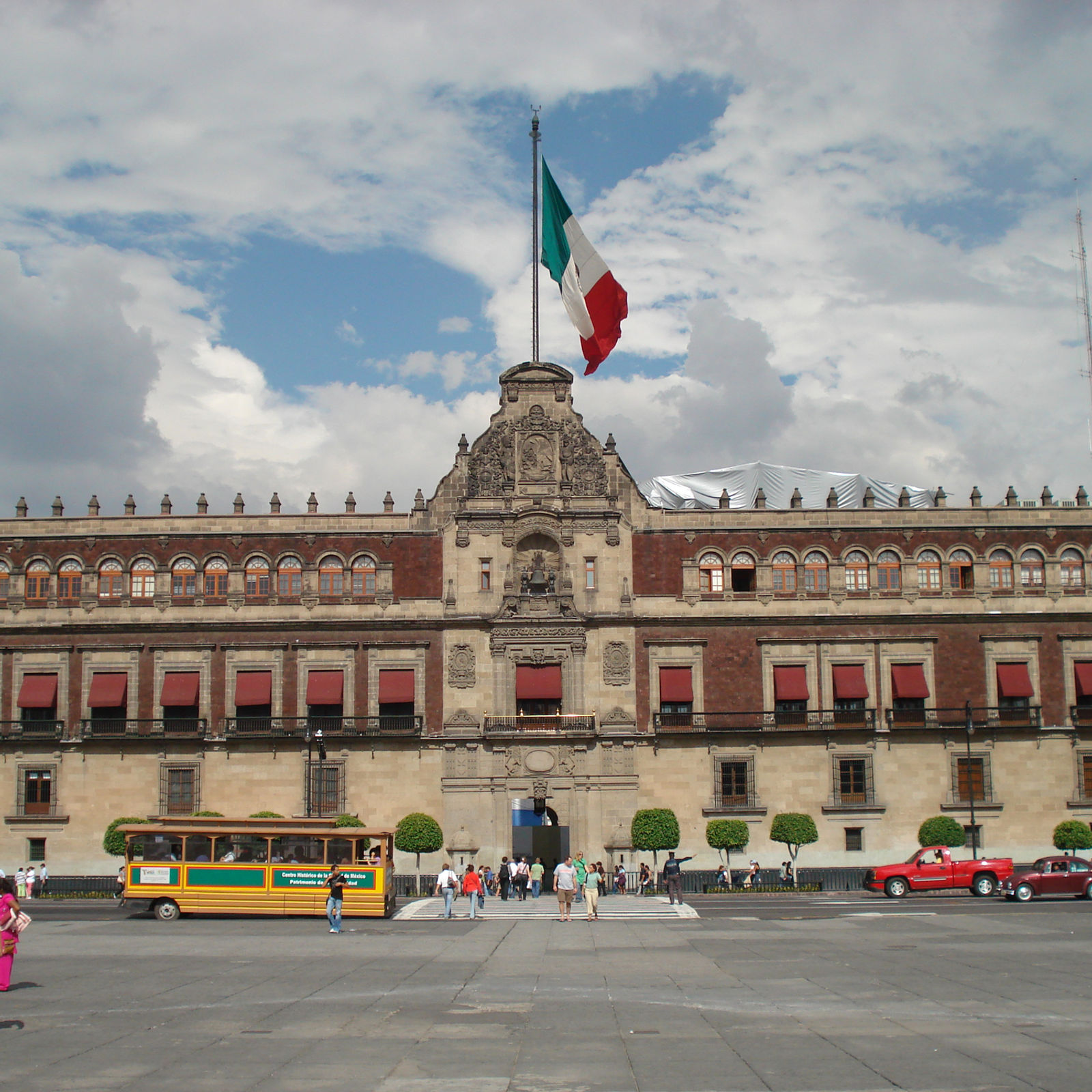
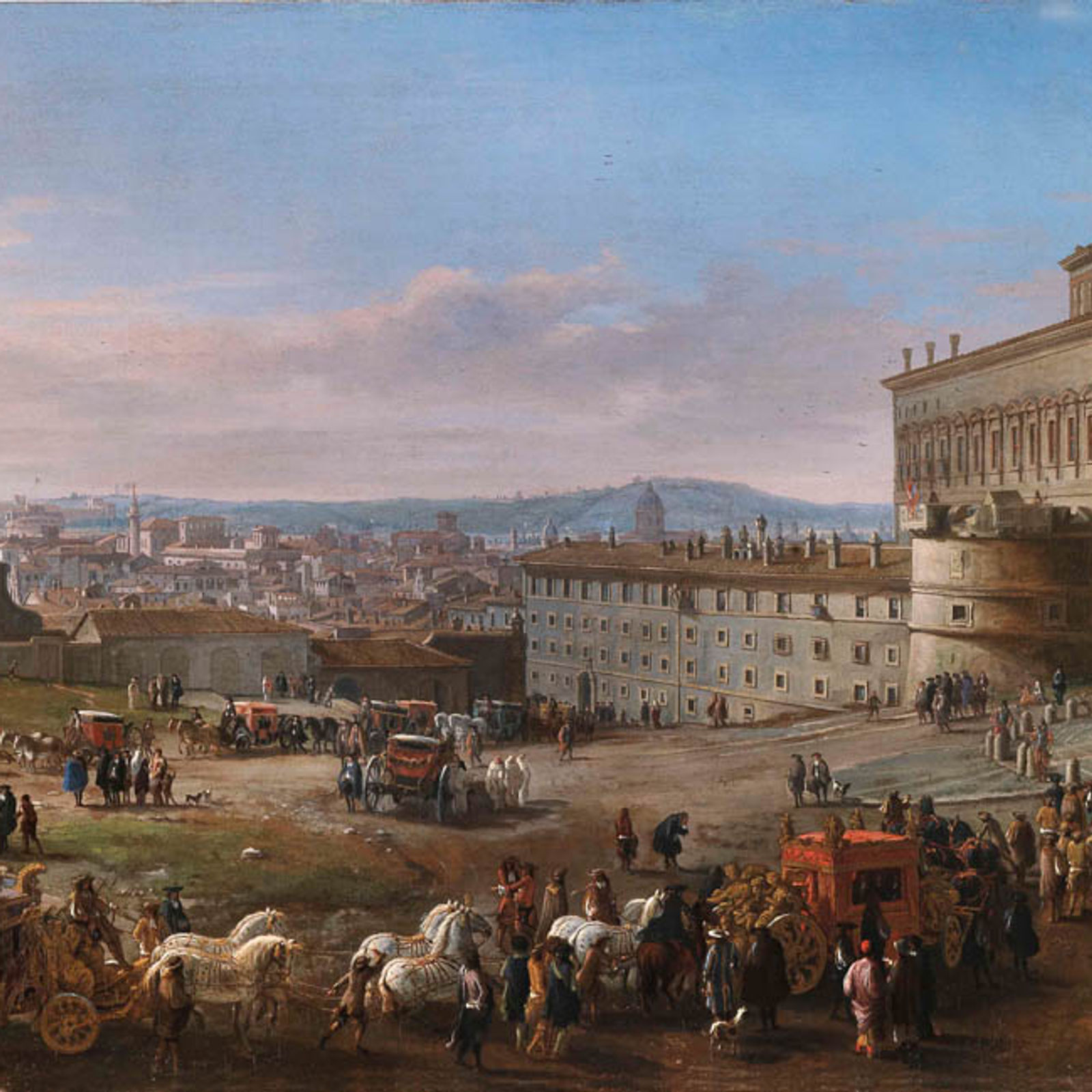
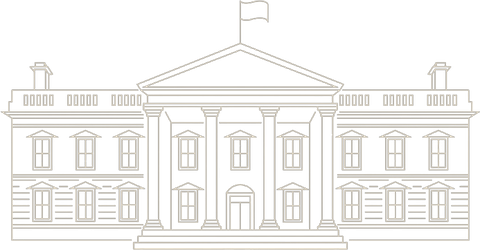
Look at the great seats of power around the world, and one common trait is obvious: they are sprawling. The White House stretches over two low floors and wide wings. The Élysée Palace unfolds horizontally around its courtyards. The Kremlin is organized as an enclosure, the Quirinal as an elongated facade, Buckingham as a massive, horizontal block. State power, historically, does not rise: it takes root.
This choice is not accidental. Horizontality indicates permanence, stability, seniority. A palace that expands seems to have always been there and will always remain there. Its floor space is itself a message: to occupy the space is to own the territory. The traditional palace commands respect by its size, by the length of its rows, by the depth of its gardens. It reassures because it seems immobile.
The tower says something completely different. It does not take root, it soars. It does not reassure by the duration, it strikes by the ascension. It is precisely this vocabulary that Bolivia has chosen.
Governing from above
There is, in the Bolivian case, a coincidence that is almost too good. La Paz is already the highest seat of government in the world, perched at over 3,600 meters above sea level. Governing Bolivia therefore means, in the most literal sense, governing from the heights. By erecting a tower, power has only doubled vertically what geography already imposed on it: altitude has become a signature, doubly assumed.
What does a presidential tower say? First, modernity – breaking with the colonial stone, displaying a State turned towards the future. Then the ascension, literally and figuratively: a people, a political project, a nation that rises. Finally, visibility: a tower can be seen from everywhere, it imposes itself on the urban landscape as the government intends to impose itself on the country. Where the classical palace is discovered when approaching it, the tower is announced from afar. She doesn’t let herself be forgotten.
Governing from above therefore means choosing the register of affirmation rather than that of tradition. It’s preferring the gesture to the inheritance.
The elevator, the new corridor of power
This verticality not only changes the silhouette of the palace: it disrupts its interior organization. In a typical state residence, the geography of power is horizontal. We speak of “wing”, “corridor”, “antechamber”; proximity to the leader is measured by distance from the ground, and precedence can be read in a map. The visitor progresses from room to room towards the presidential office, and each threshold crossed marks a degree of access.
In a tower, this grammar is reversed. The hierarchy no longer extends in length but in height. We no longer approach power, we climb towards it. The upper floor becomes the new prestigious unit, and the elevator – a trivial object if ever there was one – is transformed into a corridor of honor. The summit belongs to the head of state; the rest is layered below. It is undoubtedly the only presidential palace in the world where the degree of power is measured by the number of the floor, and where you can access the heart of the State by pressing a button.
This reorganization is not just anecdotal. It redefines circulation, protocol distances, and the staging of the reception of a delegation. Entertaining at the top of a tower, with the city at your feet, does not produce the same effect as entertaining at the end of a row of lounges. Height itself becomes an element of the protocol.
The dizziness of height
There remains the paradox, and it is significant. A tower that rises also moves away from the ground — that is to say, from the people. Now this palace has an unambiguous name: Casa Grande del Pueblo, the “Great House of the People”. How can we live in a house of the people by governing from a summit where the people are nothing more than a tiny point, at the very bottom?
This is the fundamental tension of all vertical power. The height that affirms is also the height that isolates. The horizontal palace, placed at street level, maintains the illusion of accessible power, on a level with the city. The tower separates. It offers the overall view – the panorama of the leader who dominates his territory – but at the cost of proximity. To govern from above is to see far and high; it is also, perhaps, no longer very clearly distinguishing what is happening down below.
What the tower said in spite of itself
The Casa Grande del Pueblo wanted to embody a new, plurinational, standing State. She achieved this, with rare architectural eloquence. But by choosing the vertical, she may have confessed more than she intended. A tower not only says “we rise”; it also says “we dominate”, and sometimes “we move away”.
This is the richness of this unique palace. Where nations have almost always laid their power on the ground to make it seem eternal, Bolivia has raised it to the sky to make it seem new. The only presidential palace that we visit by elevator is not just an architectural curiosity: it is a thesis on power, written at height, and which we continue to reread on each floor.