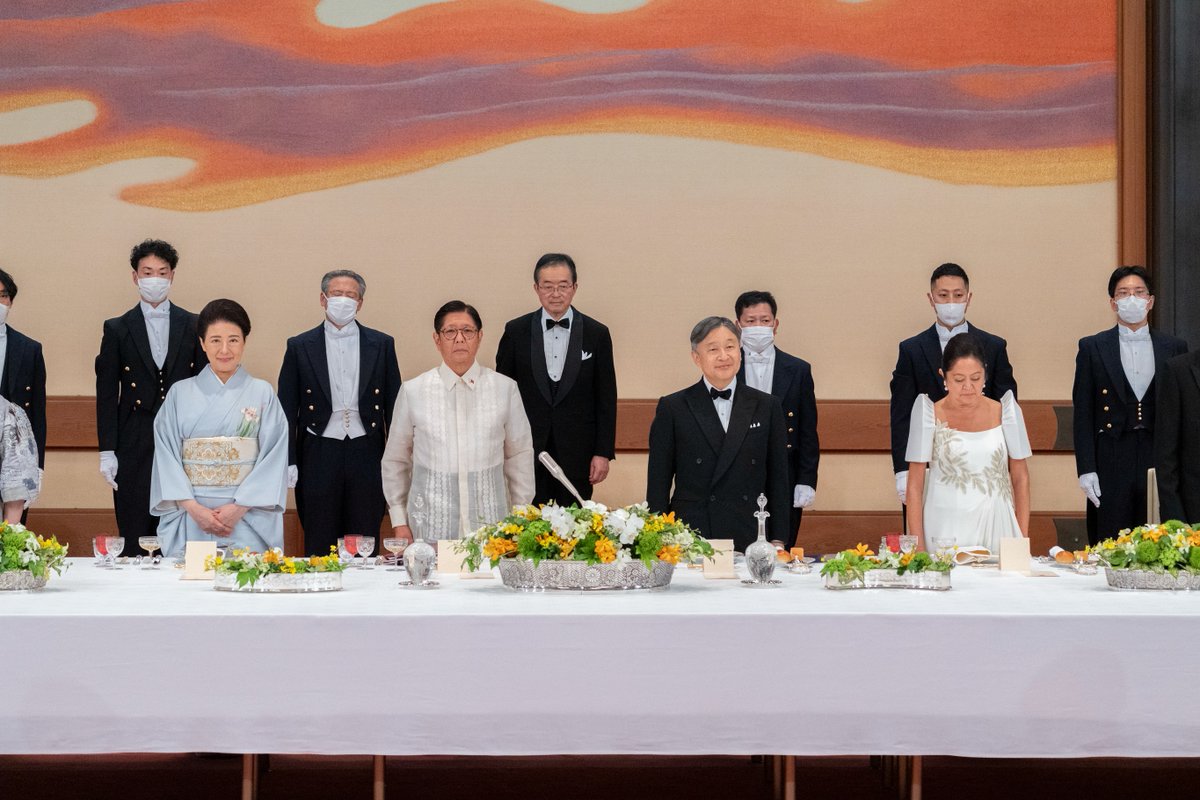
At the state banquet in Tokyo, a linen detail intrigued Western eyes. It speaks, in itself, of two opposing ways of receiving at the highest level.
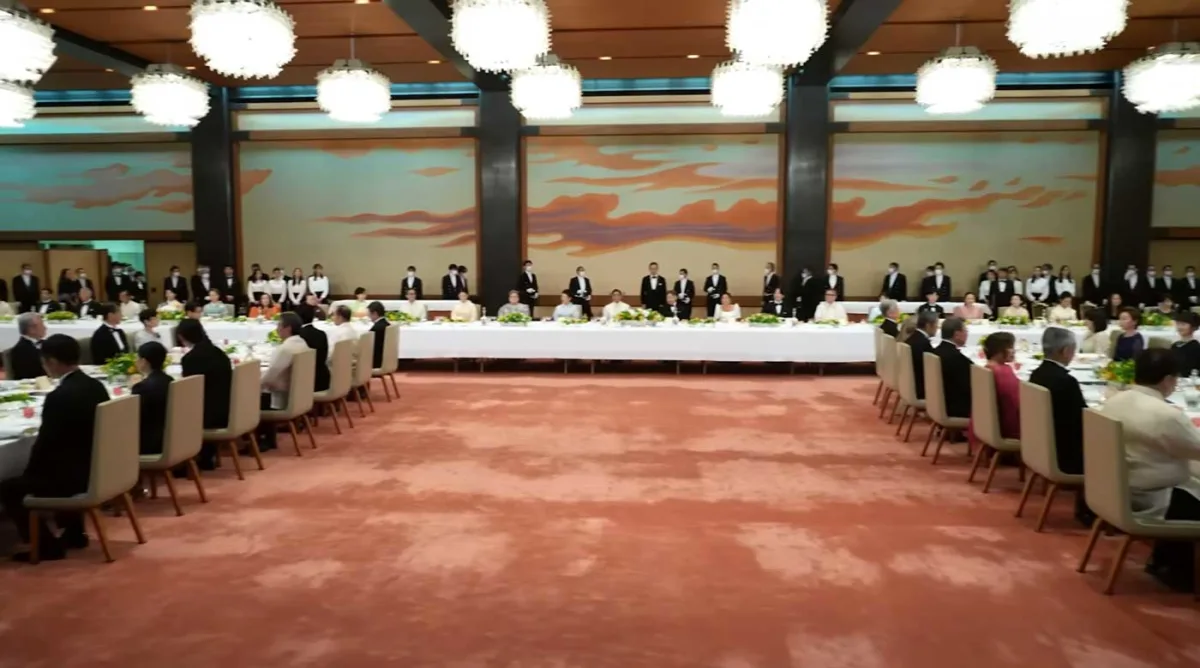
On May 27, 2026, in the Hōmeiden Banquet Hall of the Tokyo Imperial Palace, Their Majesties Emperor Naruhito and Empress Masako hosted a state banquet for Philippine President Ferdinand Marcos Jr. and First Lady Louise “Liza” Araneta-Marcos. Tuxedo and dress for the men, kimono for the Empress and the princesses, ninety place settings, seventy years of diplomatic relations to celebrate: all the ingredients of a classic evening of ceremony.
And yet, in the official photographs, a detail catches the trained eye.
At the table of honor - that of sovereigns and their guests - the tablecloth does not fall to the ground. Under the hem of the white linen, the wooden legs of the table remain visible, clean, assertive. To a Western eye accustomed to the line, it’s almost a grammatical error.
The Western reflex of draping
In the European state dinner tradition, the tablecloth on the head table hangs long, often touching the floor. At the Élysée, at Buckingham, at the Quirinal, the main table readily receives the deepest drapery, sometimes a real table skirt which completely conceals the structure. This bias is not insignificant: it constructs a monolithic ceremonial front, a mass of seamless fabric, from which only the busts of the guests, flowers and other table decorations emerge.
The Western eye therefore reads the short tablecloth as something lacking, something unfinished.
It is precisely this reading that must be questioned.
The Japanese grammar of restraint
Because the Tokyo table does not obey an oversight, but another language. Three principles can be discerned there, opposed point by point to the European reflex.
First, uniformity rather than hierarchy. The same measured impact adorns all the tables in the room, including that of the sovereigns. Where the West distinguishes the head table by weighing it down with fabric, imperial etiquette refuses to mark it with drapery. Precedence is expressed elsewhere - by the place, the orientation, the service -, never by the quantity of laundry.
Then, the furniture is made to be seen. These wooden feet belong to the furniture; engulfing them under a skirt of fabric would betray the object rather than honoring it. In a culture where the beauty of a piece is born from its exposed structure - the exposed framework, the wood left bare, the assembly that we give to read -, hiding the base would be inelegant, not the other way around.
Finally, restraint as the highest degree of formalism. Japanese aesthetics reserves its greatest mastery not for accumulation but for the right measure. The tablecloth stops where it should stop: neither shorter nor longer.
What the Western eye takes for an economy is, here, the culmination of a refinement - the luxury of not doing too much, at the very table where one could get away with anything.
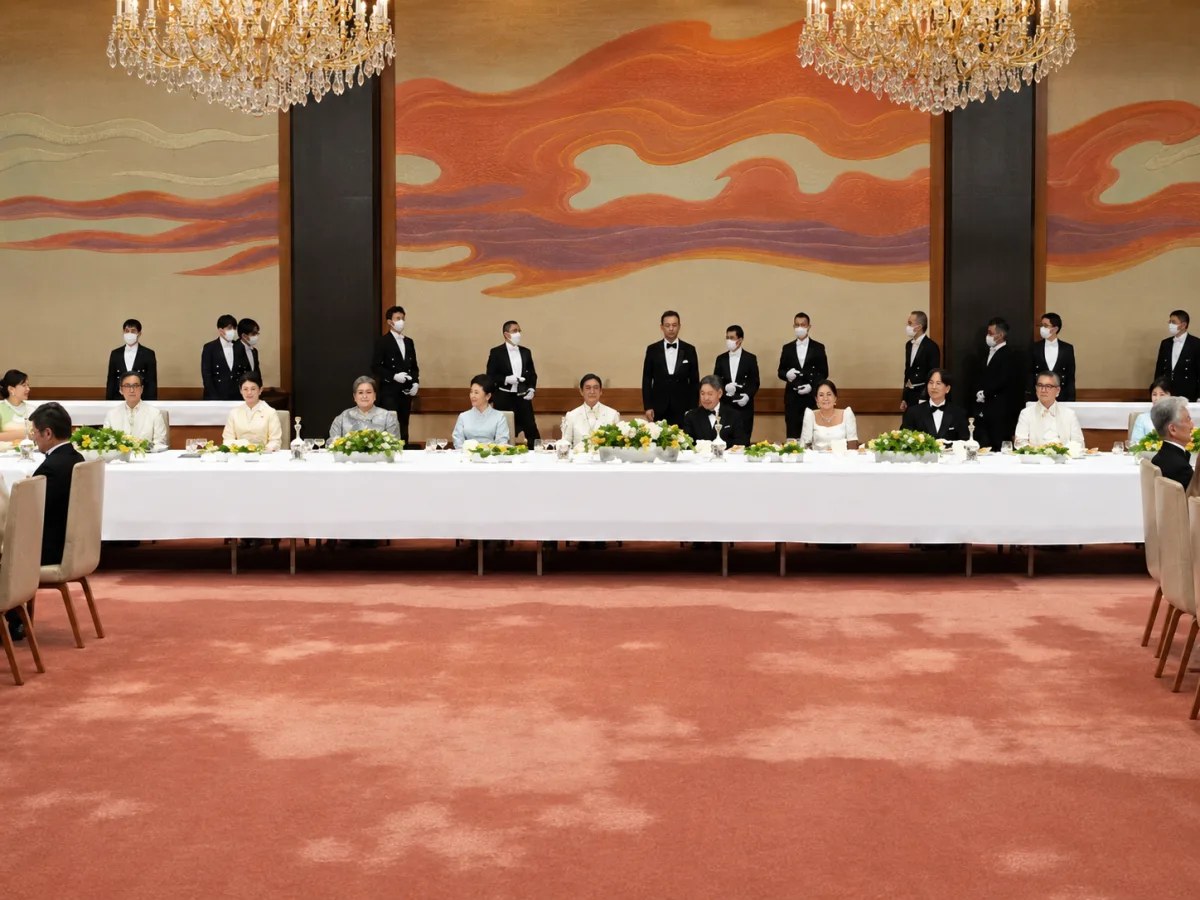
The detail goes far beyond the question of linen.
A tablecloth is a text: it sets out a philosophy of representation. The West drapes to build a scene - it constructs, conceals, dramatizes. Imperial Japan purifies to honor accuracy - it shows, lightens, retains. Two civilizations of receiving confront each other in silence, at hem level.
The trap, for the observer, would be to judge one in terms of the other. The Western eye “on the line”, trained on the front of continuous fabric, first sees an anomaly where in reality another orthography of the protocol is deployed, as rigorous as its own. This is the whole point of the interculturality of the table: the same object - the tablecloth - becomes the revealer of inverse codes, which no universal rule separates.
At the Tokyo banquet, the tablecloth did not touch the floor. This was not a fault of Japanese pageantry. It was his signature.