
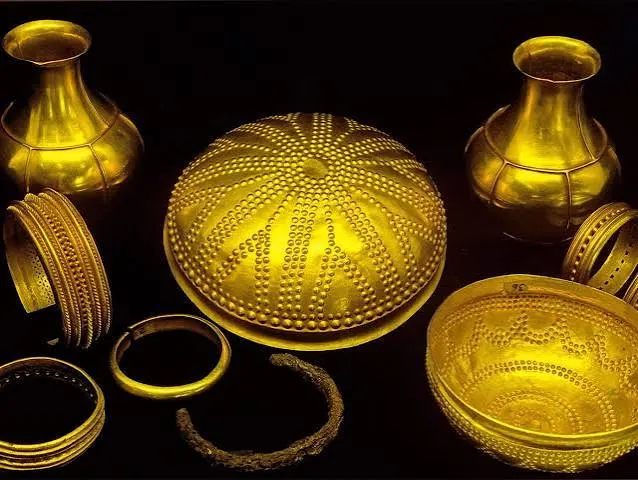
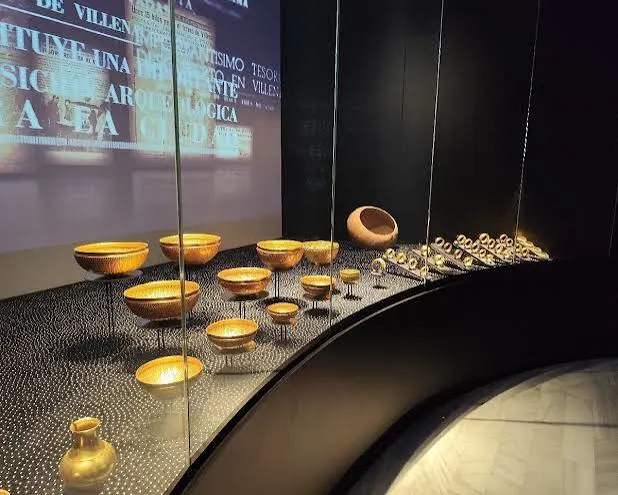
At the end of August 2026, in Spain, thieves stole a set of gold dishes dating from the 10th century BCE from the Villena museum. A few weeks earlier, Vix’s torque disappeared from a French museum. These are not simple thefts. These are historicides.
When you destroy an antique plate by melting it, you kill something that cannot be reborn. We are committing a historicide. We are assassinating the ability of a civilization to speak for itself. We condemn humanity to amnesia.
Heritage value is priceless
We always measure the theft of assets in millions of euros. We count the carats, the grams of gold. But this way of calculating kills the true nature of what has disappeared.
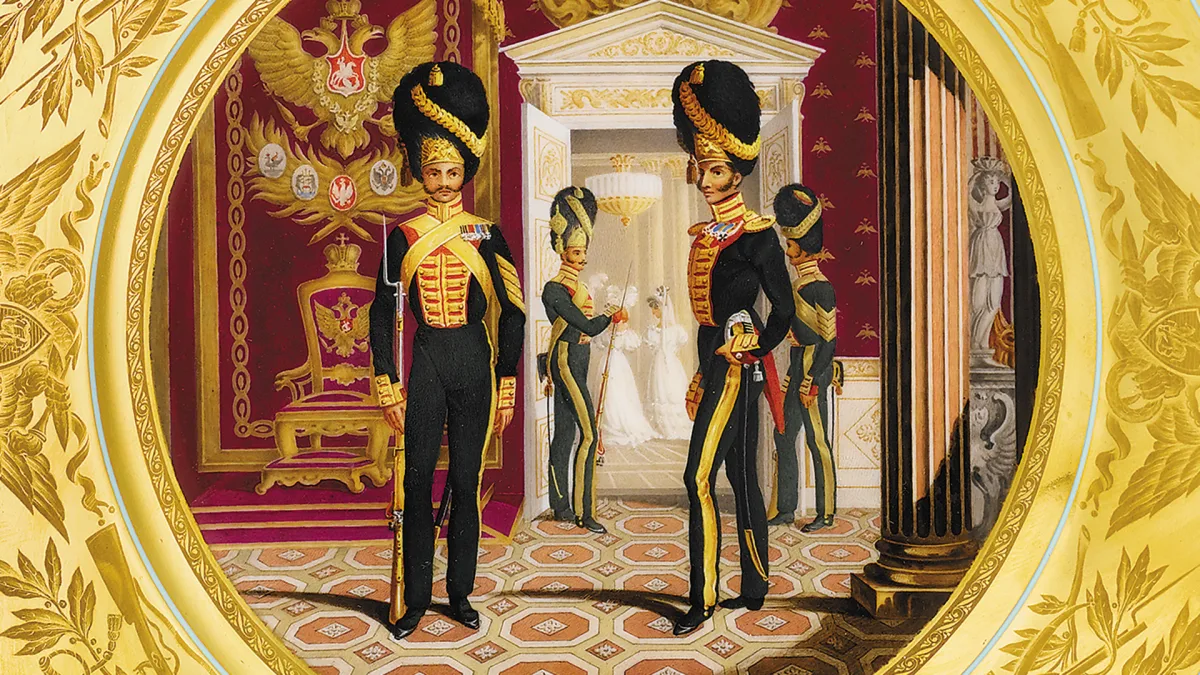
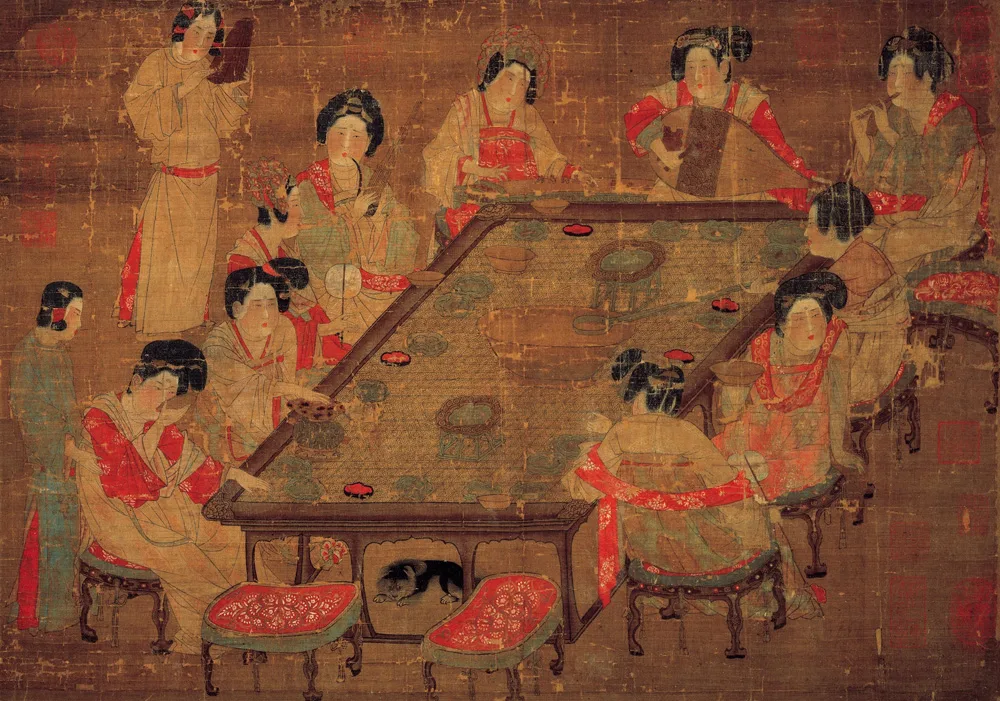
A royal plate is never just a plate. She is proof that a king has eaten. It bears the fingerprints of the past. She vibrated to the music of the court orchestras. It rested on the tables where the destinies of nations were decided.
The diplomatic services of the Élysée, the porcelain of Buckingham Palace, the crystals of the Quirinal are not decorations. These are three-dimensional documents. No photograph, no book can tell what they tell through their physical presence.
When a criminal melts these objects, an entire library burns. Unlike books, no one can make a copy. This knowledge, this proof, this human continuity: it is finished. Lost forever.
Castles as living mausoleums
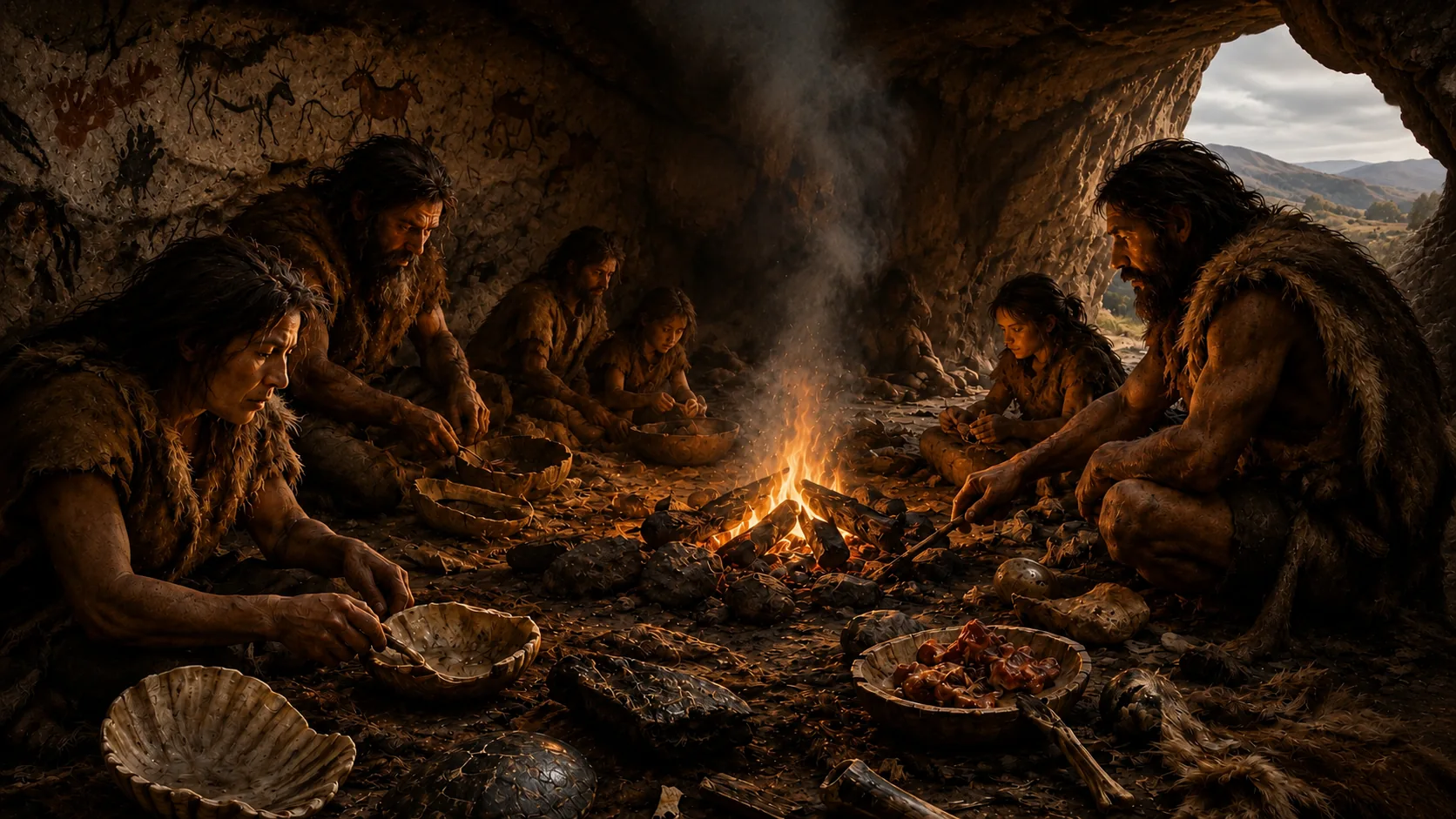
Villena’s treasure has survived three thousand years. He waited for modern archeology to rediscover it, for historians to come and question its forms to better understand a forgotten world. The torque of Vix slept peacefully in France, a reliquary of the intelligence of the Celtic peoples.
These objects were waiting for nothing more than to exist. To testify. To continue teaching.
But there is little to be done against an organized, well-funded, patient and technically invisible criminal industry. Specialized networks have clandestine foundries in Eastern Europe. They send the melted gold to the Asia Pacific where transactions are less documented. They bring it into legitimate commerce. No one can follow him anymore.
And during this time, the plate ceased to exist.
Why do thieves understand nothing?
A criminal who steals a royal plate to melt it thinks he is committing an economic crime. He believes he is solving a simple equation: weight of gold, price per gram, net profit.
But he is actually doing something much worse.
He steals from his own children. He steals from his own nation. He steals from all of humanity.
When you melt a plate dating from the 10th century, you can’t find it. Gold becomes anonymous. The metal is diluted in other ingots, other opaque markets. And during this time, the plate ceased to exist.
A rare document can be photocopied or scanned. Not a 10th century plate. 3D, high-resolution copies, photographic archives: it’s better than nothing. But it is never the thing itself. And the thing itself is what matters. Because the thing itself is the presence of the past.
Villena, symbol of irreversible loss
The theft of Villena’s treasure is part of a series of spectacular thefts which have targeted cultural institutions since 2023. The 2024 Europol report warned of a wave of ultra-rapid and violent thefts, with surprisingly precise targeting of precious metals.
What makes Villena special is the age of this ensemble, the integrity of its conservation. Each plate was a question that archaeologists continued to ask: How did people live at that time? What was the status of the person who owned these objects?
Since the theft, these questions no longer have answers. They float in the void. And even if, by some miracle, the plates were found, their provenance would be forever tainted. Their scientific value would be damaged.
The historicide is complete.
Keeping alive what cannot be lost
Systematic rotation is a first solution. The most fragile, most irreplaceable pieces no longer remain permanently in display cases. They are stored in secure spaces and are only exposed for specific periods of time.
High-resolution replicas are also part of the solution. 3D technology makes it possible to create copies so precise that they can, in an educational context, preserve an experience, a teaching, even if the original is stolen. It’s not the best. But it’s better than no one at all.
Reinforced security for small museums is essential. States and foundations must invest more.
Finally, international vigilance. Customs can be trained to recognize signatures on illegal gold. Certificates of origin may become more rigorous. Alert networks between institutions can be strengthened.
None of these solutions are miraculous. But together they create an environment where historicide becomes a little more difficult, a little less profitable.
Collective property
The cultural heritage of humanity does not belong to anyone, in the strict sense. Or rather: it belongs to everyone. Including the child who will be born in three hundred years and will never have heard of Villena’s theft.
When we steal heritage, we are not stealing from an institution. We are not stealing from a state. This child is being stolen. We are stealing the museum of tomorrow. We are robbing humanity of its future.
It is a special form of theft. It takes nothing from one owner to give to another. It takes the thing itself into existence. It’s cultural ecocide. This is organized historicide.
Irreversibility
On August 27, 2026, something died. No, not a plate. The story itself. A version of history that will never come back.
What we are left with is a responsibility. That of understanding that each old object that disappears is not a material loss. It is a loss of ability to know oneself.
When you steal a plate, you never act alone. We have accomplices: the one who buys, the one who melts it, the one who does not pay to reinforce security.
But conversely, when we decide to protect heritage, to invest in it, to pass it on, we never act alone either. We are participating in an act of resistance. A silent, but revolutionary act.
Because we say no to disappearance. No to forgetting. No to the historicide of our own history.
DETAILED SOURCES
Events and Main Judicial Cases
Theft of Villena’s treasure (August 27, 2026)
*Primary source: Dirección General de la Policía (DGP) - Official report * Primary source: Museo de Villena - Institutional press release * Secondary source: Europol - Alert System Database * Reference: Set of gold dishes dating from the 10th century BCE (estimated 3000 years old)
Theft of the Torque of Vix (July 24, 2026)
- Primary source: Musée Pays Châtillonnais - Declaration of theft
- Primary source: French police headquarters - Official PV file no. *Secondary source: UNESCO Red List for Works of Looted Cultural Property
- Reference: Bronze necklace from the Hallstatt period, object of major archaeological importance
Institutional Reports and Analyzes
Europol - Changing Tactics, Changing Targets: The Evolving Nature of Museum Heists (2024)
- URL: www.europol.europa.eu
- Analysis of cultural flights 2023-2026
- Identification of specialized criminal networks
- Modus operandi: use of explosives, precise targeting of precious metals
INTERPOL - Works of Art Database
- URL: www.interpol.int
- Red alert system for stolen items
- International detection and recovery network
UNODC (United Nations Office on Drugs and Crime) - Illicit Trafficking of Cultural Property (2023)
- Analysis of transnational criminal networks
- Study of trafficking chains (Eastern Europe to Asia Pacific)
- Evaluation of financial returns by network
ICOM (International Council of Museums) - Red List Database
- URL: www.icom.museum
- Global inventory of stolen items
- Coordination between museum institutions
- Recommended security protocols
Historical Collections Cited
Sèvres service at the Élysée Palace
- Source: Manufacture de Sèvres - Institutional archives
Buckingham Palace Diplomatic Service
*Source: Royal Collection Trust (www.rct.uk)
Palazzo del Quirinal (Rome)
- Italian diplomatic services, crystals and porcelain
Palace of Versailles - Porcelain Cabinet
- Source: Château de Versailles - Museum documentation
- Source: Louvre Museum - Royal collections
- Porcelain from the French Royal Crown
Criminal and Network Data
McKenzie-Davis criminological model
- Hierarchical structure of cultural traffic networks
- Identification of points of vulnerability: small museums
- Refinement circuits: clandestine foundries in Eastern Europe
- Destination markets: Asia Pacific, Persian Gulf
Documented comparative flights (2023-2026)
- Teeth Museum (Dresden) - German police report
- Green Vault Dresden - Europol Alert
- Kunsthal Rotterdam - Institutional report
- Louvre (pariel flight) - French security report
- Kapoor case - European Court, documented judgment
Conservation Technologies and Solutions
High resolution 3D scanning
- Source: Factum Foundation - Replication Projects
- Source: Museums Association (UK) - Conservation protocols
- Capture precision: micrometric layer
Systematic rotation of collections
- Source: ICOM - Best Practices for Museum Security *Source: American Alliance of Museums - Conservation Guidelines
- Air-conditioned storage, periodic exposure
Enhanced security systems
*Source: International Association for Museum Security * Source: Museums Association - Funding recommendations * High definition surveillance systems, motion sensors
International Regulatory Bodies
INTERPOL - Notices System
- URL: www.interpol.int/notices
- Red Notices alert system for stolen items of major value
UNESCO - Conventions and Red List
- URL: www.unesco.org/cultural-heritage
- Convention for the Protection of Cultural Heritage in the Event of Armed Conflict (1954) *Red List of Looted Cultural Property
ICOM - Code of Ethics
- URL: www.icom.museum/code-of-ethics
- International conservation and security standards
Europol - Joint Investigation Teams
- URL: www.europol.europa.eu
- Coordination of transnational cultural trafficking investigations
UNODC - Specialized Trafficking Unit
- Traffic flow analyzes
- Assessment of multidimensional criminal chains