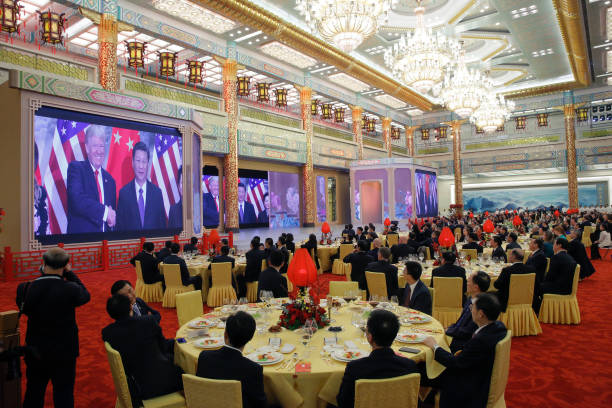
Salle d’Or, Grand Palais du Peuple, May 14, 2026 - decryption of a banquet where each dish said what the speeches did not dare
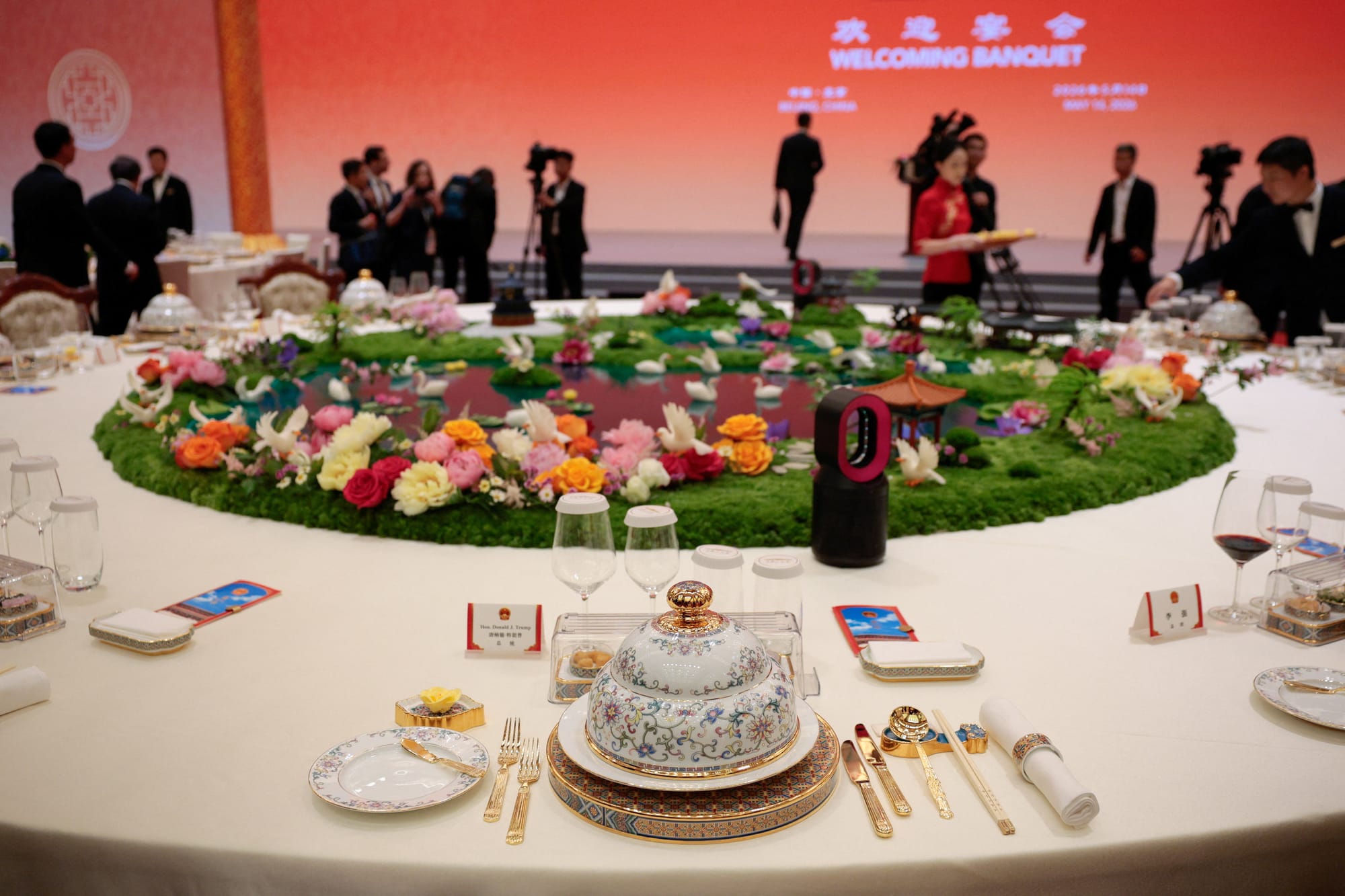
Source: Great Palace of the People
Diplomatic Cuisine
Before Xi Jinping raised his glass, before Donald Trump launched his “my friend”, everything was already written on the plate. A state banquet is not composed the day before: it is negotiated like a press release. And the one that China served to America on the evening of May 14, 2026 said, dish after dish, what the two leaders could not say out loud.
Investigation into a diplomacy that can be eaten.
Much has been said about the words of this summit - Xi’s “partners rather than rivals”, Taiwan immediately posed as “the most important question”, Trump’s invitation to the White House for September 24. We looked at the table less.
Because in the grammar of state receptions, the menu speaks first, and it speaks more frankly than the toasts.
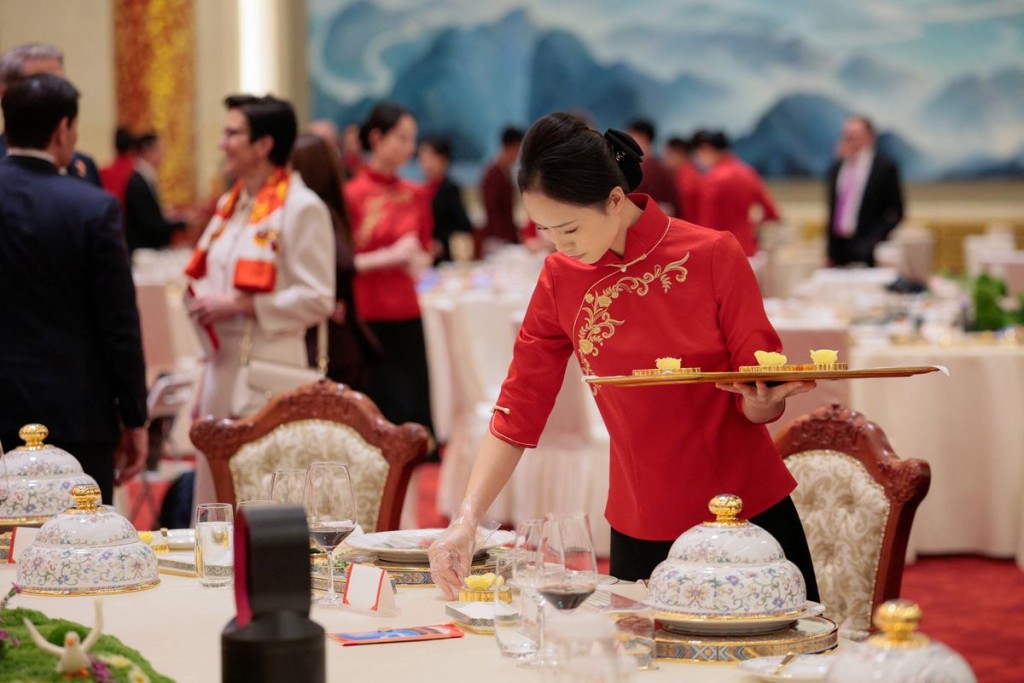
Source: Great Palace of the People
A compromise served in seven acts
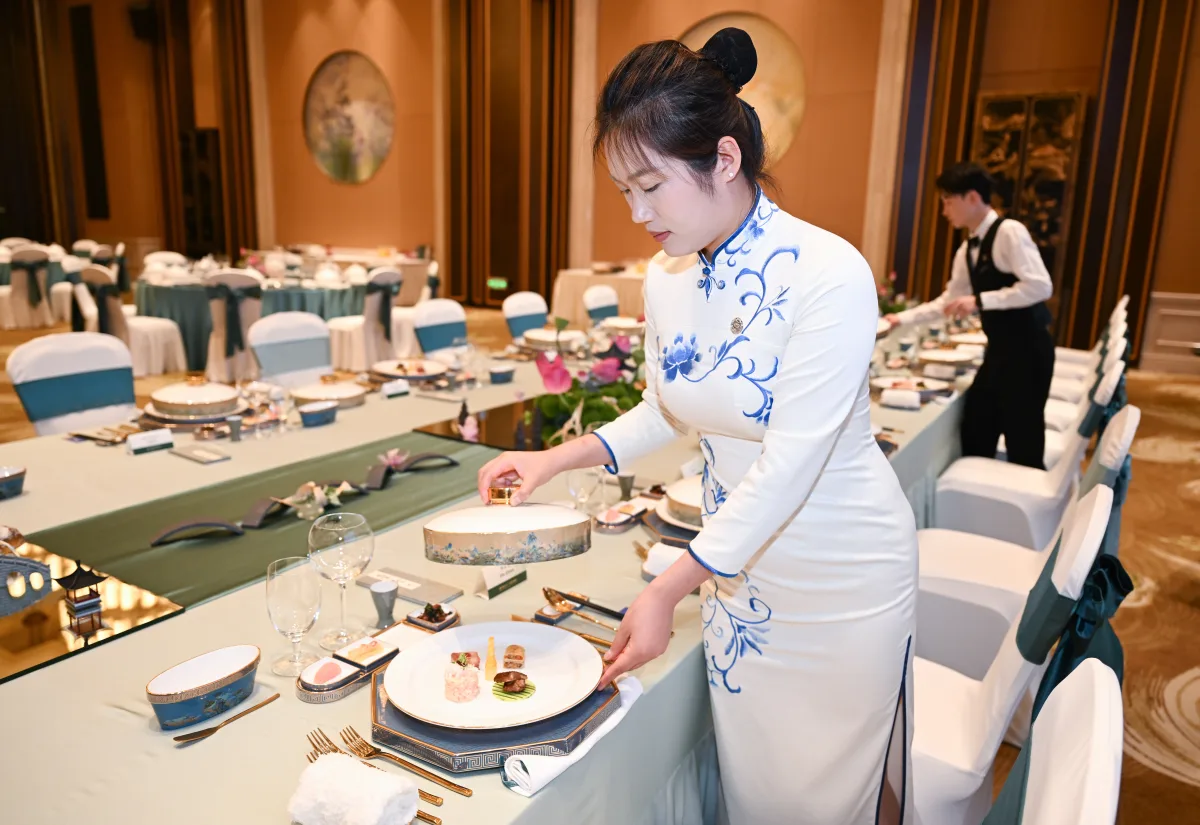
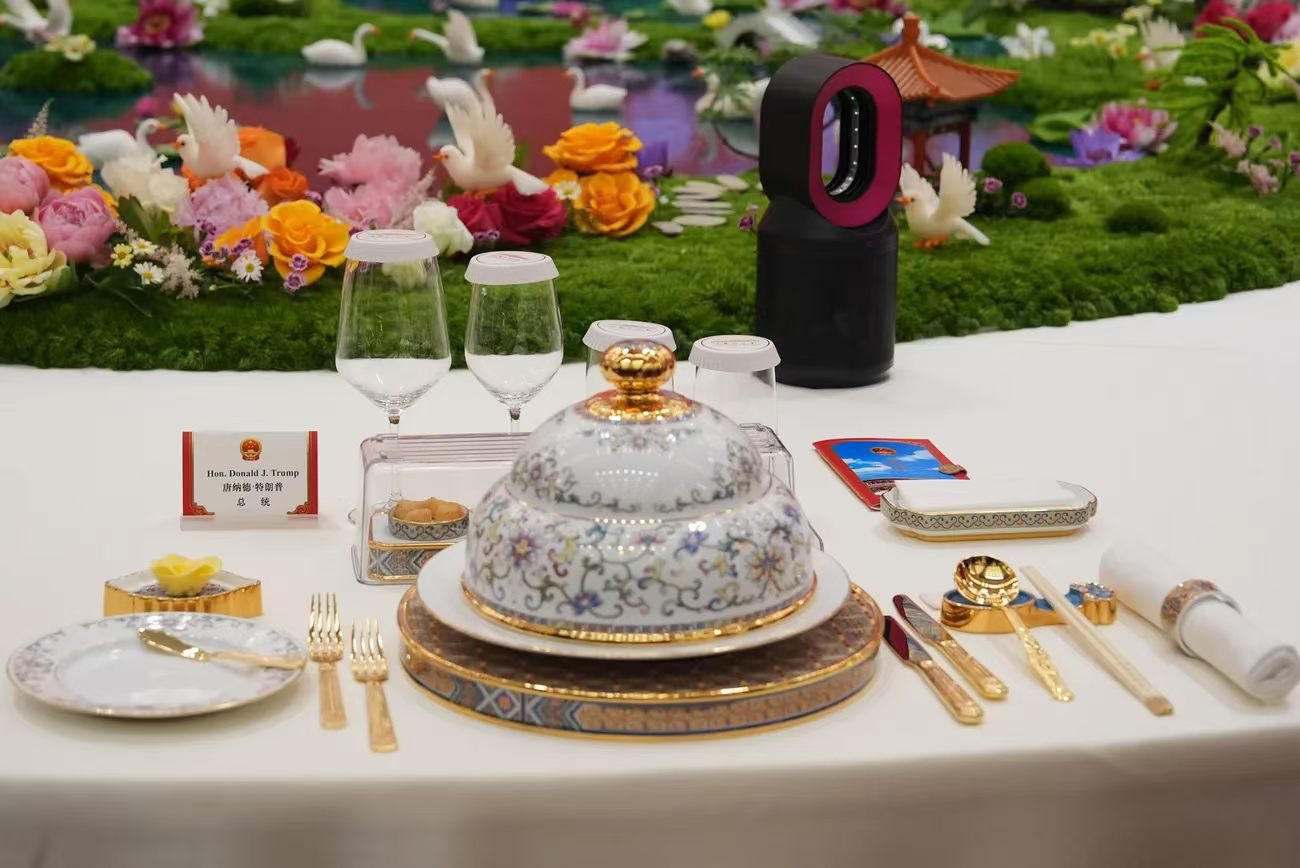
The menu for May 14 is a political object before being a gastronomic object. Huaiyang cuisine, one of China’s four great culinary traditions, took center stage at the banquet, with music played by the People’s Liberation Army military band playing in the background. This choice is not trivial. Originating from the Yangzhou and Huai’an regions, near Shanghai, this cuisine is renowned for its delicate balance, mild flavors and extremely precise knife work.
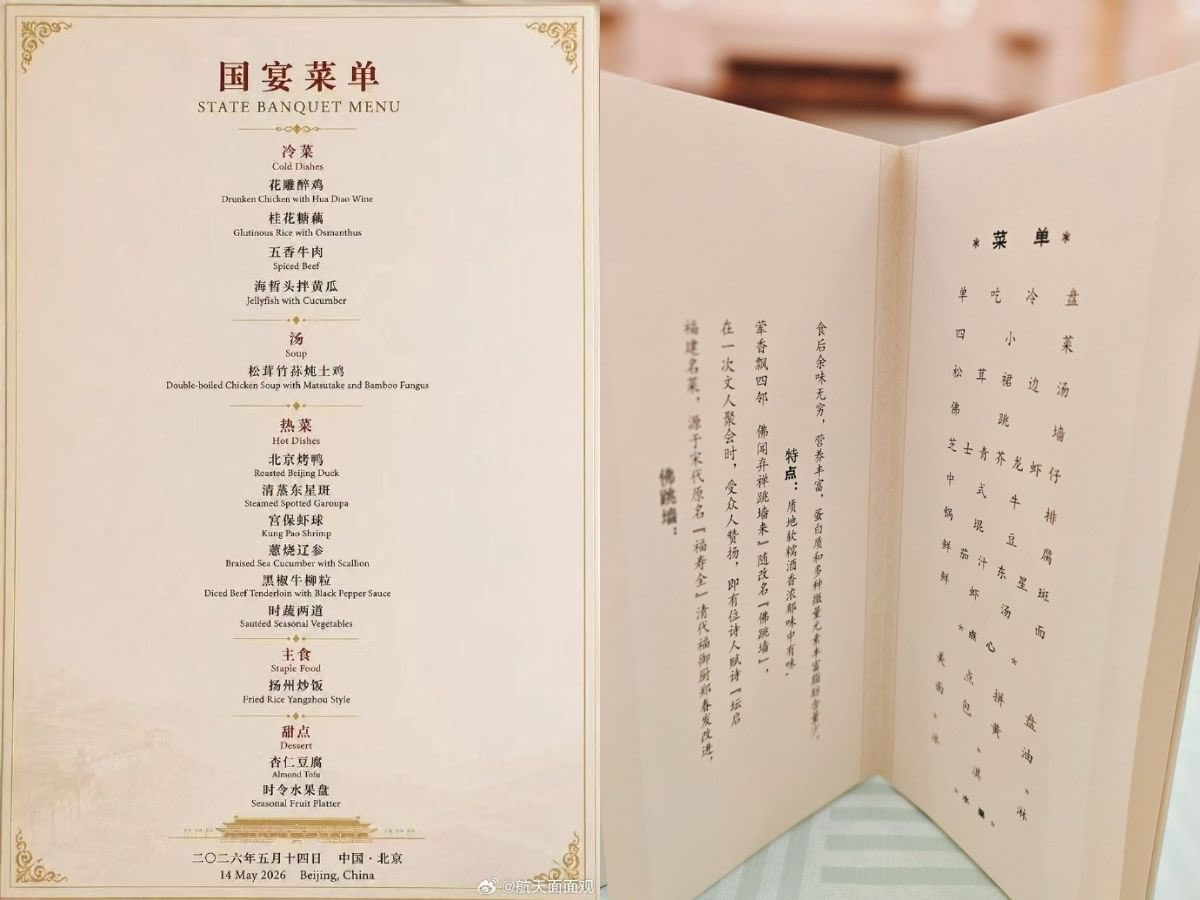
But the interest is not where we expect it. Beijing did not serve a Chinese menu to an American president: it served a negotiated menu. Crispy beef ribs, Peking duck and tiramisu were on the menu, with Chinese cooks blending local tradition with dishes said to suit Trump’s known tastes. The American president has long been associated with simple cuisine - hamburgers, well-done steaks, fries, Caesar salad. The Salle d’Or therefore played a two-part score.
The complete inventory betrays this diplomacy of the fork. The menu included lobster in tomato soup, simmered seasonal vegetables, semi-cooked salmon with mustard sauce, pan-fried pork buns and a shell-shaped pastry. Dessert brought together tiramisu, fruit and ice cream. Tiramisu, at a Chinese state banquet, is a concession readable to the naked eye: a Western dessert slipped into the heart of Huaiyang tradition, like a culinary handshake.
Source: Great Palace of the People
Luxury through restraint
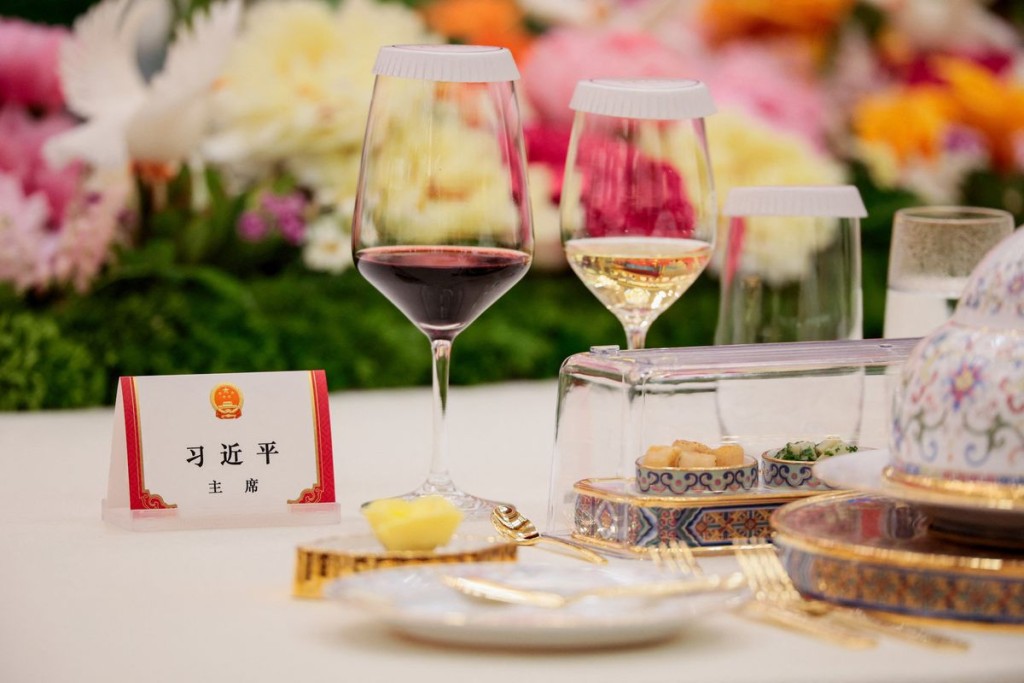
Here lies the most instructive paradox for those who observe official kitchens. China did not seek to dazzle with ostentation. “In Huaiyang cuisine philosophy, state banquets do not rely on luxury ingredients. They do not depend on expensive products: extravagance is simply not the subject,” summarizes a chef quoted by the press. It is a lesson in pure stewardship: the prestige of a state table is not measured by the price of its ingredients, but by the accuracy of its choices.
This bias has a history. Before the Trump-Xi banquet, Huaiyang cuisine was served at the 1949 “foundation banquet”, marking the birth of the People’s Republic, and then at the 50th anniversary banquet in 1999. In 2002, a banquet given by Jiang Zemin for George W. Bush also featured classic Huaiyang dishes. To serve Huaiyang to an American president is to place the meeting in a lineage - that of the great moments when China puts itself on stage before the West.
Source: Great Palace of the People
The stage matters as much as the plate
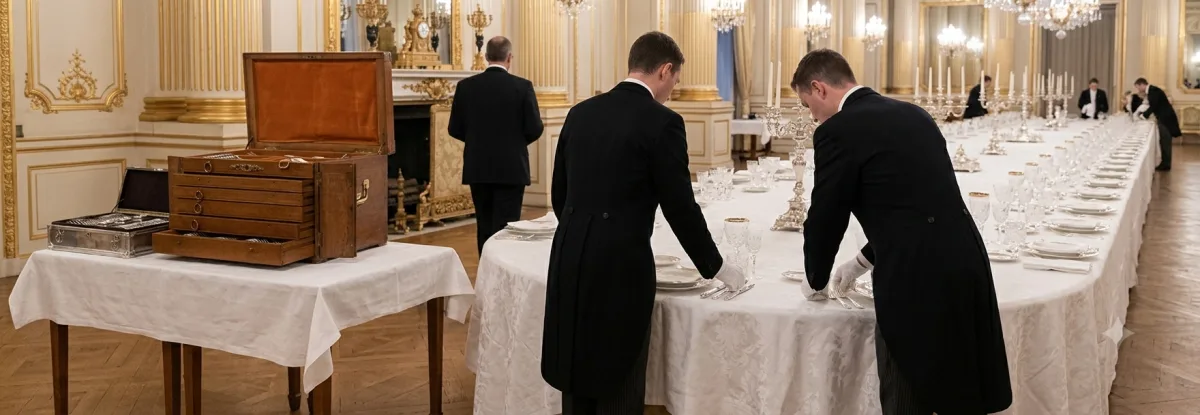
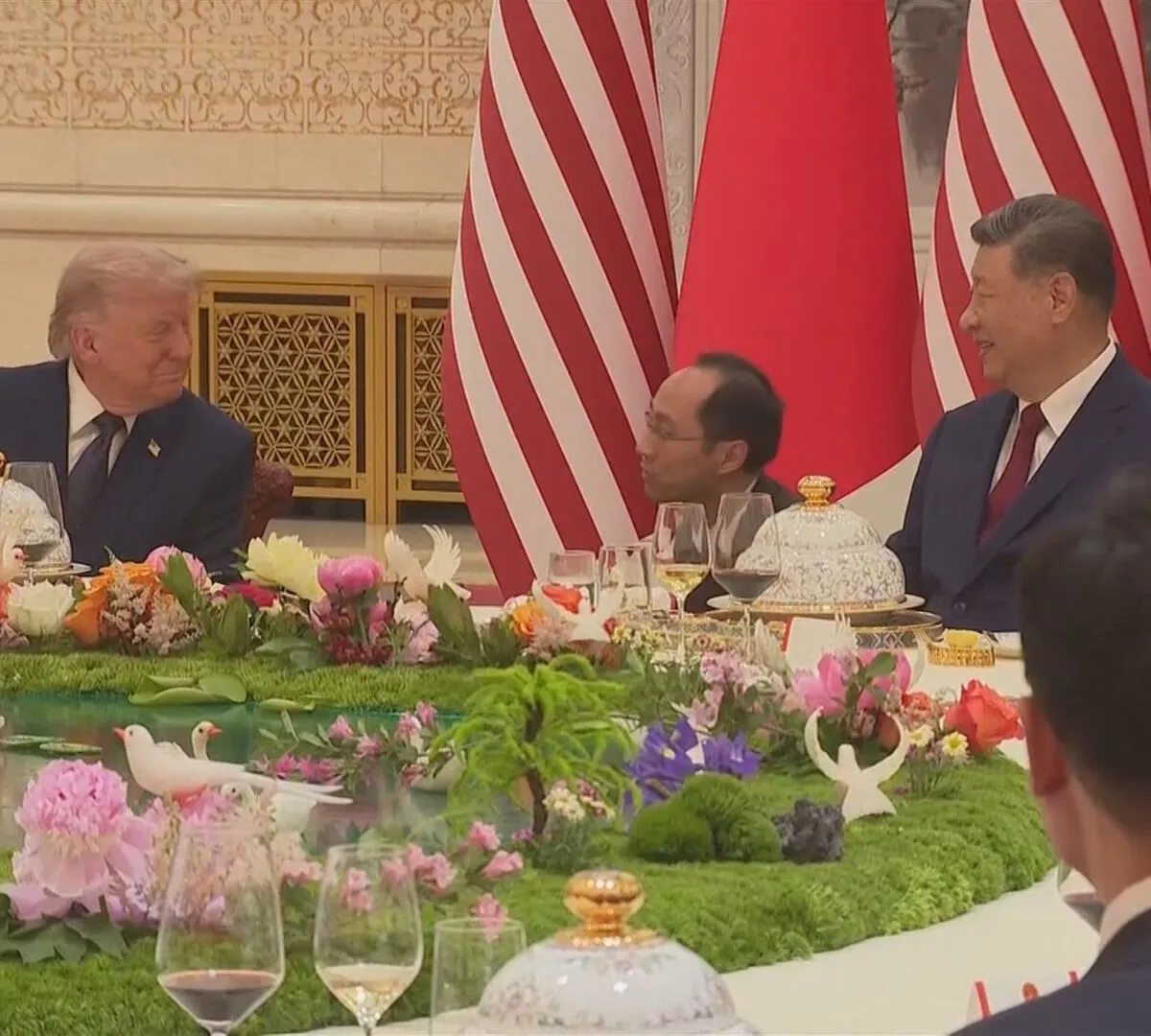
A state banquet is a theater, and the hall is its setting. Pool journalists described the setting of the Golden Hall: chandeliers, Chinese lanterns and a large banner proclaiming “Welcome Banquet” under the flags. Nothing is left to chance in this staging: the warm light of the chandeliers, the red of the lanterns, the military music - each element composes an image of hospitable power intended as much for the cameras as for the guests.
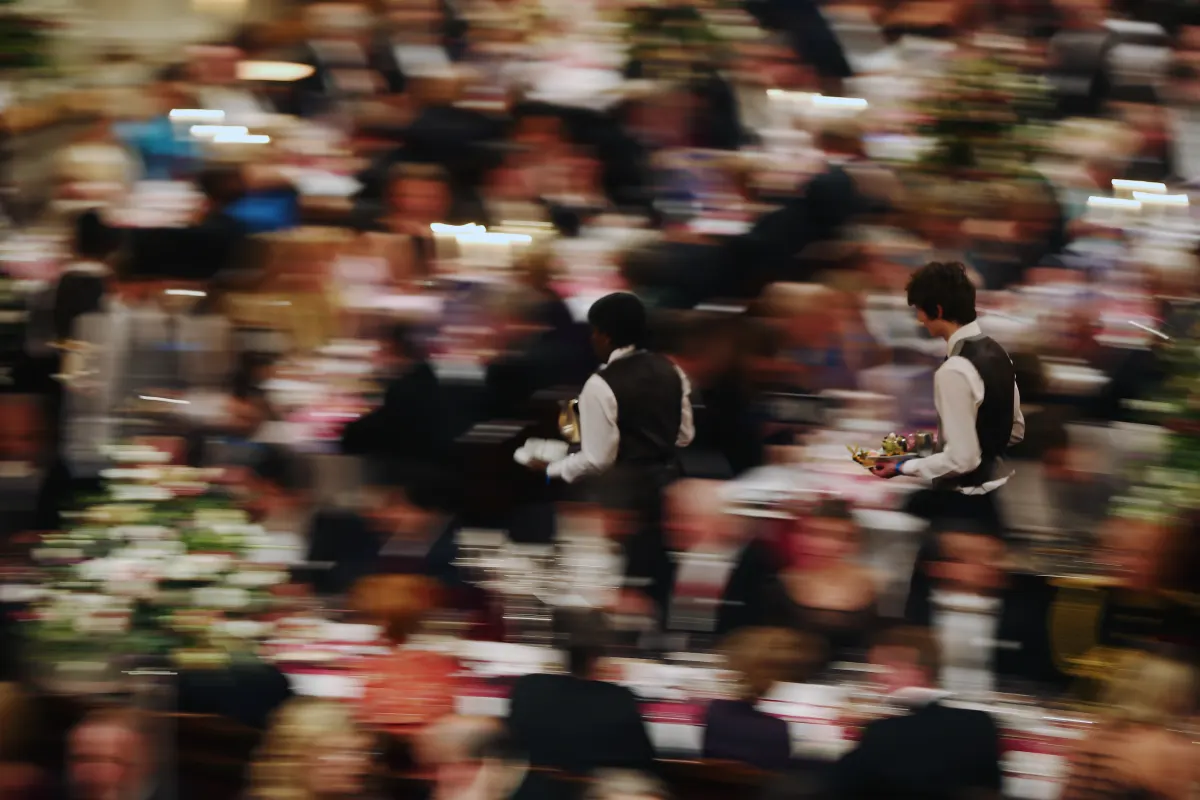
The protocol choreography frames the meal with the same rigor. The banquet began with a plate of hors d’oeuvres, after Trump toasted his host. The order of gestures - the toast first, the service then - is part of a precise score where each second has been thought out by the stewards of the two delegations.
The Chinese art of the edible symbol. Peking duck is not an ordinary dish in this context. Originating from Chinese imperial kitchens, it is traditionally roasted on fruit woods such as jujube, which give it its characteristic smoke. To serve it to a foreign head of state is to summon the imperial heritage - a silent way of remembering that China already received ambassadors when America did not exist.
Source: Great Palace of the People
What the table said, and the speeches kept silent
That’s the whole point. While the chefs were composing a menu of reconciliation, the heads of state were having another, tougher conversation. Xi warned Trump that missteps on Taiwan could push the two countries into “conflict,” a striking opener. The summit ended without announcing any substantial agreement on key issues.
The gap is revealing. The table promised harmony - tiramisu and toast, “fantastic future together” - while the meeting room drew red lines. This is precisely the function of a state banquet: to offer a space where one can be cordial without giving anything away, where the warmth of the decor compensates for the coldness of the files. The Huaiyang menu, light and without exotic ingredients, was the exact opposite of a balance of power. It was edible neutral ground.
Source: Great Palace of the People
A meaningful role reversal
We must measure what was new in the staging. Trump was welcomed at the Great Hall of the People, the seat of power in China, billed as “the equivalent of the White House and all other centers of power combined.” And the protocol deployment was calibrated to impress: Vice President Han Zheng greeted Trump at the airport upon his arrival Wednesday, becoming the highest-ranking Chinese official to ever greet a U.S. president. Receiving here was not a gesture of courtesy. It was a display of sovereignty - hospitality as an assertion of rank.
A state banquet does not feed: it negotiates. On the evening of May 14, in the golden light of the Golden Hall, China put on the table a compromise that speeches could not formulate - a little Huaiyang for national pride, a little tiramisu for the guest, and not an ounce of extravagance so as not to give anything up. The leaders spoke to each other with careful words; their stewards had already said everything, dish by dish.
In Beijing, as everywhere, the table always reaches an agreement before the men.