In 1520, France and England wanted to seal a peace.
Before signing anything, their ambassadors must resolve a more mundane problem: where to accommodate two royal courts of several thousand people each, without one appearing to cede ground to the other.
Months of negotiation will be necessary, not on the substance of a treaty, but on the location of the tents.
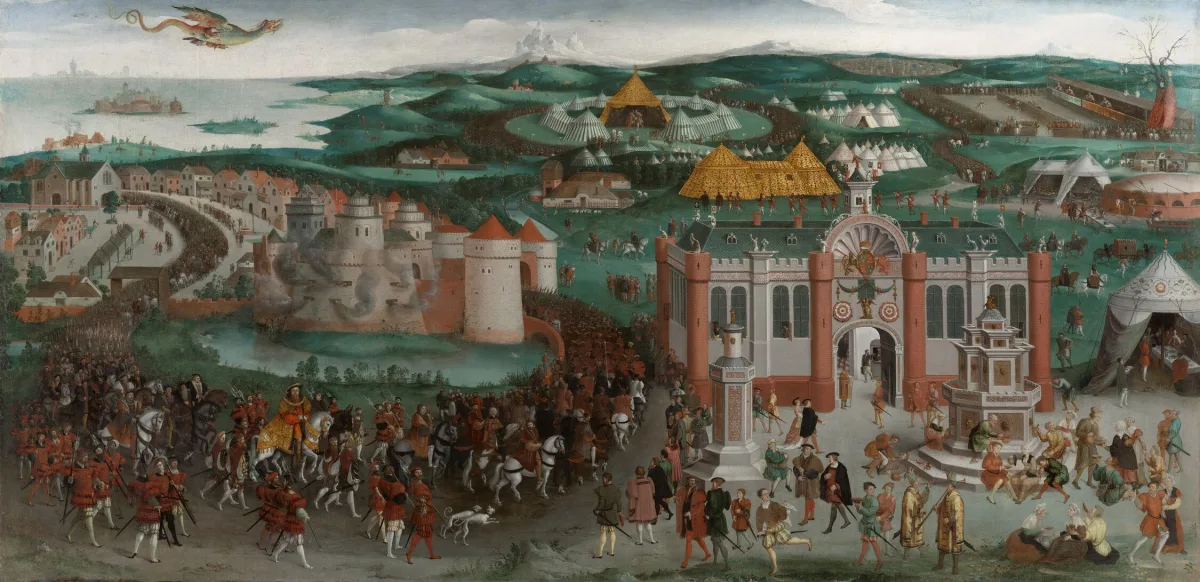
The choice falls on a valley near Calais, between the towns of Guînes and Ardres.
Francis I, King of France, sets up camp in Ardres.
Henry VIII, King of England, his at Guînes.
Each delegation includes several thousand people: guards, cooks, carpenters, tailors, priests, musicians.
According to British historians from Historic Royal Palaces, the ensemble brought together up to 12,000 people. To accommodate them, more than 35,000 yards of canvas were ordered, or more than 40,000 square meters stretched on masts.

A project before a summit
Nothing is left to chance. Months before the meeting, envoys from the two kings went near Calais to arbitrate, tent by tent, the layout of the camp. Commissions of organizers were appointed to supervise the work and prepare the accommodation. Masons, carpenters, joiners, painters, blacksmiths and tailors number in the hundreds.
The central pavilion of François I rises to more than 36 meters.
Henry VIII, for his part, refused to sleep in a tent: he had a temporary palace built in Guînes, with wooden walls painted in stone trompe l’oeil, equipped with large glass windows, a luxury then almost unknown to the nobility. In front of its courtyard, two fountains flow continuously, one of hypocras, a spiced wine, the other of pure wine.
“We think here of nothing other than hunting, women, banquets and changing houses,” said an Italian bishop visiting the French court, a few years after the Cloth of Gold camp.
The cost, on the French side, exceeds 400,000 tournament pounds, the equivalent of around 34 million euros today, just for the construction of the camp. The American magazine Smithsonian estimates the entire event at nearly $19 million at the time, a comparable order of magnitude once reduced to the two crowns.
Feed two courses for seventeen days
Then comes the other challenge: feeding this crowd for more than two weeks, with four-hour meals, in three courses of fifty dishes each. The account books record, on the French side, more than 100,000 eggs, 3,000 sheep, as many lambs, 800 calves and 300 oxen consumed in seventeen days, with 66,000 liters of beer and 200,000 liters of wine. Historic Royal Palaces puts forward comparable figures on the English side: nearly 98,000 eggs and around 200,000 liters of wine. The two accounts, kept separately by each camp, overlap.
To supply this food site, a network of carts was organized over several hundred kilometers: fish came from Boulogne, game from Caen, cheese from Milan, then under French domination. In the kitchen, around thirty men are barely enough to prepare the meats, roasted, candied in stews or enclosed in pâtés en croute. Each service is announced by trumpets and oboes: at the Cloth of Gold camp, we eat to music.
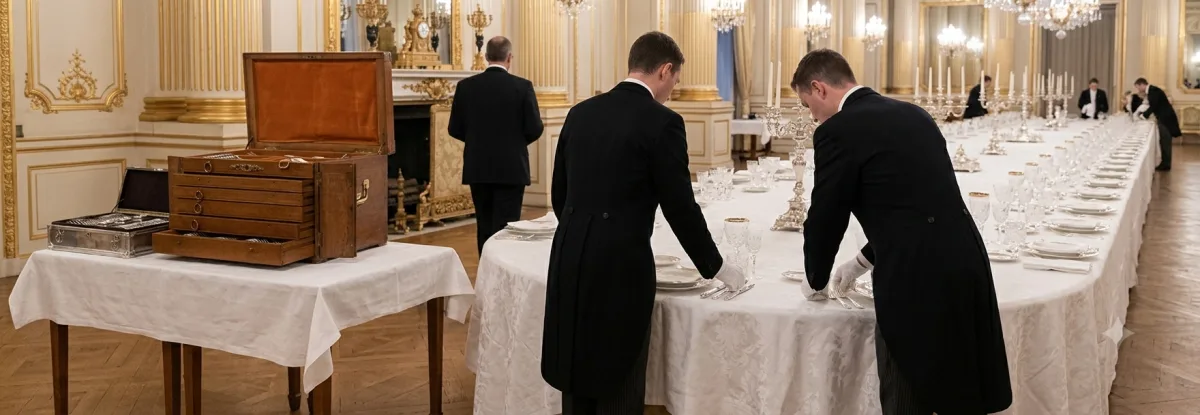
Detail also counts in service.
A model that spans the centuries
The peace signed with lots of banquets hardly lasted: from 1521, France and the empire of Charles V were at war again.
But the organizational model has spanned the centuries.
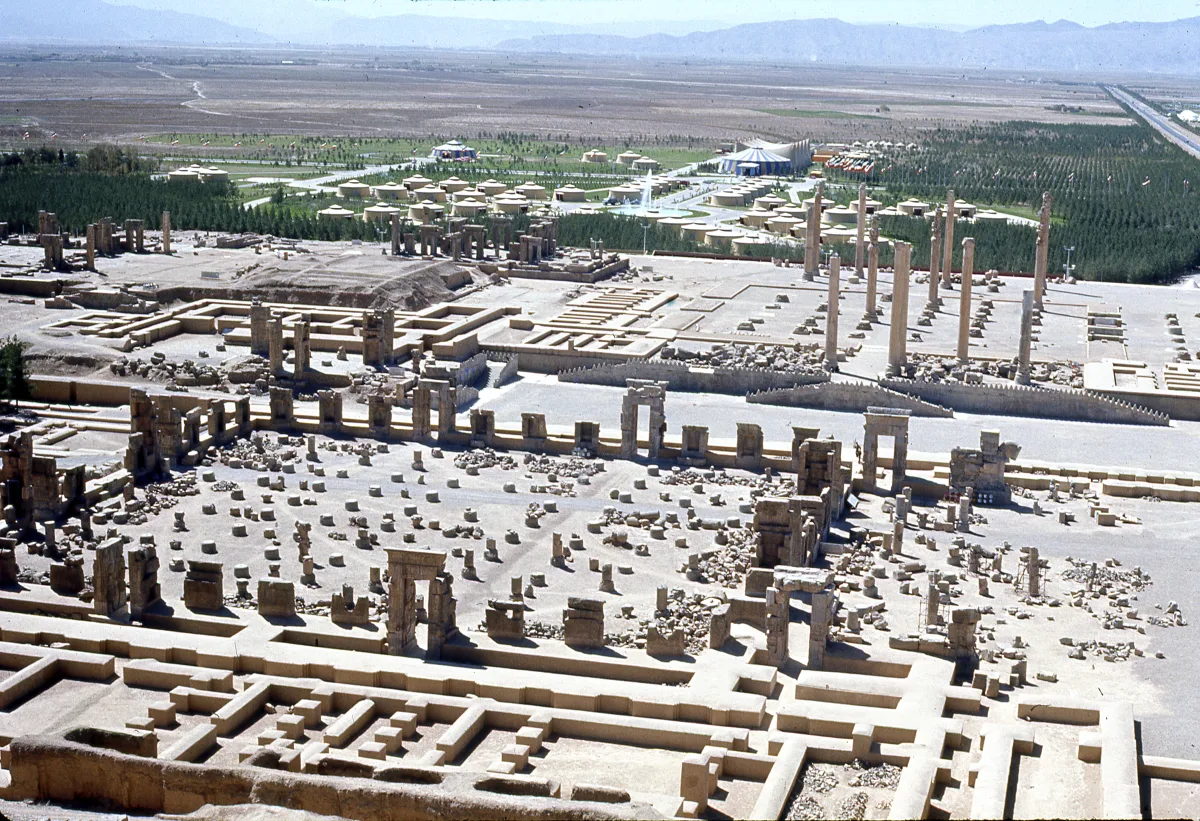
Four hundred and fifty-one years later, in 1971, the Shah of Iran took direct inspiration from it to celebrate the 2,500 years of the Persian Empire in Persepolis. Around sixty heads of state and crowned heads are received in tents set up on more than 64 hectares of desert, an area close to that deployed in Guînes and Ardres. On October 14, a gala dinner brings together 600 guests in a 68-meter-long dining room. The official cost, estimated between 17 and 22 million dollars by the organizers, remains today a reference for any extraordinary state event.
From this summer of 1520, there remains neither lasting treaty nor signed text. There remains proof, counted in carts, yards of canvas and liters of wine, that peace, even provisional, is first built through stewardship.