A state dinner never chooses its service at random. Plate, buffet or a mixed formula: each carries its own idea of hospitality - and, very often, carries on a tradition.
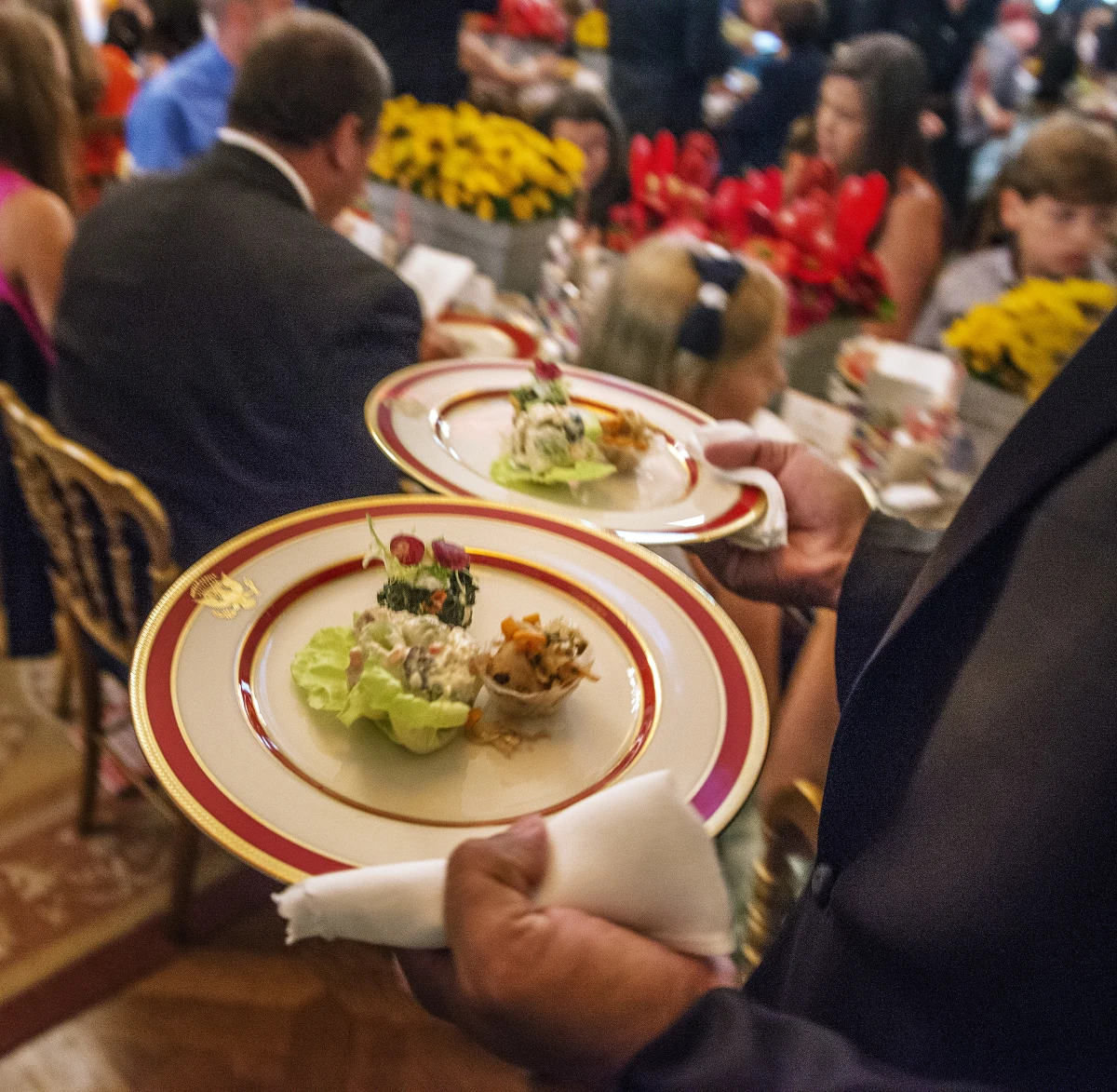
The plate: mastery of time and of the message
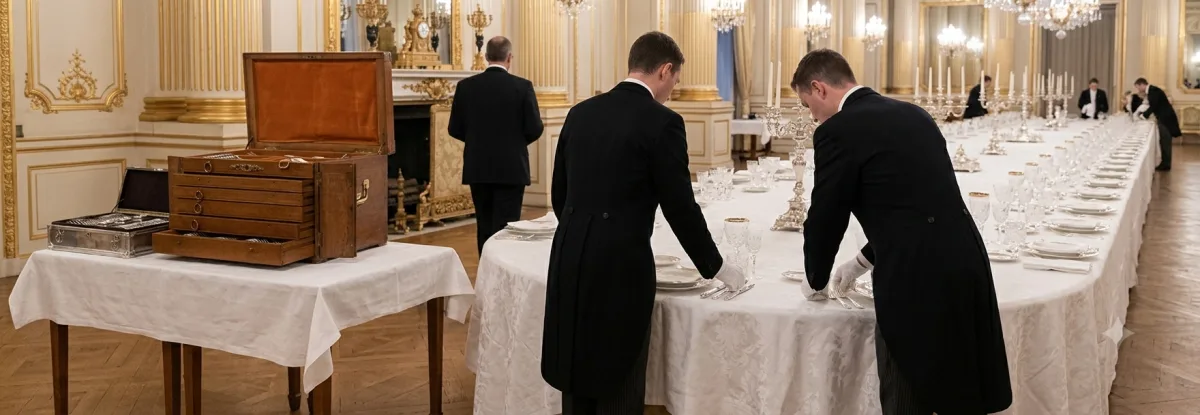
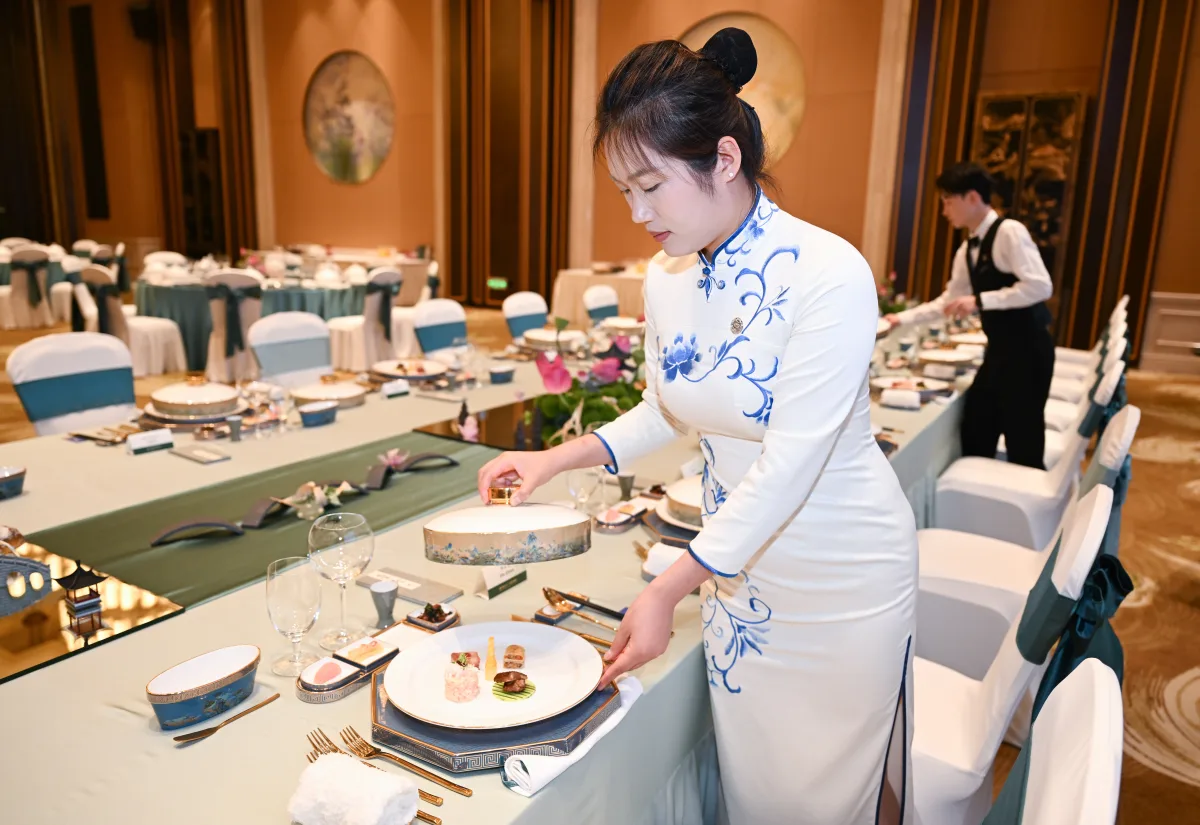
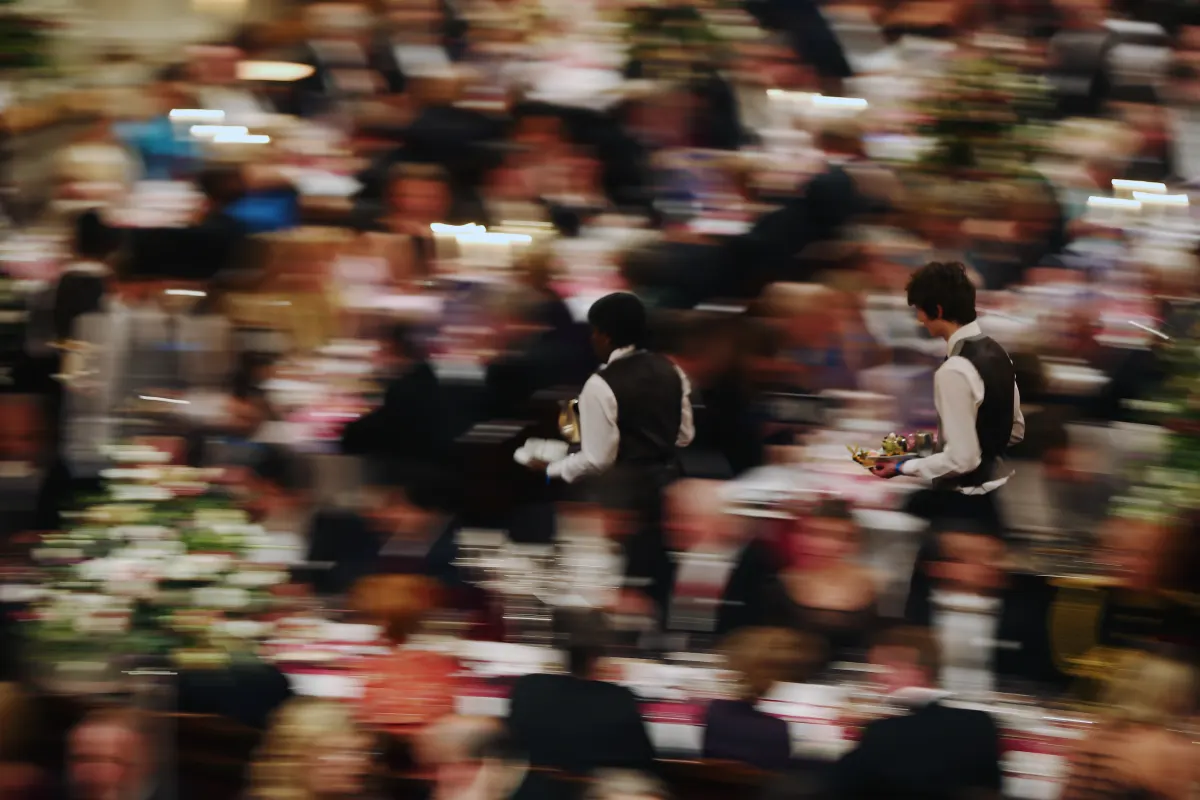
Plated service remains the most codified form of the state dinner. Each dish arrives at the intended moment: it accompanies a toast, precedes a speech, closes a protocol sequence. This precision makes it possible to run a ceremony without a hitch.
It also showcases the national cuisine: a signature dish, presented with care, becomes a diplomatic gesture in itself.
The standard of solemnity
This is why, in many countries, the seated and served meal remains the reference form for the great official dinners. It holds the ceremony at its highest degree of solemnity: the rhythm is kept, precedence respected, each guest in their place. Where the state dinner must remain an official act from beginning to end, this formula remains the rule.
A reassuring framework
Plated service makes it possible to control the portions, the staging and part of the food-safety stakes. Nothing is left to improvisation. It is this rigour that explains its permanence in the most solemn state banquets: in Washington as in London, the seated, timed dinner remains the rule, and in Paris, the same protocol demand presides over the art of hosting at the Élysée.

The buffet reverses the logic. It does not dictate, it offers.
The buffet: organised freedom
The encounter in motion
To rise and serve oneself is also to cross paths with other guests. A conversation begun at the table continues before the dishes, changes interlocutor, deepens. This informal circulation is often sought at the large receptions with a political or economic vocation.
A wider showcase of the country
By multiplying the dishes, the buffet shows more of a country’s cuisine than a single menu in several courses. The guest discovers a variety, not only a selection.
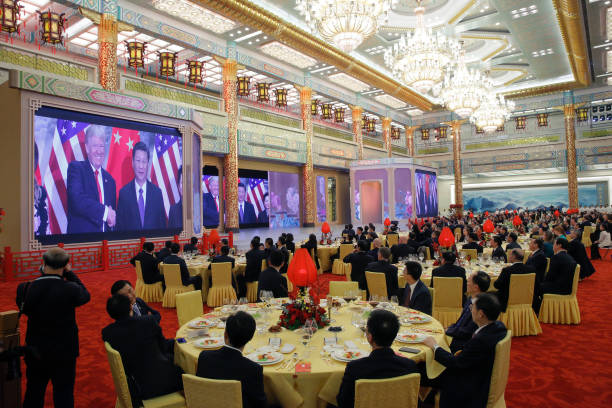
In certain contexts of official or institutional reception - often outside the most codified Western framework - this capacity to unfold a broad gastronomic range, in a spirit of abundance and sharing, can make the buffet the favoured formula.
Each sets their own quantity
No one imposes the portion: each guest serves their own, according to their appetite. The buffet also offers more latitude in the face of the diversity of diets: a wider choice lets everyone compose according to their preferences.
It does not, for all that, dispense with prior work. Allergies, religious restrictions and specific diets must always be identified in advance: in self-service, the risk of cross-contact between dishes exists, and food safety remains the responsibility of the organiser, not of the guest.
An assumed informality
The service is lighter, the codes loosen a little. To rise during the meal, for whatever reason, is in no way embarrassing. At a plated dinner, the same gesture draws the eye; at a buffet, it blends into the general movement.
The flip side of circulation
This freedom has its counterpart. To rise, to move about, is also to escape a little the planned choreography: the sequence is less well controlled, and what is gained in conviviality is sometimes lost in mastery.
The buffet also raises a question of precedence. By setting everyone in motion, it can bring together before the same dishes guests whom a seating plan, at a plated dinner, would keep apart. A great banquet must therefore anticipate this: circulation must not undo the order of ranks.
The mixed formula: reconciling the two logics
Between these two models, an intermediate formula is sometimes chosen, notably for large events: a starter served on the plate, then a main course at the buffet.
Keeping the ceremonial opening
The starter served on the plate preserves a strong protocol moment: welcome, toast, first official words.
Gaining flexibility for what follows
The main course at the buffet then absorbs a large number of guests, without lengthening the service or multiplying the constraints of personalisation.
The formula answers a concrete problem: how to open a dinner with solemnity, while receiving more broadly than a fully plated service would allow.
A choice - or a tradition?
None of these three models is superior to the others. Each answers a different question: how many guests, what degree of solemnity, what image of the host country.
But perhaps the real question is not one of choosing. In many capitals, the plated dinner remains the norm because it carries the ceremony to its highest point of solemnity; elsewhere, the buffet is preferred because it better expresses a certain idea of hospitality. Both, above all, carry on a tradition.
The plate asserts a mastery. The buffet organises a freedom. The mixed formula negotiates between the two. To choose a service - or to perpetuate one’s own - is already to begin to host.