India: at Hyderabad House, a summit set at the minute
One morning in July, a Prime Minister bows to two flags. In the evening, she dines without ceremony with the man she calls her “elder brother”. In between, twelve hours set to the minute in the former palace of the richest prince in the world. Story of a choreography.
Salvation
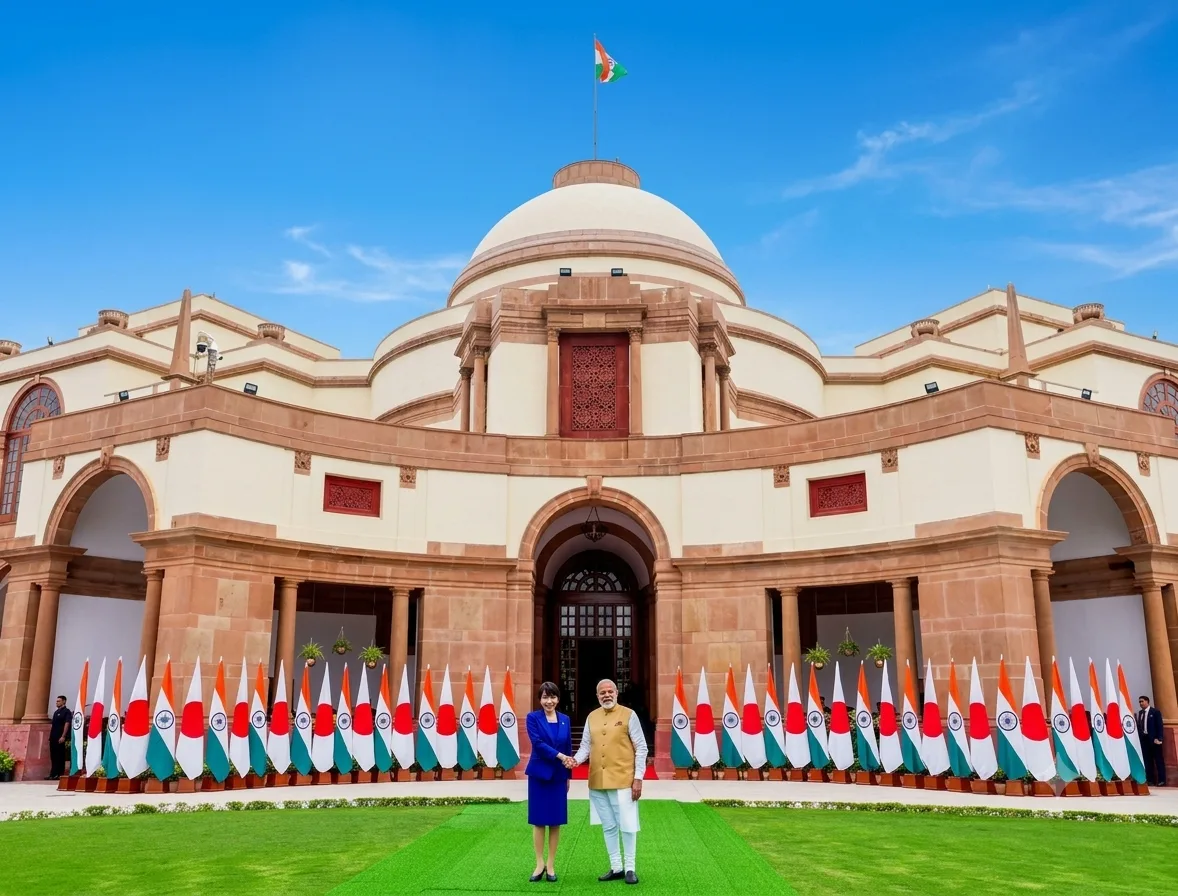
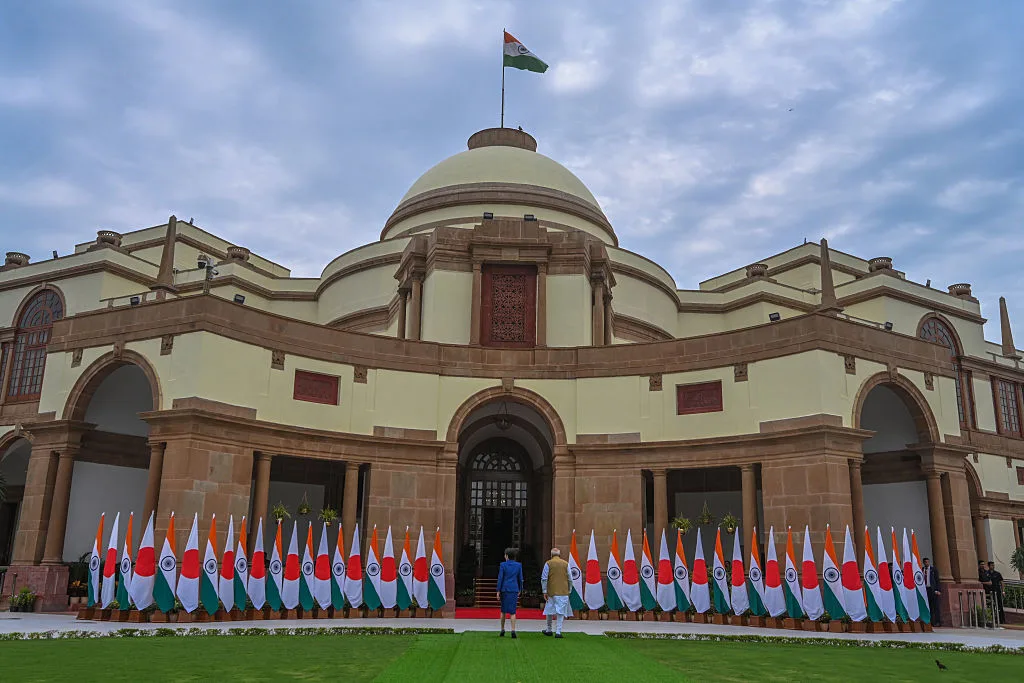
July 2, 2026, New Delhi. Sanae Takaichi walks towards the meeting room alongside Narendra Modi. She stops and bows to the Indian and Japanese flags.
The gesture lasts a second and it says everything. This is his first official visit to India since coming to power. The 16th annual India-Japan summit can begin.
Act I: The Court of Honor
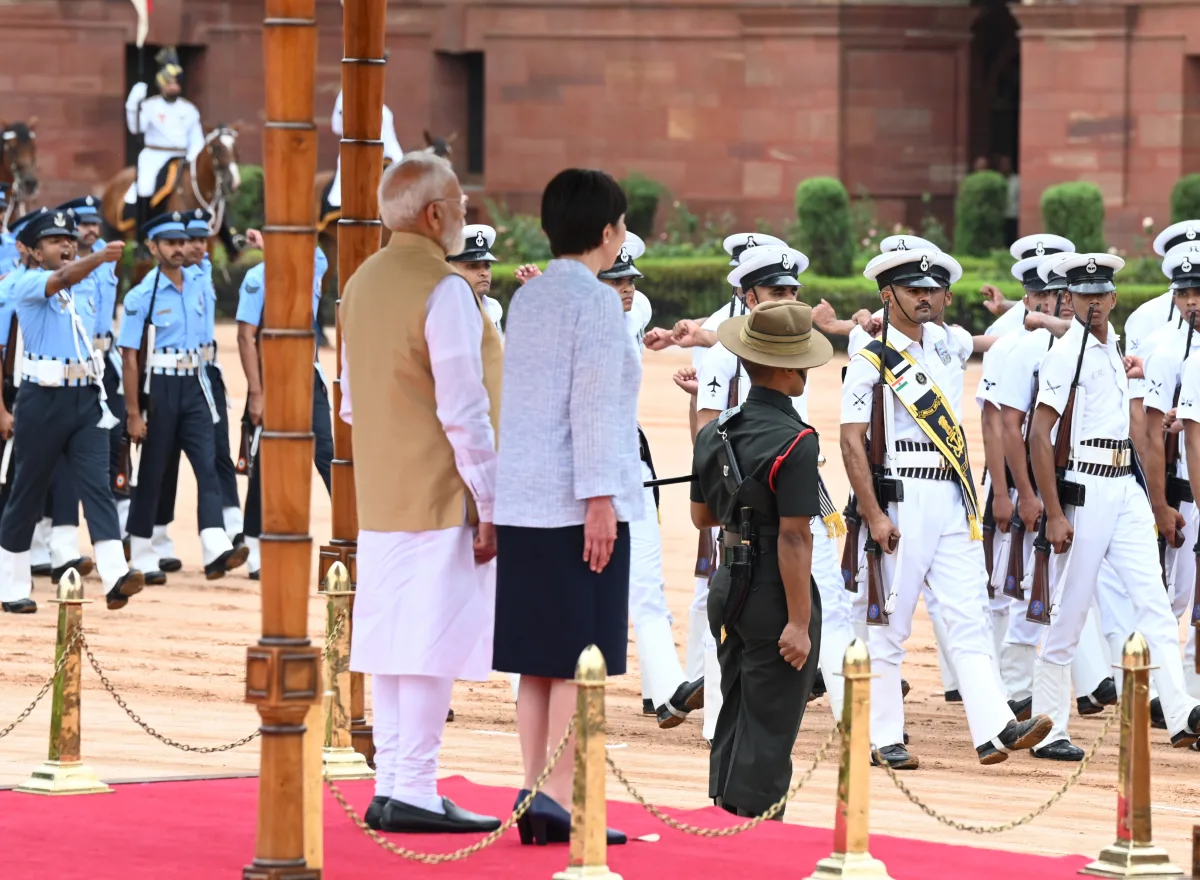
Nothing starts here. It all starts a few kilometers away, in the main courtyard of Rashtrapati Bhavan, the presidential palace.
There is the guard of honor and the review of the troops. Narendra Modi presents the members of his government one by one. It is the Republic which receives.
Then the procession leaves towards Hyderabad House. We move from ceremony to work.
The palace of a prince who is too rich
Hyderabad House is not a neutral decor. Sir Edwin Lutyens built it between 1926 and 1928 for Mir Osman Ali Khan, seventh Nizam of Hyderabad. In 1937, TIME presented him as the richest man in the world.
The palace has thirty-six rooms, a dome and a butterfly-wing plan. Only the viceroy’s palace was larger.
The irony of history? The Nizam’s sons found the palace too Western. We didn’t live there much. Since 1974, it has been under the Indian Ministry of External Affairs. The residence of a prince has become the reception hall of the Republic.
11:30 a.m.: door closed
The meeting begins in small groups, lasting around sixty minutes.
This is where sensitive things are said: China, North Korea, the Strait of Hormuz. We also talk about defense.
At 12:35 p.m., the doors open for the plenary session, with full delegations, for around thirty minutes.
The rule is as old as diplomacy: we speak frankly behind closed doors, and then we put on a show.
“My sister-in-law”, “my older brother”
It’s time for the cameras. The two leaders exchange memoranda then address the press.
Sixteen results are announced. Three texts form its backbone: economic security, artificial intelligence and energy resilience.
And a first: India and Japan will develop military equipment together. This is a naval antenna, UNICORN, a stealth mast which already equips Japanese Mogami-class frigates.
Then the tone changes. Modi calls his guest his “sister-in-law”. Takaichi responds by calling him his “older brother”. At a summit, this is also how we sign.
Lunch, the forgotten part of the program
Narendra Modi then offers lunch to his guest. The menu has not been made public, nor the seating plan.
It’s often like this: the meal is the most human moment of a visit, and it’s the one we talk about the least.
3:30 p.m.: money comes into play
At the Joint Economic Forum, organized by the Japanese Foreign Trade Agency (JETRO), the two prime ministers face more than 150 Japanese companies.
JETRO announces 129 company memorandums. Around 2,000 billion yen have already been invested in India since the summit in August 2025. The target remains 10,000 billion yen over ten years.
The sequence lasts thirty minutes. Politics opens the door, the economy walks through it.
7:00 p.m.: dinner without ceremony
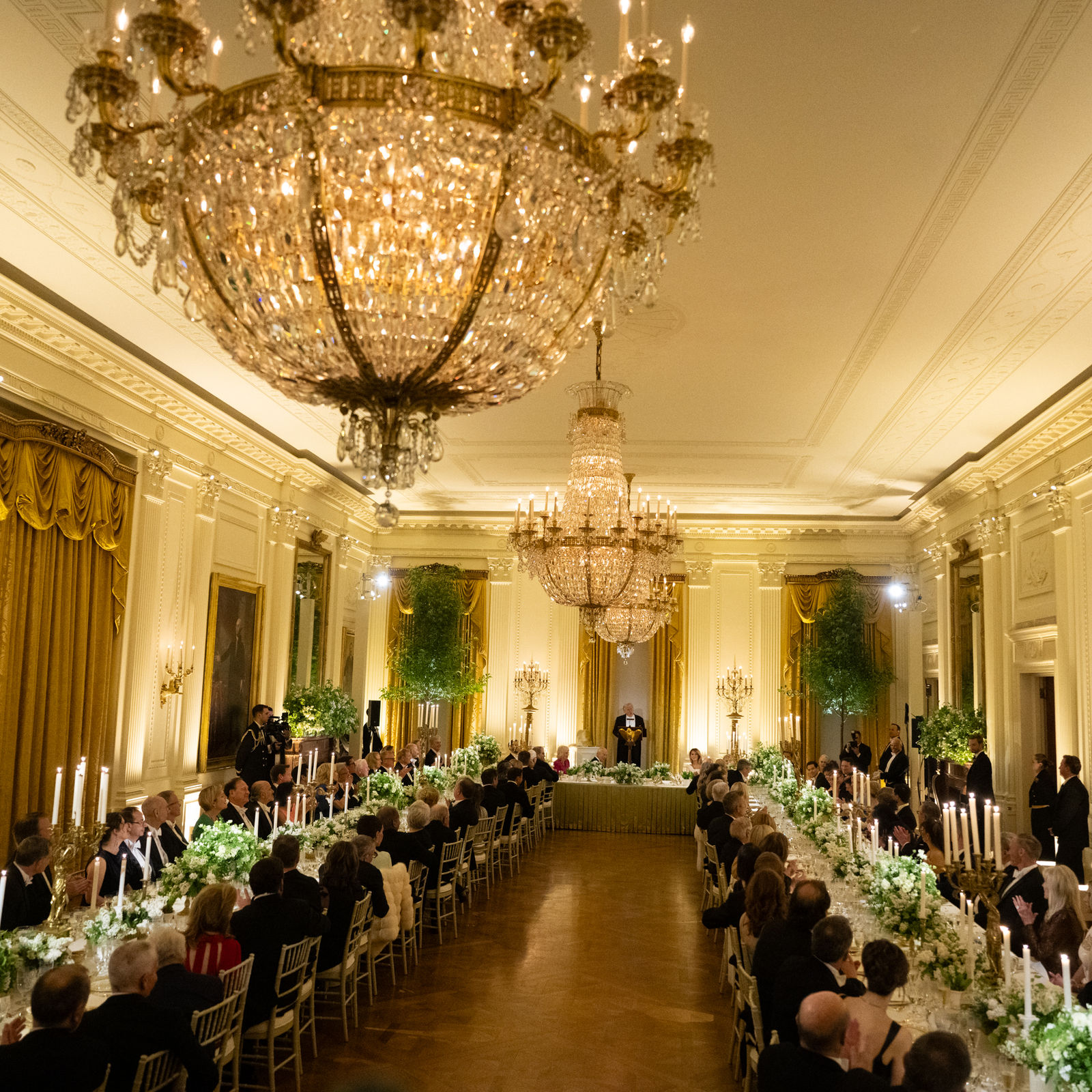
In the evening, no state banquet. Tokyo uses the exact word: an informal dinner, hosted by Narendra Modi.
It lasts an hour and a half. We talk about the bilateral relationship, the world, and especially the cultures of the two countries.
This “informal” is not trivial. It signals trust: we remove the uniform of protocol to keep the essential, the personal relationship.
Departure, last message
On the morning of July 3, Sanae Takaichi left India from Palam technical airport. It is Minister of State Jitendra Singh who accompanies her.
In 2027, the two countries will celebrate 75 years of their diplomatic relations. This will be the “year of Shared Horizons”.
What the day says
A summit is not only seen in what we sign. It reads in the order of things: the main courtyard in the morning, the door closed at noon, the cameras afterwards, the dinner without ceremony in the evening.
At Hyderabad House, the clock is the first protocol.
Also read: Japan: the imperial calendar as the supreme form of state protocol
-
Sources
Official Japanese sources
- Ministry of Foreign Affairs of Japan:
Japan-India Leaders’ Meeting and Luncheon
- Ministry of Foreign Affairs of Japan:
Informal Dinner hosted by Prime Minister Modi
- Ministry of Foreign Affairs of Japan:
Japan-India Joint Economic Forum
- Ministry of Foreign Affairs of Japan:
Prime Minister Takaichi’s Visit to India (July 1 to 3, 2026)
- Offices of the Japanese Prime Minister:
,
,
Official Indian sources
- Ministry of External Affairs of India:
List of Outcomes, 16th India-Japan Annual Summit
- Ministry of External Affairs of India:
transcript of the press briefing of July 2, 2026
*DD India:
welcome ceremony and talks at Hyderabad House
*DD India:
departure of Sanae Takaichi from Palam
Press and analysis
*IANS:
PM Modi, Japanese counterpart Takaichi hold talks at Hyderabad House
*ANI:
129 MoUs announced at Japan-India Joint Economic Forum
- Naval News:
India and Japan to Co-develop Naval Radio Antenna Based on UNICORN
History of the palace
*The Victorian Web:
Hyderabad House, New Delhi, by E. L. Lutyens
*Gulf News:
Inside Nizam’s palace turned diplomatic hub