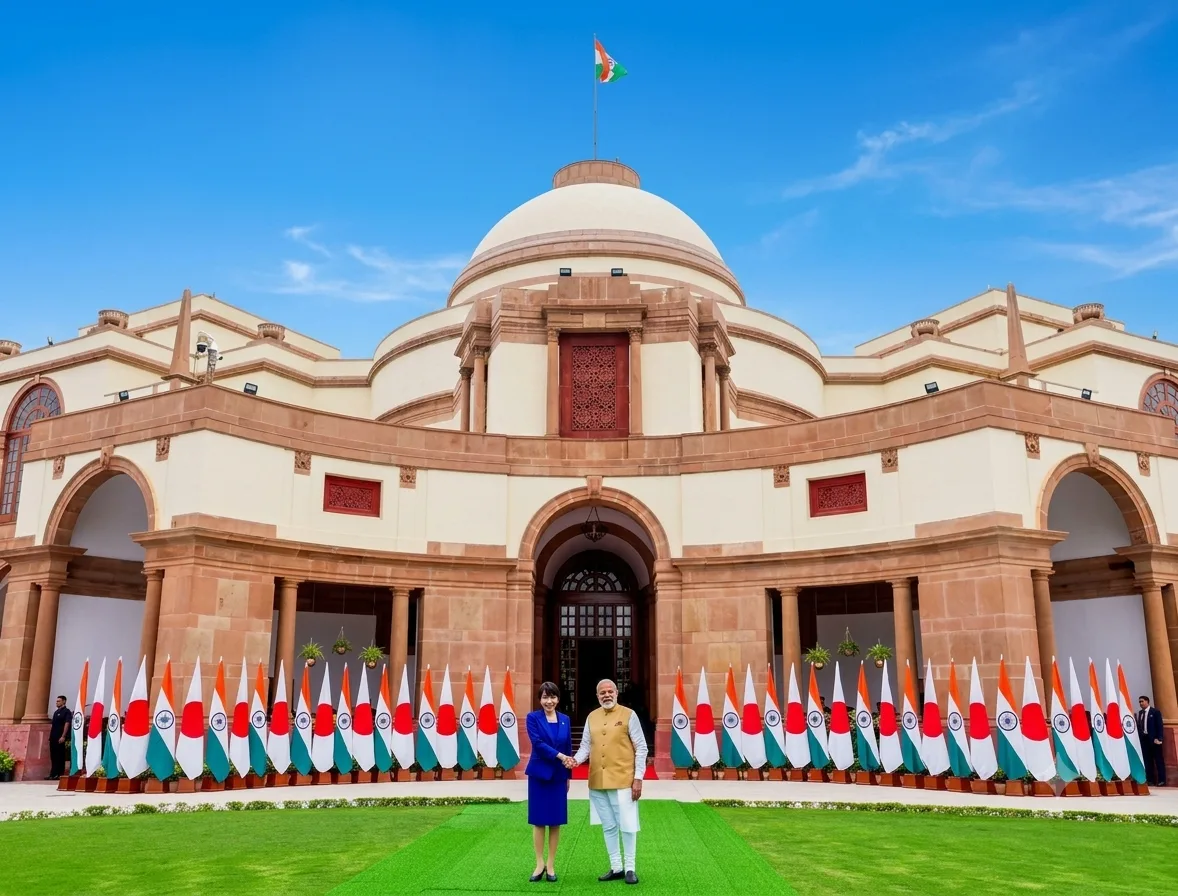
On July 2, 2026, a former princely palace in New Delhi orchestrated, hour by hour, the state visit of Japanese Prime Minister Sanae Takaichi. Behind the signing of sixteen strategic agreements lies a protocol mechanism regulated to the nearest quarter of an hour.
A morning that begins elsewhere
Nothing begins at Hyderabad House. It all begins three kilometers away, in the main courtyard of Rashtrapati Bhavan, where Sanae Takaichi receives the highest welcome that India reserves for a foreign head of government: guard of honor, review of the troops, presentation of the Indian cabinet. This sequence is not incidental. It constitutes the first act of a two-stage system, where the imperial legitimacy of the former British capital gives way, a few minutes later, to working diplomacy in the Nizam’s former palace.
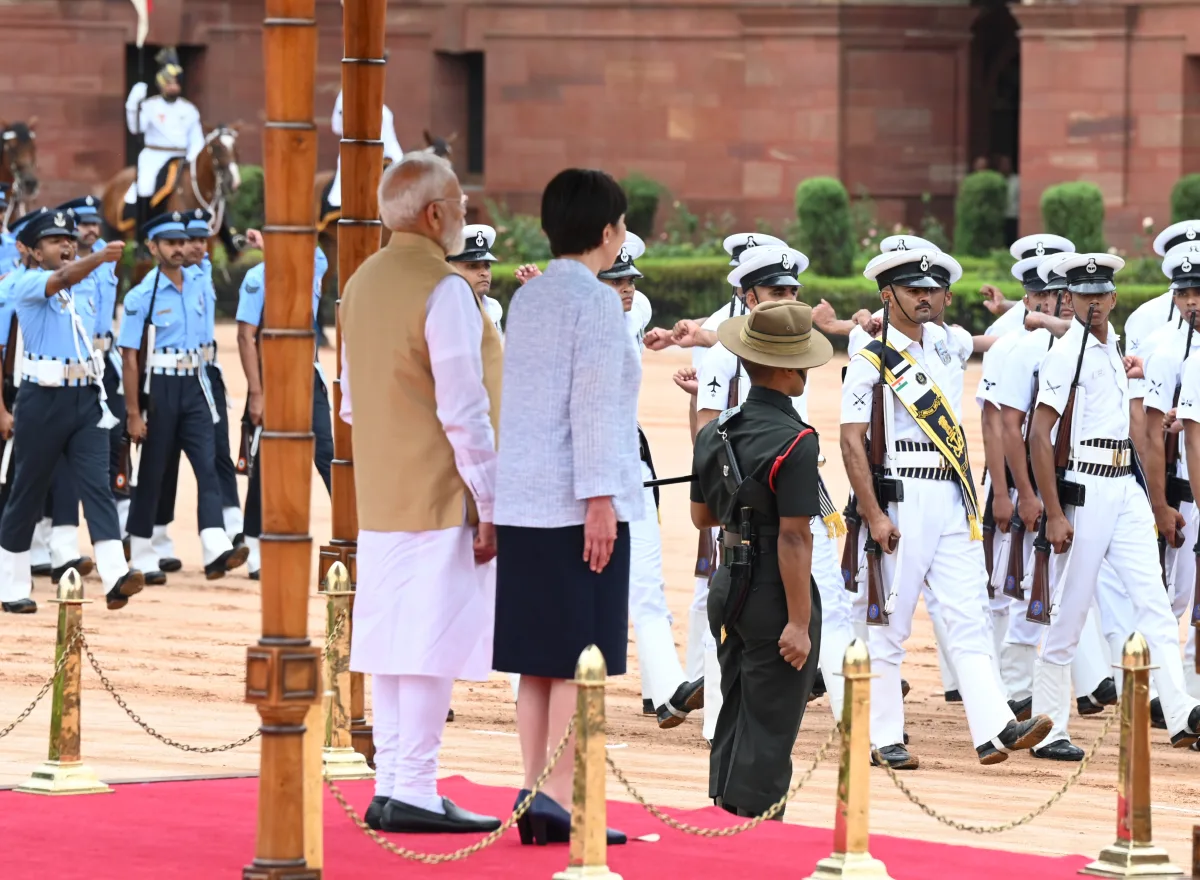
It is this shift, from ceremony to negotiation, which has structured all the summits held in the Indian capital since 1974. Hyderabad House never welcomes a foreign dignitary in the first place. He receives it second, once the republican solemnity has been consumed elsewhere.
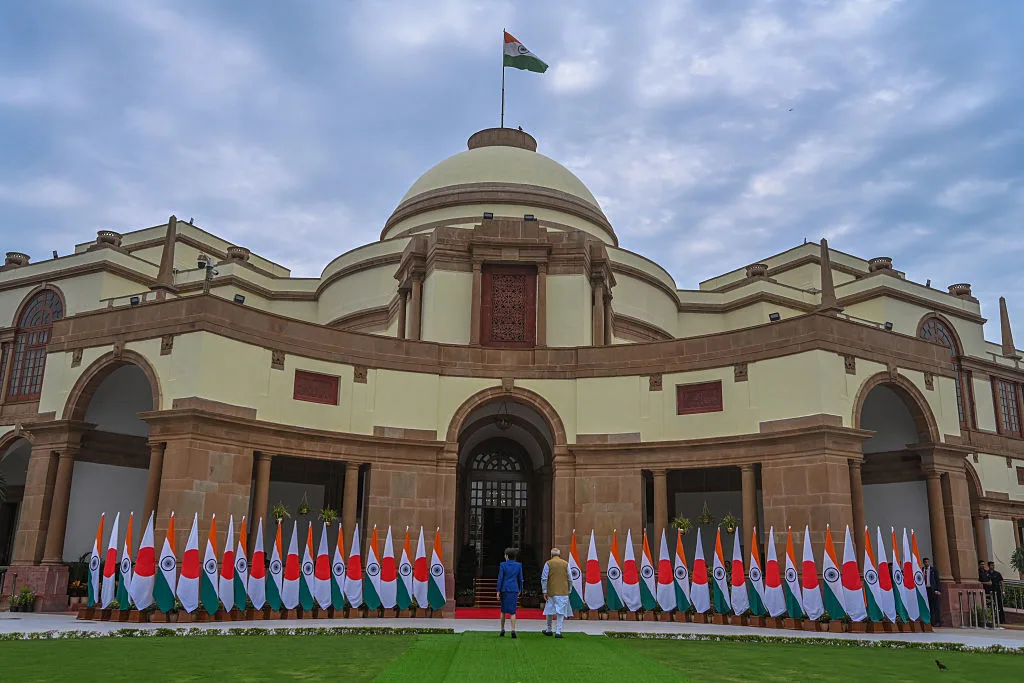
Eleven thirty: the restricted room
At 11:30 a.m., Narendra Modi and Sanae Takaichi sit down in a tight format, lasting around sixty minutes. This choice of format is not cosmetic. The small group makes it possible to address the most sensitive subjects, in particular the defense co-development file, before opening to the enlarged delegations. Discretion always precedes staging.
At 12:35 p.m. the plenary meeting opens, lasting around thirty minutes, where the full delegations meet. It is in this interval that the final architecture of the sixteen agreements that the two heads of government are preparing to make public is being negotiated.
The afternoon of storytelling
Next comes the most visible sequence of the protocol: joint press conference, signing of agreements, in the reception rooms of Hyderabad House. This is the moment when corridor diplomacy becomes an official document. Three strategic texts form its backbone: a joint declaration on economic security, a text on cooperation in artificial intelligence, a third on energy resilience. To these three pillars are added sixteen memorandums, including an unprecedented defense co-development agreement, relating to a naval radio antenna system.
At the same time, the India-Japan Economic Forum is being held, where one hundred and fifty Japanese companies sign nearly one hundred and twenty-nine bilateral agreements. The figure deserves to be stated without emphasis: twelve and a half billion dollars in commitments announced on the same day as the State signing. The political summit and the economic summit take place in mirror images, in the same city, on the same protocol day.
7 p.m.: measured informality
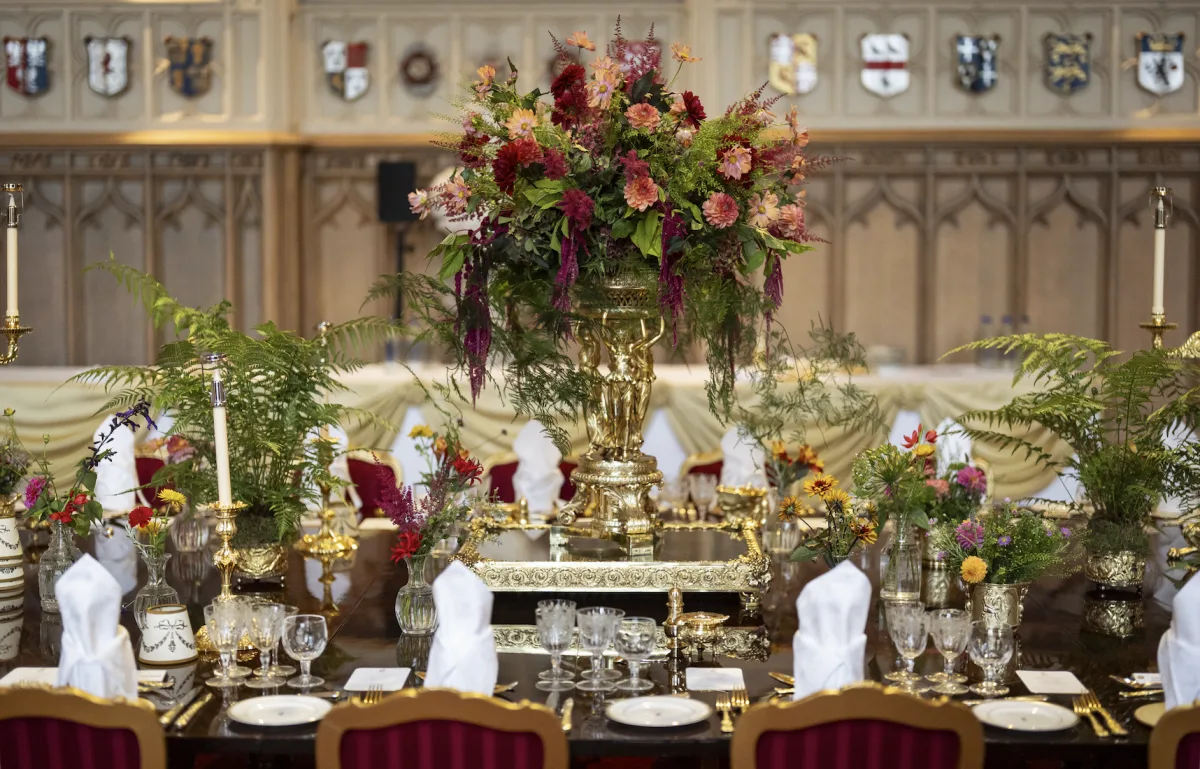
The evening dinner ends the day, and it is perhaps the most revealing detail of the file. The Japanese government explicitly describes it as informal. This word is not an accident of translation. It signals a private format, without outside guests, distinct from the classic state banquet. An hour and a half of conversation, devoted to bilateral relations, the international situation, and the respective cultures of the two nations.
This distinction between state banquet and informal dinner constitutes a protocol lesson in its own right. It reminds us that the same place, on the same day, can host radically different ceremonial registers: the pageantry of the court of honor in the morning, the solemnity of the signing in the afternoon, diplomatic intimacy in the evening.
What the day reveals
Hyderabad House is not just a setting. It is a sequencing instrument. Each hour of the day on July 2, 2026 corresponds to a distinct protocol register, and this gradation, from public ceremony to private conversation, constitutes in itself a diplomatic language. A summit is never about what is signed. It is also read in the order in which things took place.