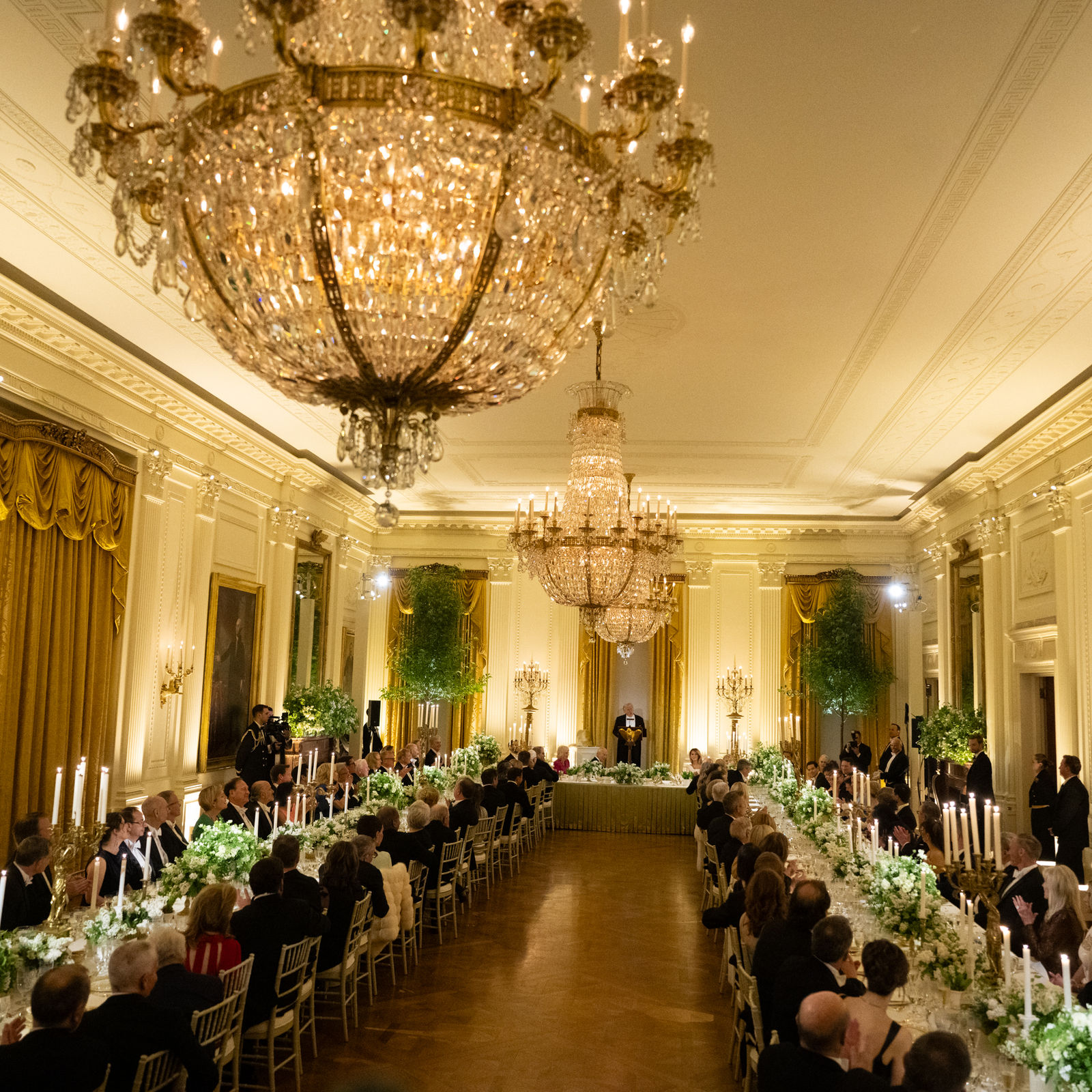
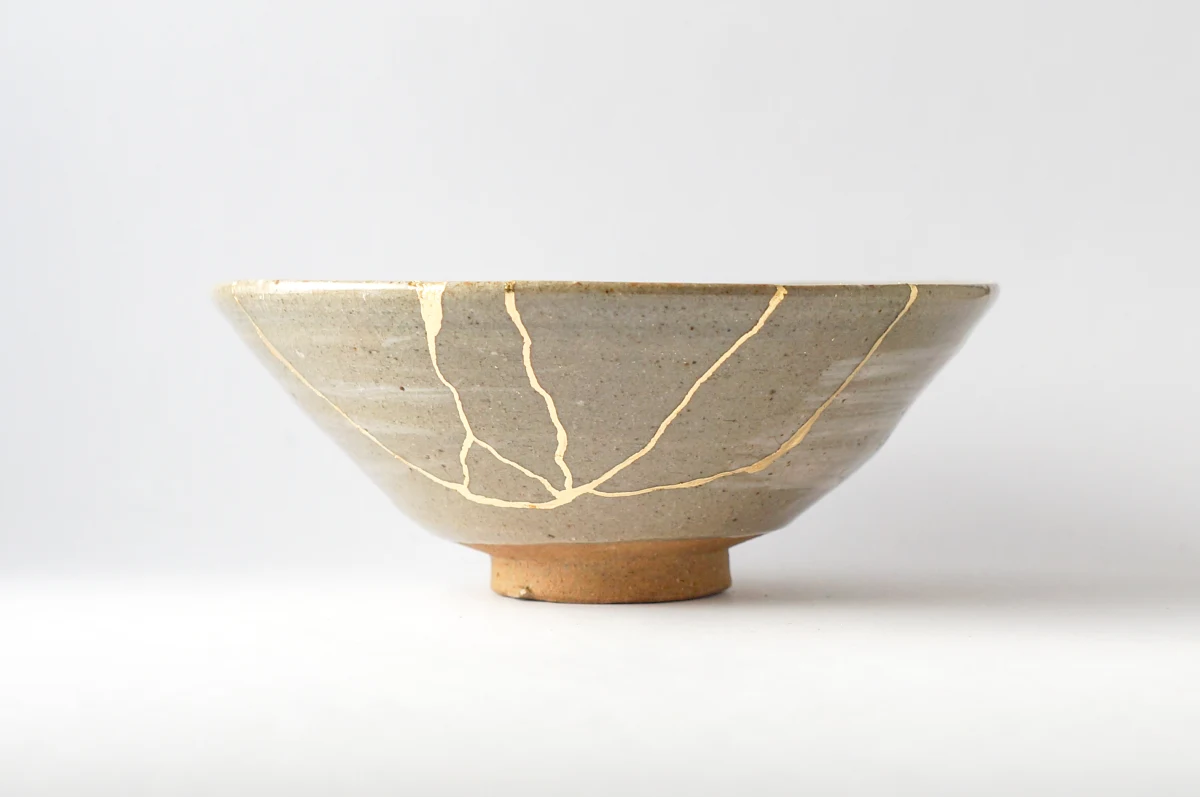
A Korean rice bowl became Japan’s most revered treasure. A banquet served to sixty sovereigns and heads of state went down as a symbol of blindness. Between the two, a single lesson for everyone who lays an official table: greatness lies not in the price of things but in their truth.
In Kyoto, in a small sub-temple of the Daitoku-ji, rests a bowl that almost nobody sees. It sleeps inside several nested boxes, wrapped in silk. It is called the Kizaemon Ido. In the sixteenth century, Korean country potters threw it for household use, perhaps as a simple rice bowl. No gilding, no decoration. A slightly uneven clay, a glaze that has taken on the colour of time. Japanese tea masters loved it for that rustic simplicity. In 1951, Japan designated it a national treasure. This bowl is not worth what it costs. It is worth what it is.
Persepolis, or Borrowed Splendour
October 1971. The Shah of Iran celebrates 2,500 years of the Persian monarchy at the foot of the ruins of Persepolis. Kings, queens and presidents arrive from all over the world. A city of tents has been designed by French decorators. The uniforms of the imperial household are by Lanvin, the porcelain comes from Limoges. The Paris restaurant Maxim’s closes its doors for nearly two weeks to cater the banquet.
On the evening of 14 October, the menu is a masterpiece of French cuisine: mousse of crayfish tails, rack of lamb, roast peacock stuffed with foie gras, and the greatest wines of Bordeaux and Burgundy. Only one element comes from Iran: the caviar. Six hundred guests dine for five and a half hours. The Guinness Book of Records would later rank it the longest and most lavish official banquet in modern history.
Before the celebration, the Shah answered his critics with irritation: was he supposed to serve fifty heads of state bread and radishes? But the Western press savaged him for throwing such an extravagant party while much of his people lived in poverty. From exile, Ayatollah Khomeini accused everyone who took part of treason. Historians still debate how much the celebration really weighed in the fall of the monarchy eight years later. But it has lived on in memory as a disaster.
The mistake was not the luxury. Persepolis was a setting of unheard-of authenticity: the very stones of the Persian Empire. The mistake was that the table spoke another language. To celebrate 2,500 years of Iranian history, they had served Paris.
Sophistication is not a trap. Imitation is.
Authenticity Has No GDP
It would be too easy to conclude that pomp is suspect and simplicity virtuous. The greatest houses in the world prove otherwise.
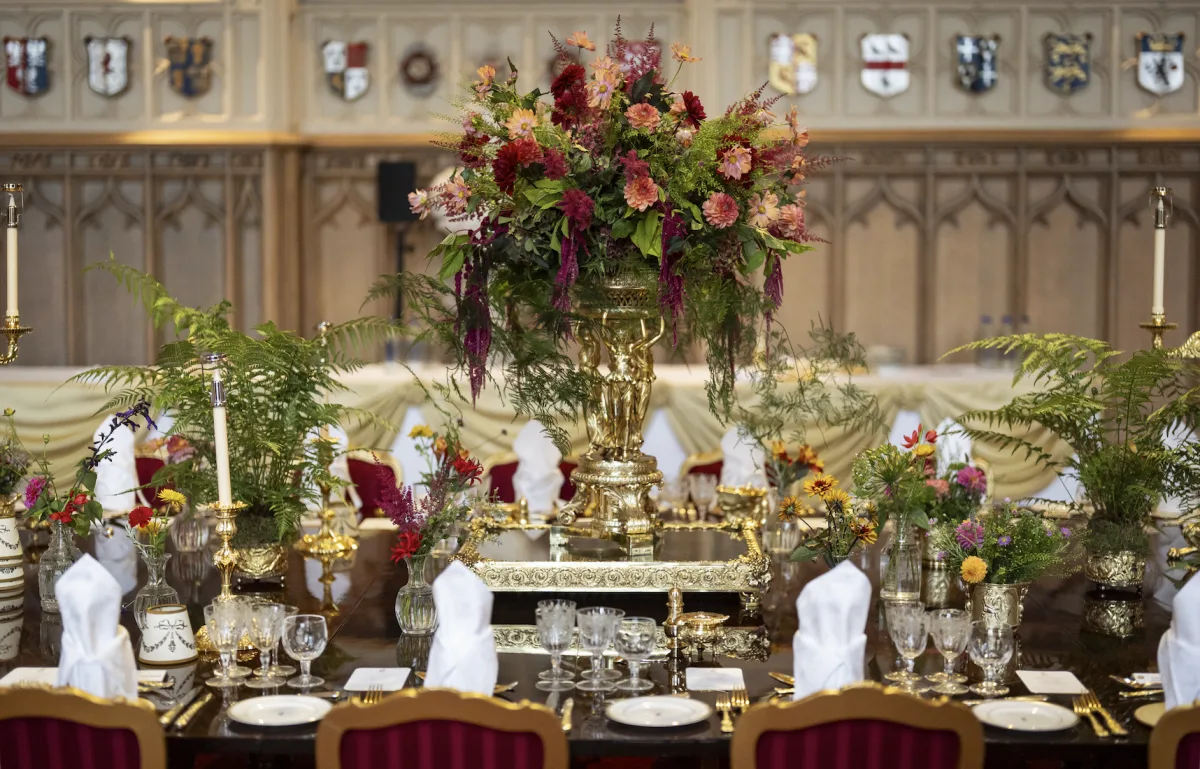
At Buckingham Palace, state banquets are laid with the Grand Service, a silver-gilt service of more than 4,000 pieces commissioned by the future George IV and first delivered in 1811. It has been used in every reign since. It takes eight people three weeks to clean it before a banquet. This is immense splendour, but it is true splendour: this goldsmiths’ work is the very history of the British monarchy, set on the table.
At the White House, in 2009, First Lady Michelle Obama planted a kitchen garden on the South Lawn. Its vegetables and herbs found their way into state dinners. For the dinner given for Germany in 2011, Native American children came to harvest traditional plants a few days before the reception. The world’s leading power chose to serve what grows at home.
And authenticity requires no budget. Arabic coffee, inscribed by UNESCO in 2015 as a “symbol of generosity”, costs almost nothing. But its ritual says everything: elders and guests are served first, the coffee is poured with the right hand, and the guest shakes his cup to signal that he has finished. In Samoa, the ʻava ceremony welcomes distinguished guests with a drink drawn from a simple root. No Limoges porcelain can match what these gestures say about those who host.
Buckingham Palace and Arabic coffee are not opposites. They stand on the same side: that of houses which serve what they are.
A table does not need to be rich. It needs to be true.
What This Changes for a Steward
For those who prepare official receptions, authenticity is not an idea. It is a method, made up of very concrete choices.
Serve your own soil. A local product, well chosen and well prepared, tells the visitor more than a perfectly copied foreign dish. The visitor has already eaten French food at home. He has come to discover yours.
Put your own craftsmen to work. A tablecloth woven in the country, ceramics from a nearby workshop, wood from the land. These objects do not need to be old to be noble. They need to be yours.
Explain what you serve. A simple dish becomes a story when the host can say where it comes from and what it means. It is often that story the guest will remember.
Choose simplicity when it is true. To remove, to pare down, to leave space is not an admission of poverty. It is a choice, provided it is owned. Simplicity that apologises looks poor. Simplicity that asserts itself looks sovereign.
A young house need not blush at not owning George IV’s silver. A great house need not give up its own. Each has the same duty: to lay its table in its own language, without submitting it to someone else’s dictionary. The Kizaemon Ido has been saying so for four centuries. It is not the object that makes the splendour. It is the truth of the one who presents it, and the eye of the one who receives it.
Sources
- Royal Collection Trust, “The Grand Service”.
- Royal Collection Trust, “A footman polishing silver at Buckingham Palace”.
- The White House (Obama archives), presentation of the White House kitchen garden.
- The White House (Obama archives), “Preparing the German State Dinner”, June 2011.
- UNESCO, “Le café arabe, un symbole de générosité”, inscribed in 2015.
- UNESCO, decision 19.COM 7.b.55, description of the serving ritual.
- Time, “Iran: The Show of Shows”, October 1971.
- Alimentarium, “The most expensive party ever”.
- Robert Steele, The Shah’s Imperial Celebrations of 1971: Nationalism, Culture and Politics in Late Pahlavi Iran, I.B. Tauris, 2021.
- Nuovi Autoritarismi e Democrazie, article on the 1971 celebrations and their reception, no. 1/2022.
- The Japan Times, “Tea bowls, simple emblems of power”, 20 November 2013.
- Louise Allison Cort et al., “National Treasure Tea Bowls as Cultural Icons in Modern Japan”.
Also in our pages: Samoa: The Art of Giving What Has No Price.
Picture Credit
Japanese tea bowl. Illustrative image. © Marco Montalti / iStock / Getty Images, ref. 1280370448.