
A Desk Born of a Shipwreck
HMS Resolute, a British ship that set out in 1852 to search for Sir John Franklin’s lost expedition in the Arctic, was abandoned trapped in the ice, then found and refloated by an American whaler in 1855. Washington returned the vessel to London as a token of friendship.
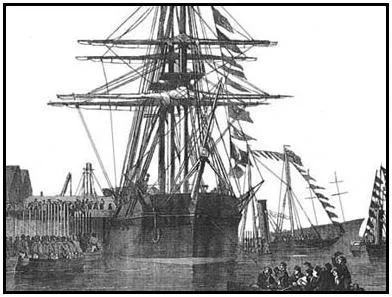
In 1880, twenty-five years later, a mysterious crate arrives at the White House: inside, a desk accompanied by a brass plaque stating that it is a gift from the Queen of Great Britain and Ireland to the President of the United States. Queen Victoria gives the American president Rutherford B. Hayes a heavy desk of carved wood. There is nothing incidental about this wood: it comes from the timbers of HMS Resolute.

The British gesture answered the American one exactly, in the same material and the same spirit: to return a possession so as to make of it, once transformed, the foundation of an alliance. The desk, known as the Resolute desk, still serves today as the presidential desk in the Oval Office. No other state gift will have known such functional longevity: most diplomatic presents end up in a museum or a storeroom. This one continues to bear, literally, the weight of American executive power.
Porcelain as an Instrument of Peace
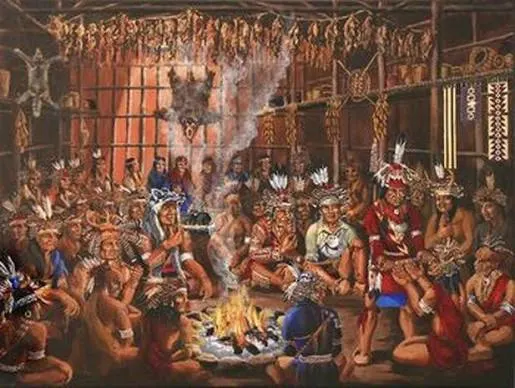
In 1807, Napoleon I and the tsar Alexander I meet on a raft anchored in the middle of the River Niemen, at Tilsit, to sign a peace treaty that reshuffles the map of Europe.
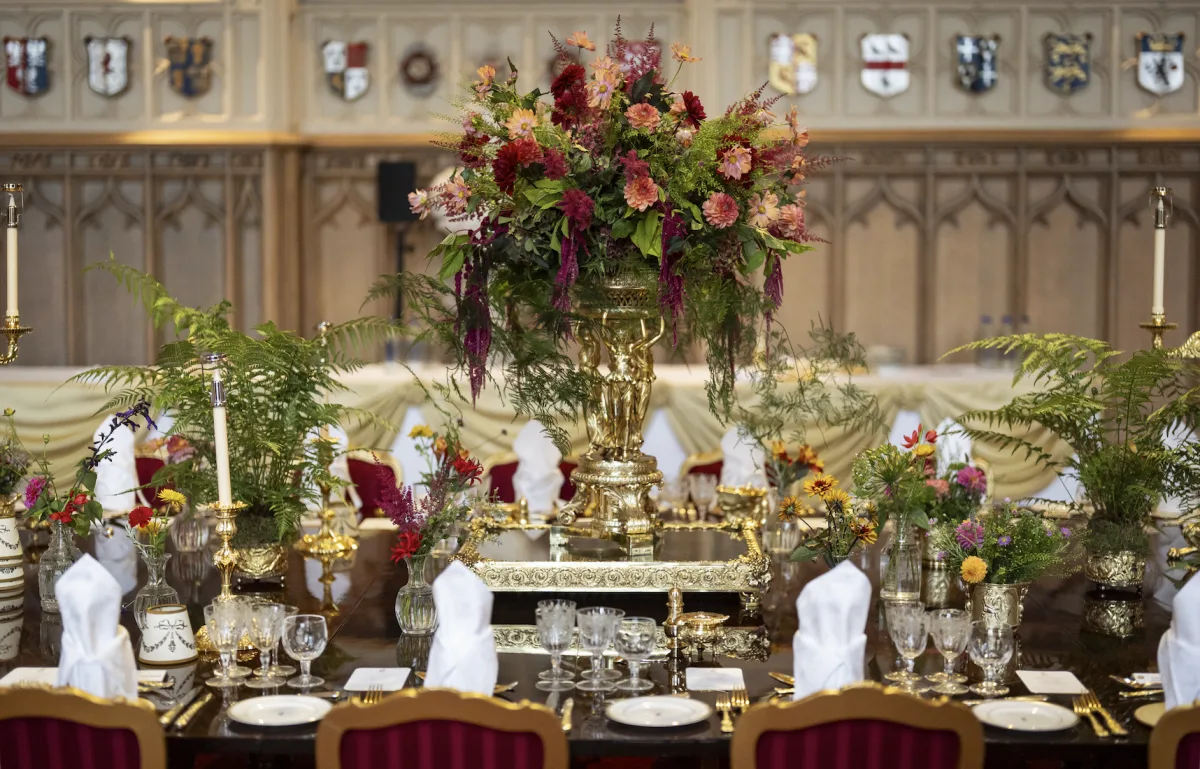
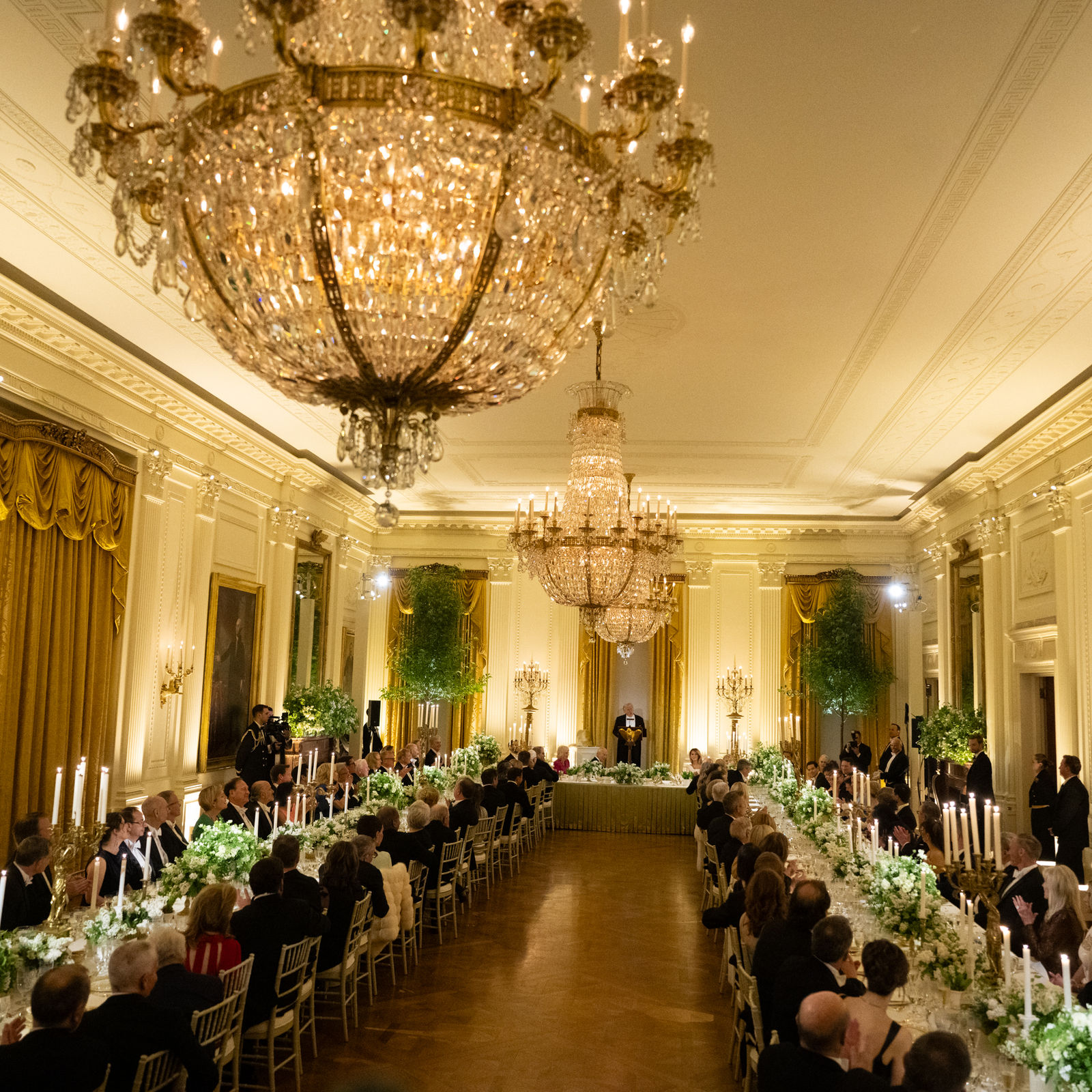
The following year, nine large crates from Paris arrive in Saint Petersburg: they contain a dessert service produced by the imperial porcelain manufactory of Sèvres, known as the “Olympic Service.”

That same year, Napoleon also gives the tsar a second service, called the Egyptian service, decorated after the surveys Vivant Denon had made during the Egyptian campaign. The choice is anything but decorative: since Louis XV, Sèvres porcelain has served as a French state gift, and Napoleon systematically amplifies this practice to assert, through the table, the power of a still-young empire.

A Statue Too Large for a Single Gift
The Statue of Liberty is given by the French people to the Americans at the initiative of the jurist Édouard de Laboulaye, as early as 1865, to celebrate the centenary of American independence.
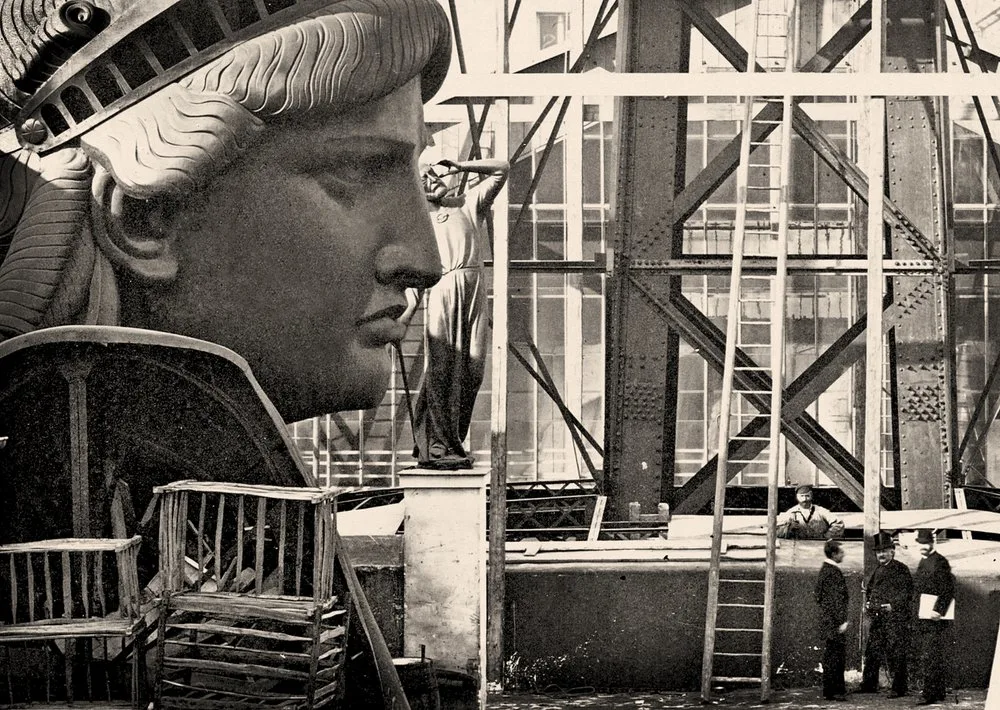
What history rarely remembers is the mechanics of the financing: the monument is paid for by a double public subscription, on either side of the Atlantic, France taking charge of the statue and the United States of its pedestal. Once completed, the statue is dismantled into 350 pieces distributed across 210 crates before crossing the ocean aboard a French frigate.
The most famous diplomatic gift in the world was therefore never a state gesture in the strict sense: it is a popular subscription that became an official monument, inaugurated in 1886 by President Grover Cleveland.
It illustrates a principle that stewardship knows well: a present of such magnitude cannot rest on the generosity of a single sovereign alone.
It requires transport logistics, an assembly site, and shared financing, without which it remains, like the statue’s head exhibited in 1878 at the Paris Universal Exhibition, an unfinished promise.
Two Pandas for Two Musk Oxen
In February 1972, Richard Nixon becomes the first sitting American president to travel to the People’s Republic of China. During an official dinner, First Lady Pat Nixon confides to Premier Zhou Enlai her admiration for the giant pandas she had seen at the Beijing zoo. He simply replies that he will give her some. Two months later, the pandas Ling-Ling and Hsing-Hsing arrive at the National Zoo in Washington, a gift from the Chinese government, sealing the resumption of relations severed for twenty-five years.

In return, the American government sends China a pair of musk oxen, a gift whose diplomatic asymmetry escapes no one: the director of the National Zoo himself would concede that musk oxen lack the charm of pandas.
This episode illustrates a discreet rule of the state gift: its value is measured not by its price but by its political rarity. China, the sole holder of wild pandas, has since the 1950s made of it a tool of foreign policy renewed at each major diplomatic rapprochement, from Japan to the United Kingdom. The animal becomes an ambassador, the stewardship of the zoo becomes a matter of state, and the animal’s upkeep, for decades, remains the responsibility of the receiving country.
The White Elephant, or the Gift That Ruins
No inventory of diplomatic gifts would be complete without its counterexample.
According to a legend widely spread since the mid-nineteenth century, the kings of Siam are said to have had the custom of giving a white elephant, a sacred animal too precious to be put to work, to a courtier fallen into disgrace: the honour of the gift masked the certain ruin that its upkeep represented. The expression passed as such into several languages to designate a present as prestigious as it is cumbersome.
This story, so often quoted, is probably an urban legend. No historical evidence supports the thesis of a punitive gift: on the contrary, these animals were considered far too precious to be given away, to the point that a king of Pegu launched a war in 1568 against the king of Siam who refused to sell him one.
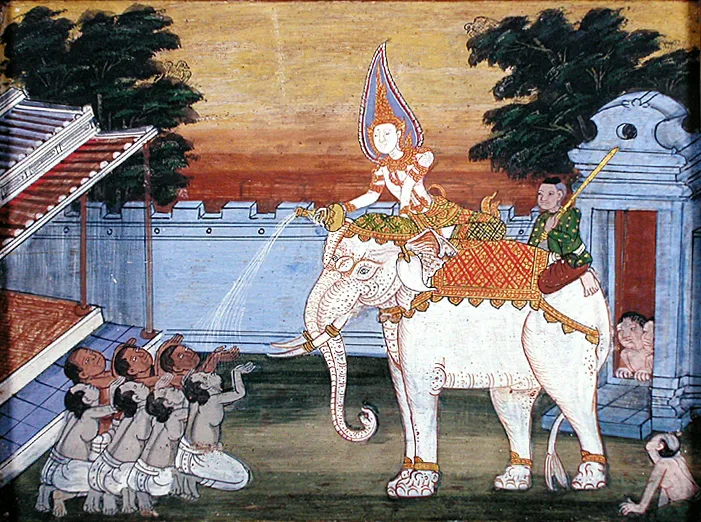
The historian Rita Ringis summed the matter up bluntly: no Siamese monarch ever regarded his white elephants as a burden, nor gave them away. The legend probably arose from a confusion with similar tales from India, peddled by Western traders in the nineteenth century.
The fifth gift on this list is therefore not an object, but a received idea about gifts themselves: it earns its place here precisely because it reminds us that in matters of protocol, popular memory sometimes invents faster than it verifies.
Sources: Wikipedia (Resolute Desk, Panda diplomacy, Statue of Liberty, Ling-Ling and Hsing-Hsing); White House Historical Association; Encyclopaedia Britannica; Persée, “The Olympic Service at the Kremlin Armoury”; napoleon.org; Wikipedia (Sèvres Egyptian Service, White elephant); History.com; wordhistories.net; Almost History Podcast.
Photo Credits:
By Gioacchino Serangeli, 1810, Museum of the History of France (Versailles) © Réunion des musées nationaux / Jean Arnaude
By Illustrated London News. Cropped version of an image that appeared in Illustrated London News. Cropped version taken from www.aforteanosla.com.
By President (1981-1989: Reagan). White House Photographic Office. 1981-1989. File URL Catalog record, Public domain, https://commons.wikimedia.org/w/index.php?curid=91394048
By Osama Shukir Muhammed Amin FRCP(Glasg) - Own work, CC BY-SA 4.0, https://commons.wikimedia.org/w/index.php?curid=55021164
By Associated Press - The Sacramento Bee, Public Domain, https://commons.wikimedia.org/w/index.php?curid=132017422
By Anonymous (Thailand). Walters Art Museum: Home page Info about artwork, Public domain, https://commons.wikimedia.org/w/index.php?curid=91068