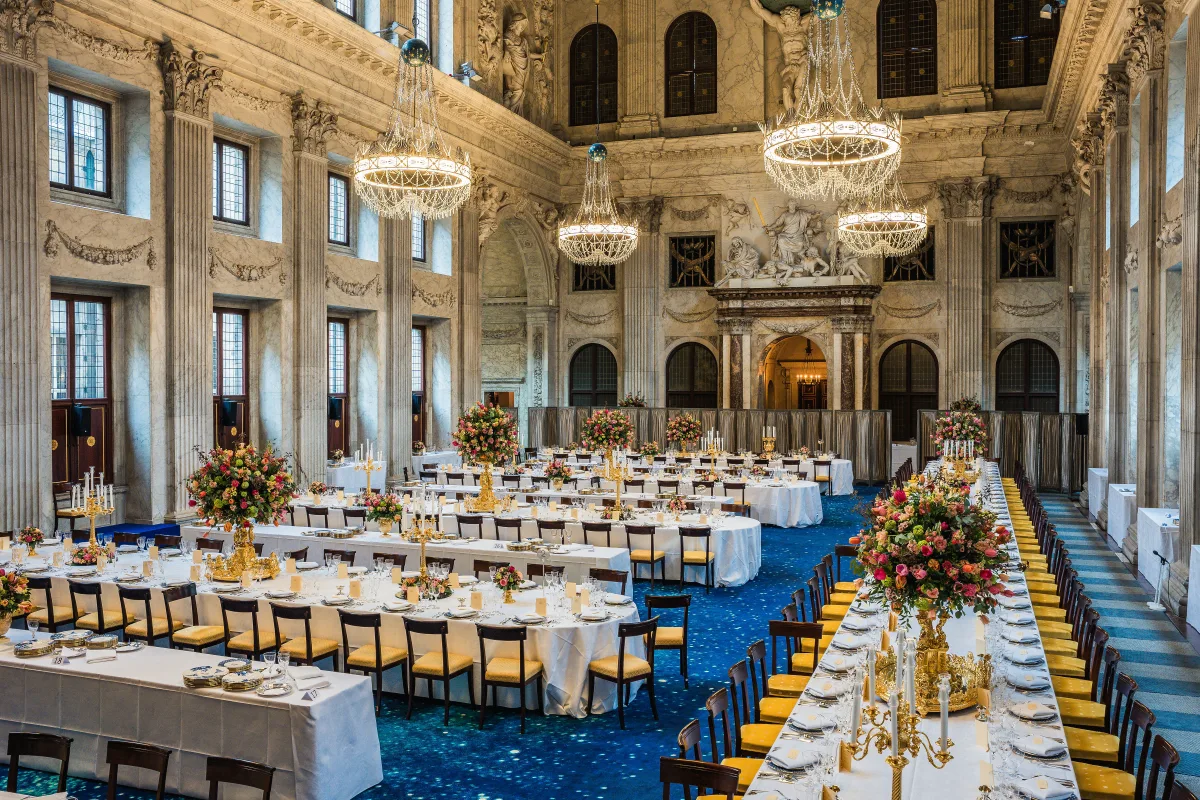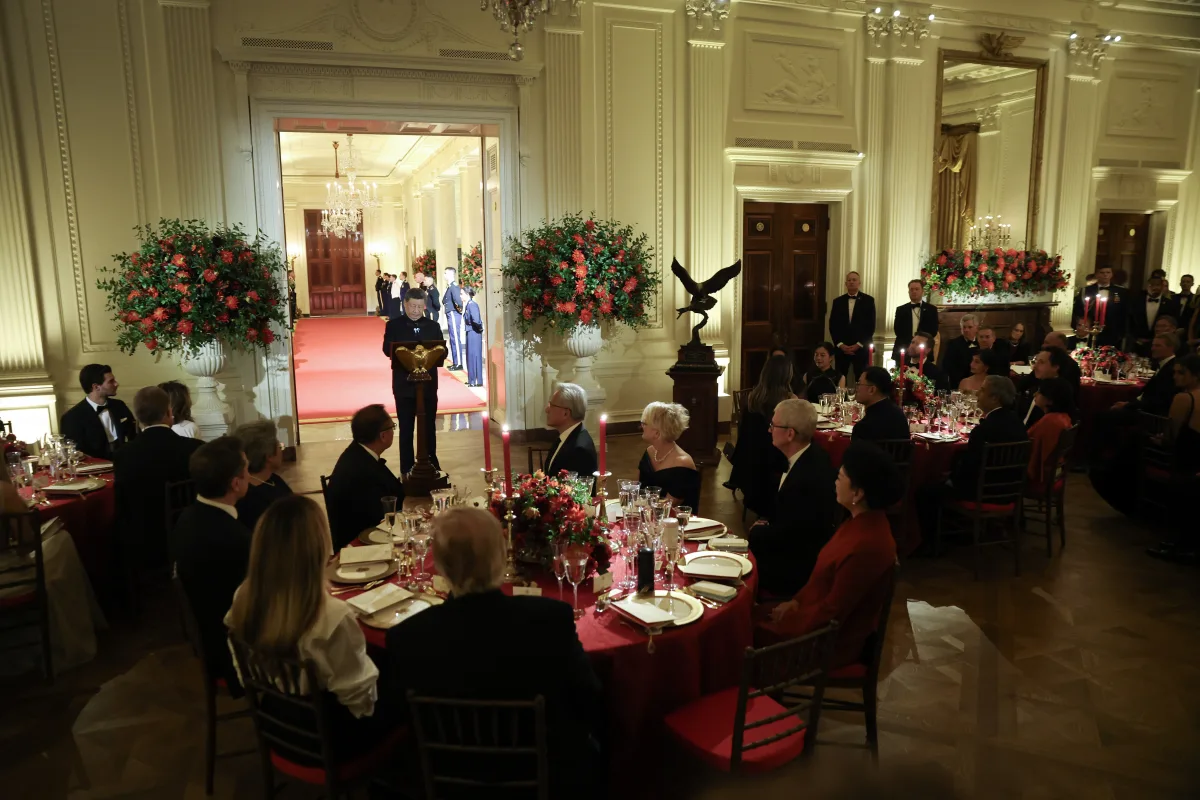
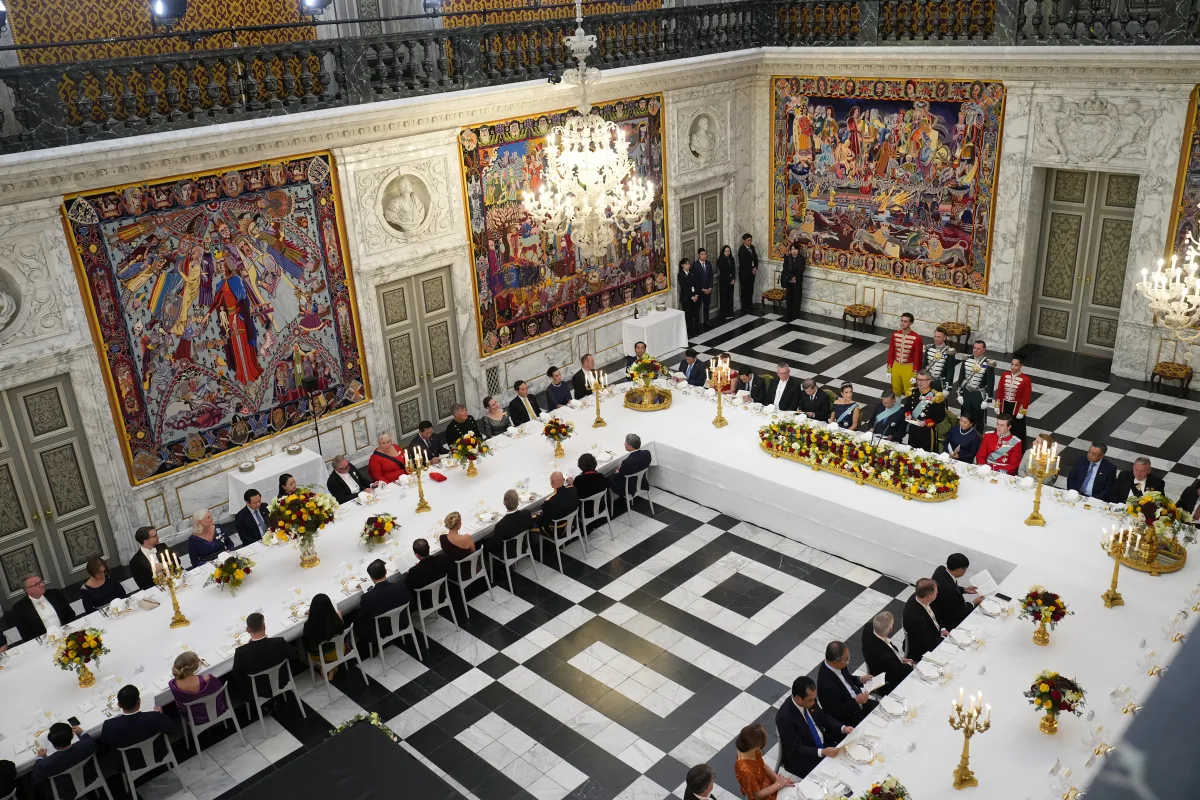
State dinner given at Christiansborg in honor of the Vietnamese president and his wife, October 19, 2026, in Copenhagen.
The red and yellow of the Vietnamese flag are also the colors of the House of Oldenburg.
For the Christiansborg banquet, the Danish Court made this correspondence the starting point for its floral decoration. The intention is specified by the Palace:
Bring the two countries together in the colors of the table.
This connection gives the reception a particular signature.
Vietnam can recognize its national emblem there, while the Danish monarchy finds there a reference to its history. The same bouquet thus sends a mark of honor to the visitor and inscribes it in the house which receives it.
Floral diplomacy takes a concrete form here. It involves knowing the guest, looking for what may be pleasantly familiar to them and translating this attention into a setting adapted to the circumstance.
An attention that is being prepared
The first choice is made before the flowers arrive. What do we want to talk about? What place should be given to the invited country? How can we inscribe this homage in a room that already has its works, its colors and its uses?
At Christiansborg, the shared palette leaves real freedom of composition. Red and yellow roses mingle with light orchids, autumn hydrangeas and foliage. The national colors remain recognizable, without imposing the shape of an emblem on the bouquet.
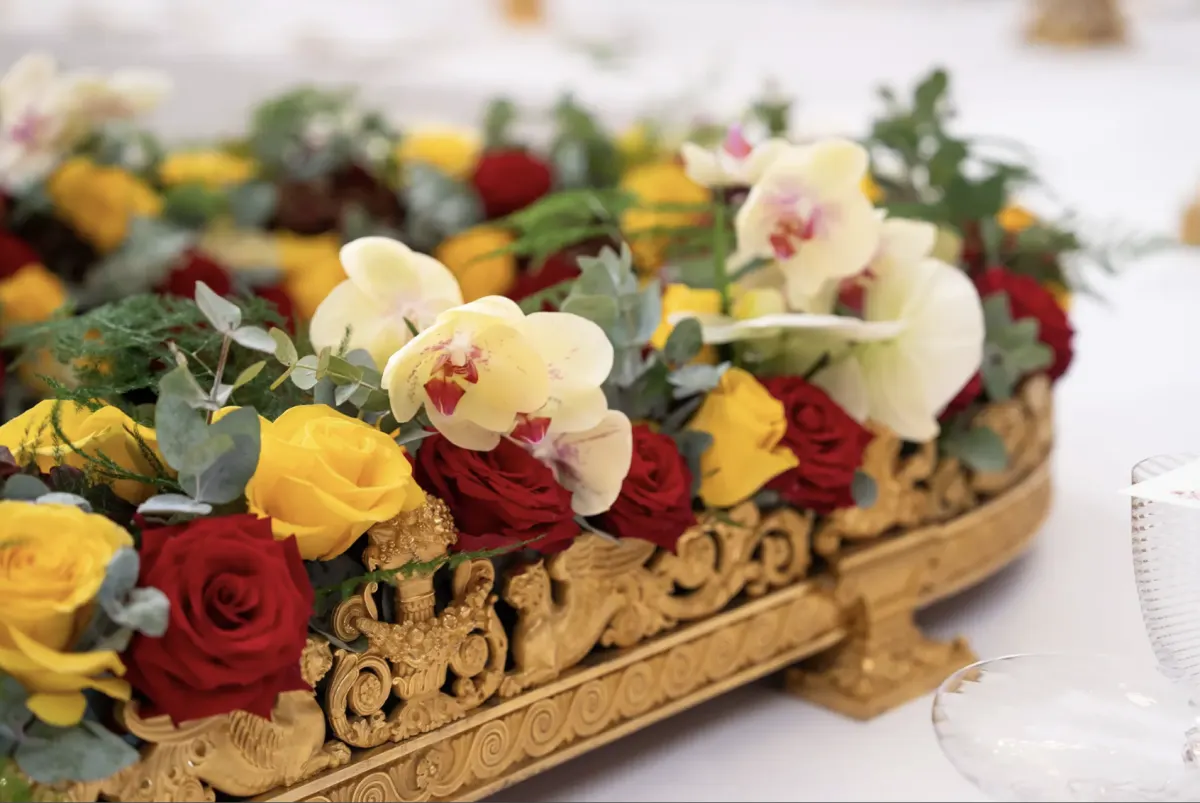
Roses and orchids make up a palette whose dominant colors evoke the Vietnamese flag and the house of Oldenburg.
Queen Mary helped choose the flowers. This involvement places flowering among the personal touches of the royal welcome. It also reminds us how a reception is constructed through decisions that seem modest when considered separately: a nuance, a material, a proportion.
However, we must remain precise about their meaning. The message of the colors is confirmed by the Court. There is no basis for attributing an additional political intention to each species. Floral diplomacy benefits from this measure: a clearly established tribute, which the know-how of florists makes perceptible.
Entertaining with household items
The compositions take place in the Frederick VI dessert service, designed by G. F. Hetsch in the 1830s for the second Christiansborg. Nearly two centuries later, these pieces are still used to welcome a state guest.
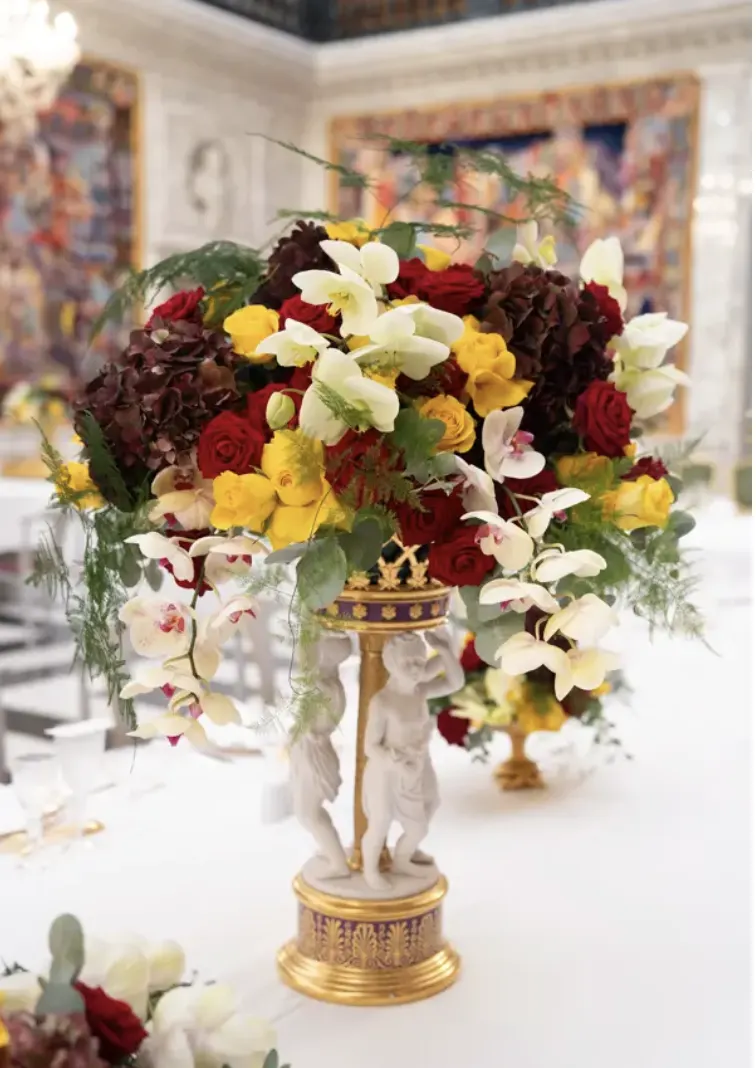
The historic pieces of Frederick VI’s dessert service host the floral arrangements of the banquet.
The choice of container gives depth to the gesture. The palace receives with the objects of its history, preserved to continue to be used. Their presence allows us to discover a heritage in the use to which this reception gives access.
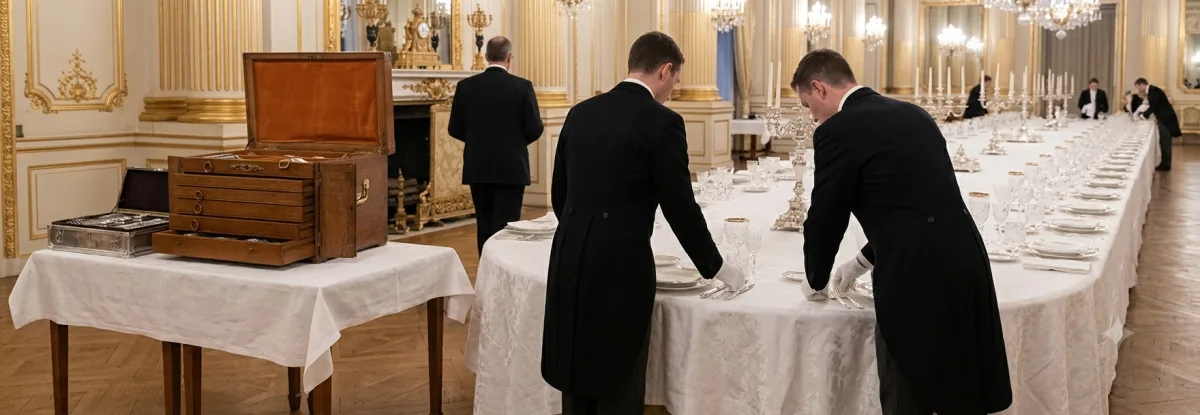
For stewardship, this meeting between ancient object and plant implies concrete requirements. Protection against humidity, stability, handling and movement must be considered from the design stage. The devices used that evening are not documented, but the constraints belong entirely to the profession.
The medium also guides creation. Its silhouette, its opening and its decoration determine the possible proportions. In the photographs, the sculpted figures remain visible under the bouquets. The flowers extend the pieces without erasing the design.
This relationship between collections and creation distinguishes palace floral art. The decor is made up of what the house has, with its history and with the responsibilities it entrusts to those who bring it to life.
Diplomacy at table height
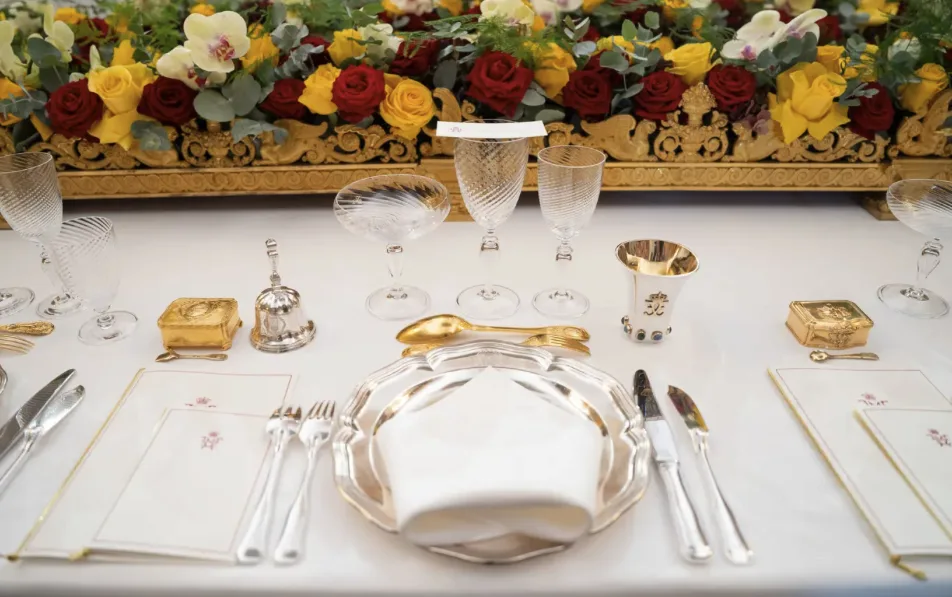
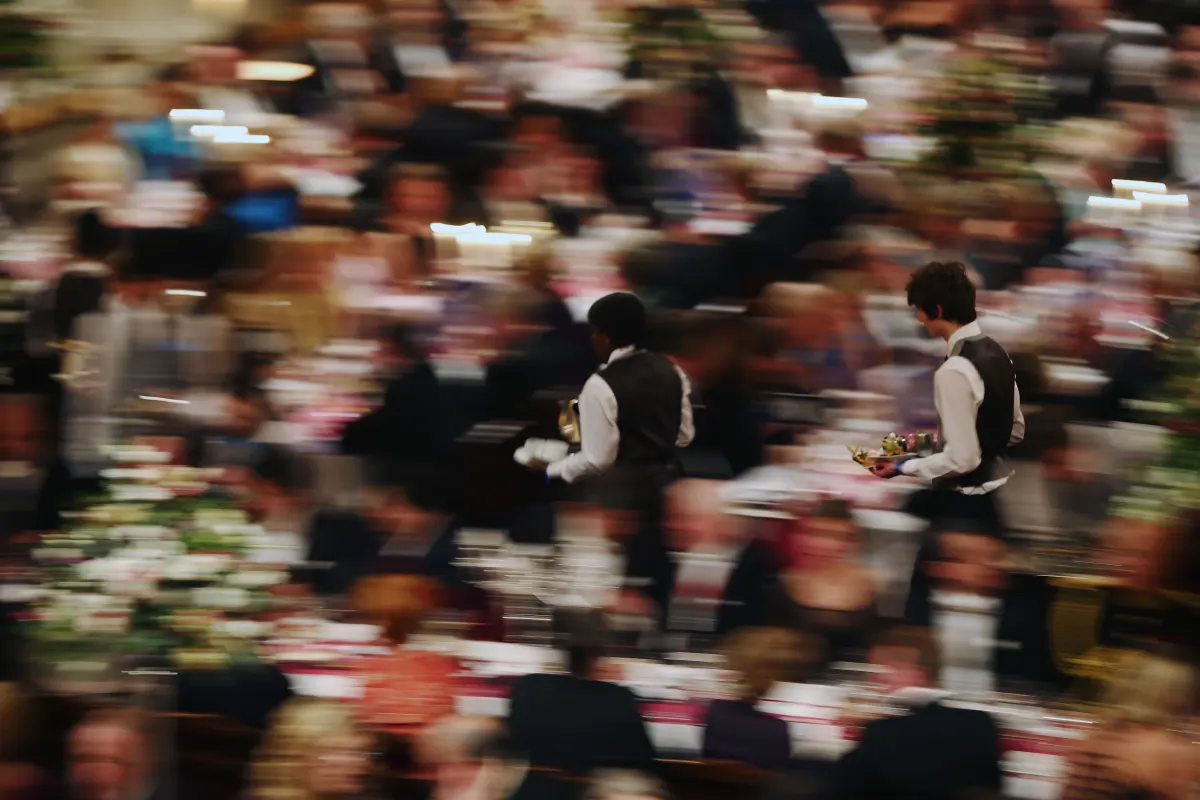
Around the place setting, the flowers share space with the glasses, the table pieces and the gestures of the meal.
A state table must allow you to converse, look at your neighbor and follow the service with ease. The quality of the flowers is also measured by this freedom given to the guests.
Height, volume and spacing therefore concern stewardship as much as florists. A successful composition from the entrance to the room can become cumbersome when you sit down. A bouquet must find its place among the glasses and candelabra, then accompany a meal during which the plates and gestures follow one another.
At Christiansborg, views of the banquet show an alternation of raised compositions and elongated groups. In front of the main guests, the flowers form a generous foreground while leaving the faces clear in the official photograph.
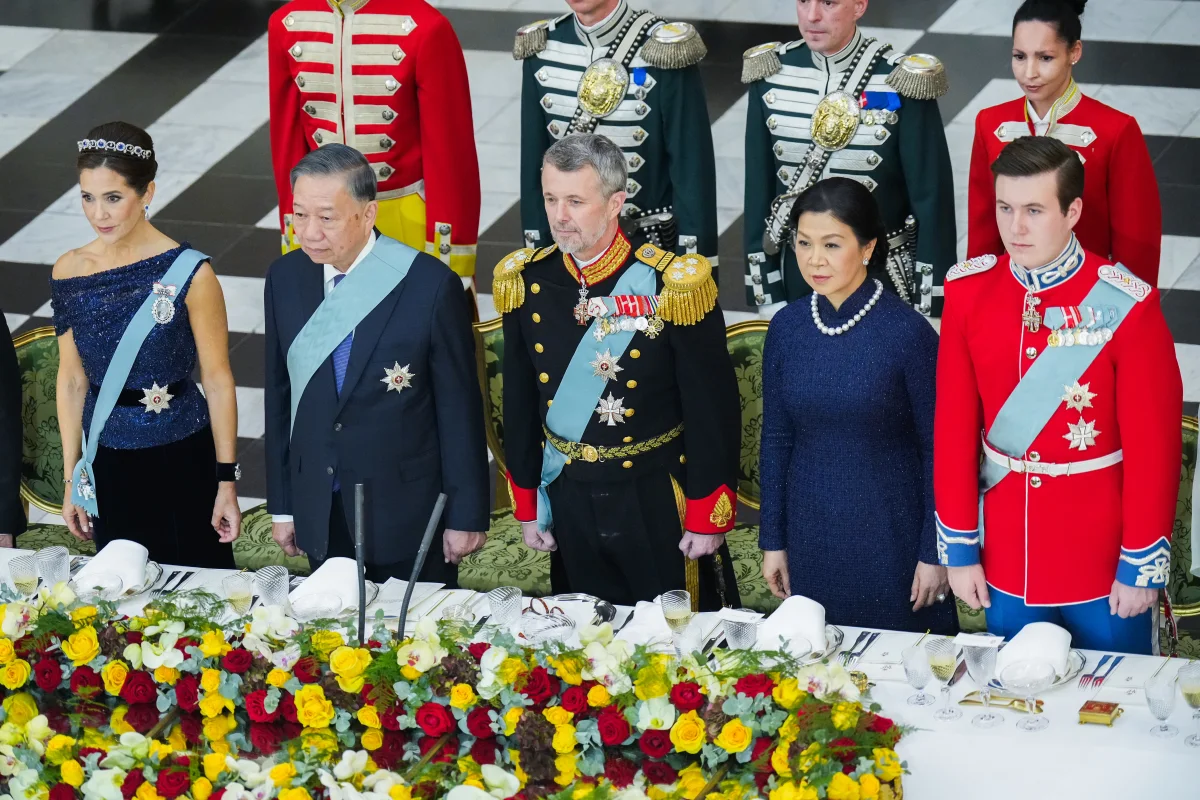
From left to right, Queen Mary, President Tô Lâm, King Frederik X, Ngô Phương Ly and Crown Prince Christian.
This photograph gives the setting a second duration. The flowers were chosen for an evening; their colors will accompany the images of the meeting well after the table has been dismantled. They now contribute to its visual identity.
One reception, several attentions
The menu and the music extend the welcome. Greenland cod, Kattegat seaweed, Gribskov mushrooms and fruits from the Fredensborg garden present guests with a geography linked to the kingdom. The musical program also includes the popular Vietnamese melody Bèo Dạt Mây Trôi.
The bringing together of these choices outlines attentive hospitality: introducing people to their products, reserving a place for the culture of others, finding colors in which everyone can recognize themselves. Gastrodiplomacy and floral diplomacy contribute to the same reception experience.
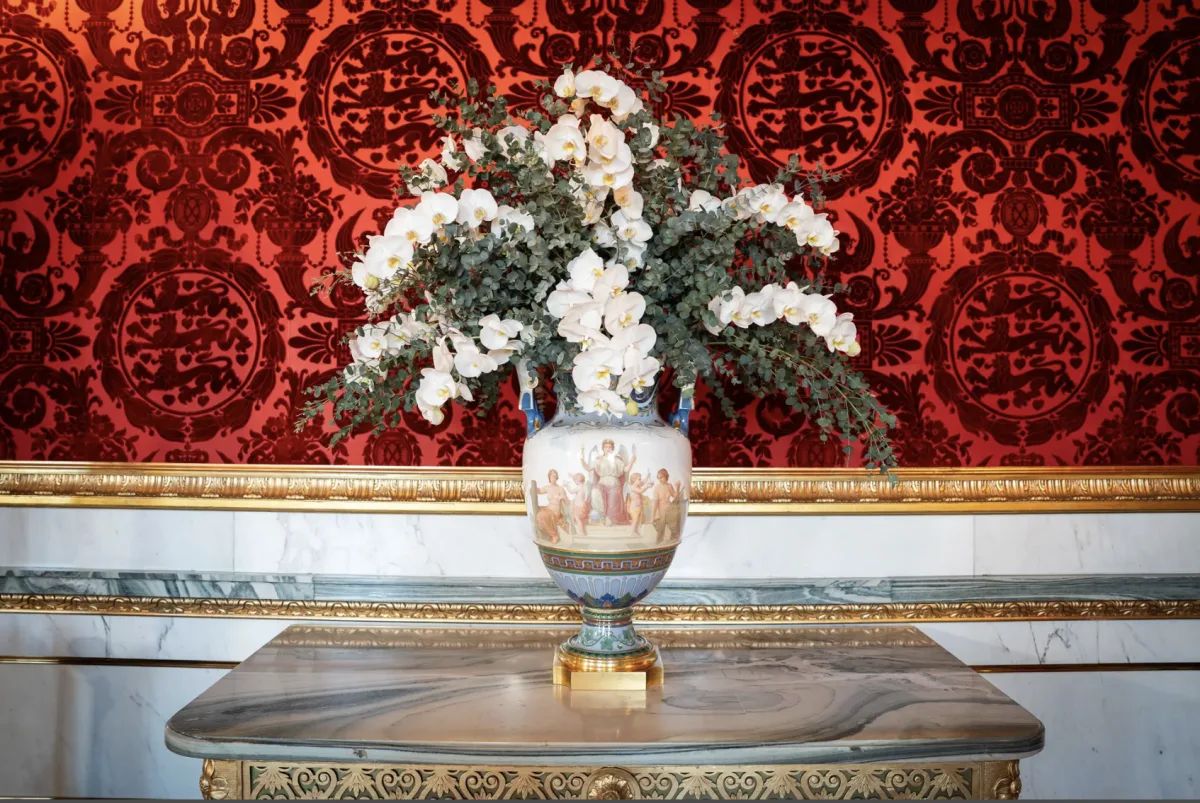
On a console, white orchids have a space which allows a larger composition than at the table.
Stewardship ensures the coherence of this whole. It links the intentions of the reception to the realities of the place, the collections available and the conditions of the service. His work allows each attention to take its rightful place.
In Christiansborg, a matching of colors found its form in flowers chosen for the occasion, arranged in old rooms, around a table set for entertaining. In front of the Vietnamese guests, red and yellow had something familiar. The palace had made room for them even in its bouquets.
Sources
- Royal House of Denmark,
floral decorations of the State Banquet on October 19, 2026
. * Royal House of Denmark,
Official Christiansborg Banquet Gallery
. * Royal House of Denmark,
. * Analysis of the layout and compositions based on the six photographs of the banquet.
Photo credits
Images 1 and 5: Martin Sylvest Andersen/Getty Images. Images 2, 3, 4 and 6: © Kongehuset.
Also read: Floral diplomacy: setting the frame, coloring the speech, holding the photo.