The dark suit also has a homeland
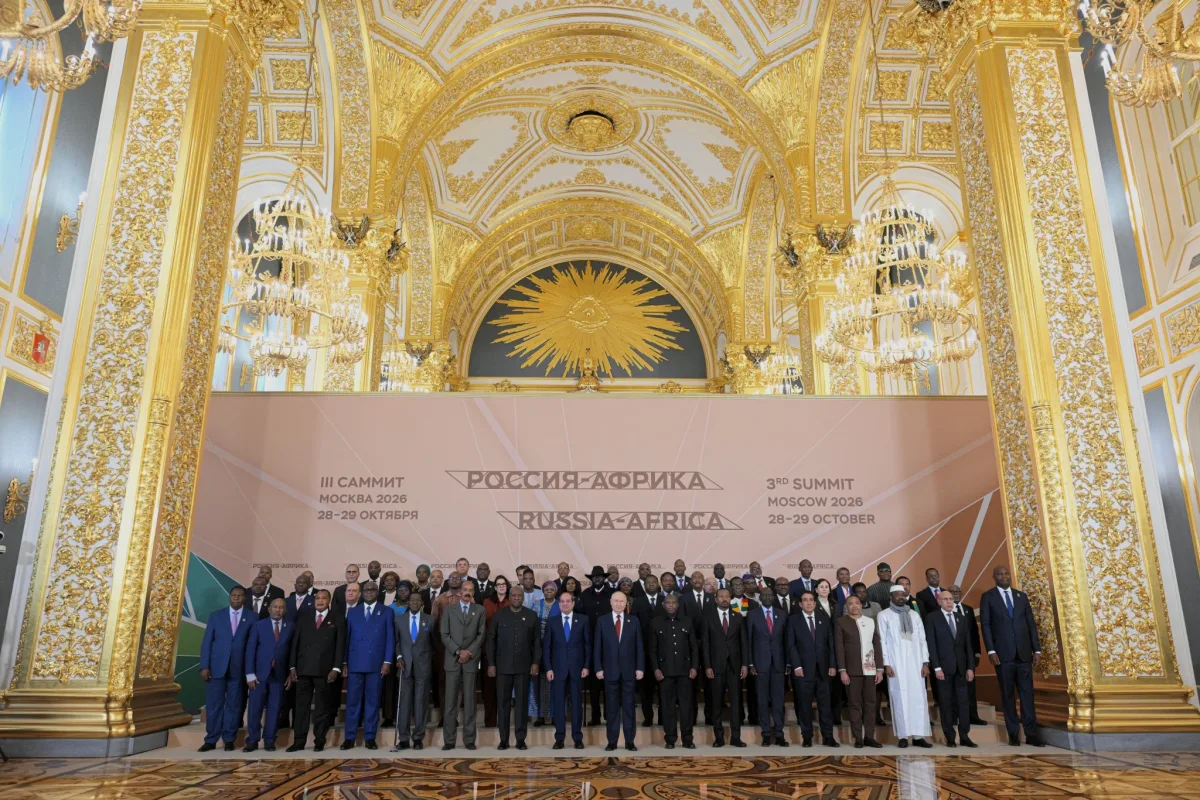
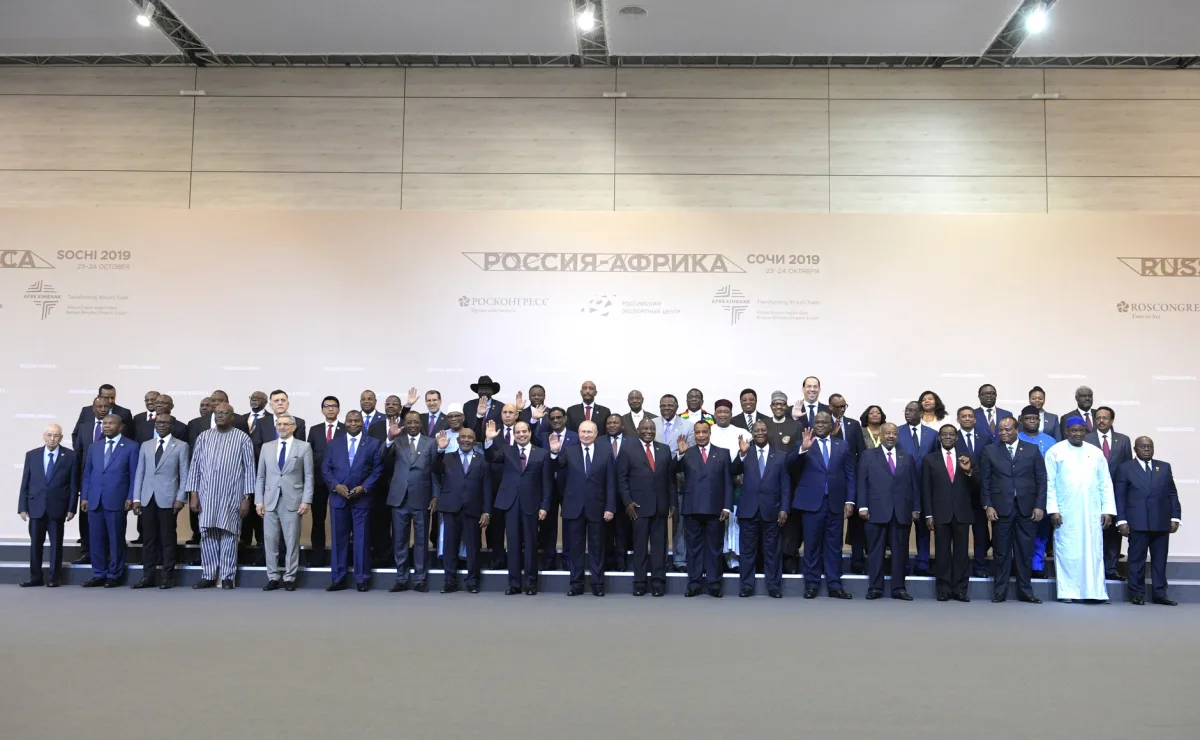
Look at a family photo from the summit. The eye first looks for what is beyond: a long dress, a turban, an embroidered cap. He forgets the dark costumes, as if they had no origin.
However, the suit and tie comes from Europe. It has become the common attire for international meetings, but it remains a cultural choice like any other.
The protocol services have known this for a long time. In 1998, the American State Department wrote bluntly in its guide for diplomats: wearing the national dress of a country instead of Western dress is sometimes appropriate. He added: “Above all, let the information on the invitation be your guide. » In other words, it’s the invitation card that decides, not the habit.
At Buckingham, the instructions given to guests at state banquets, cited by the BBC, go in the same direction: white suit and tie, evening uniform or national dress.
Windsor, two evenings, two locker rooms
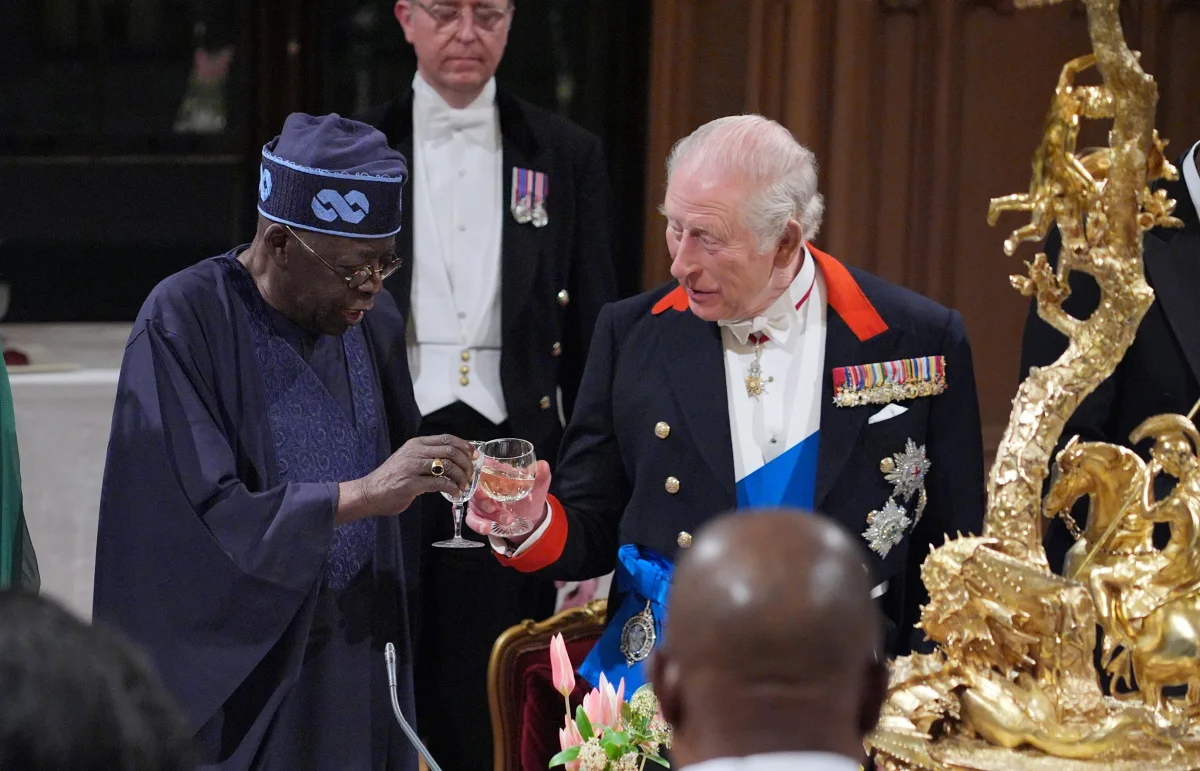
On March 18, 2026, Windsor received Bola Ahmed Tinubu. This is the first state visit by a Nigerian president to the United Kingdom in 37 years. At the banquet, the presidential couple wears traditional outfits. Opposite, the King and the Prince of Wales are in suits, white ties. The Princess of Wales chose green, the color of the Nigerian flag. That evening, everyone took a step towards each other.
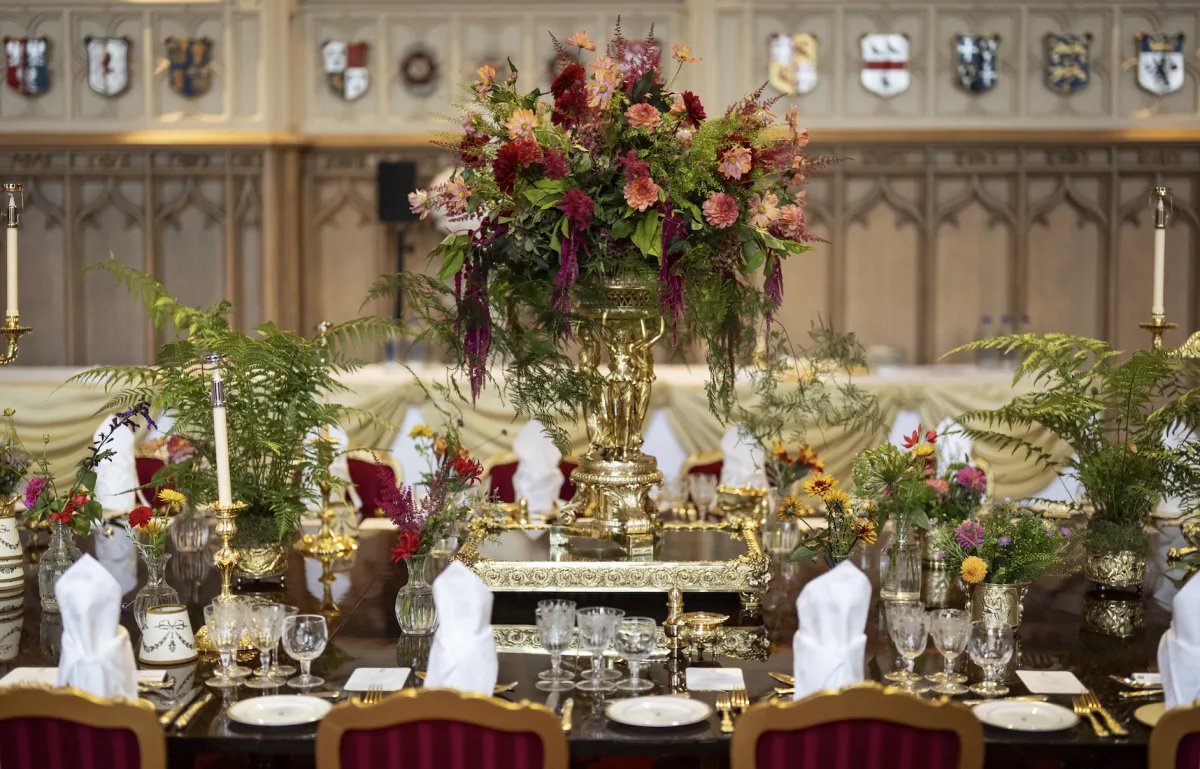
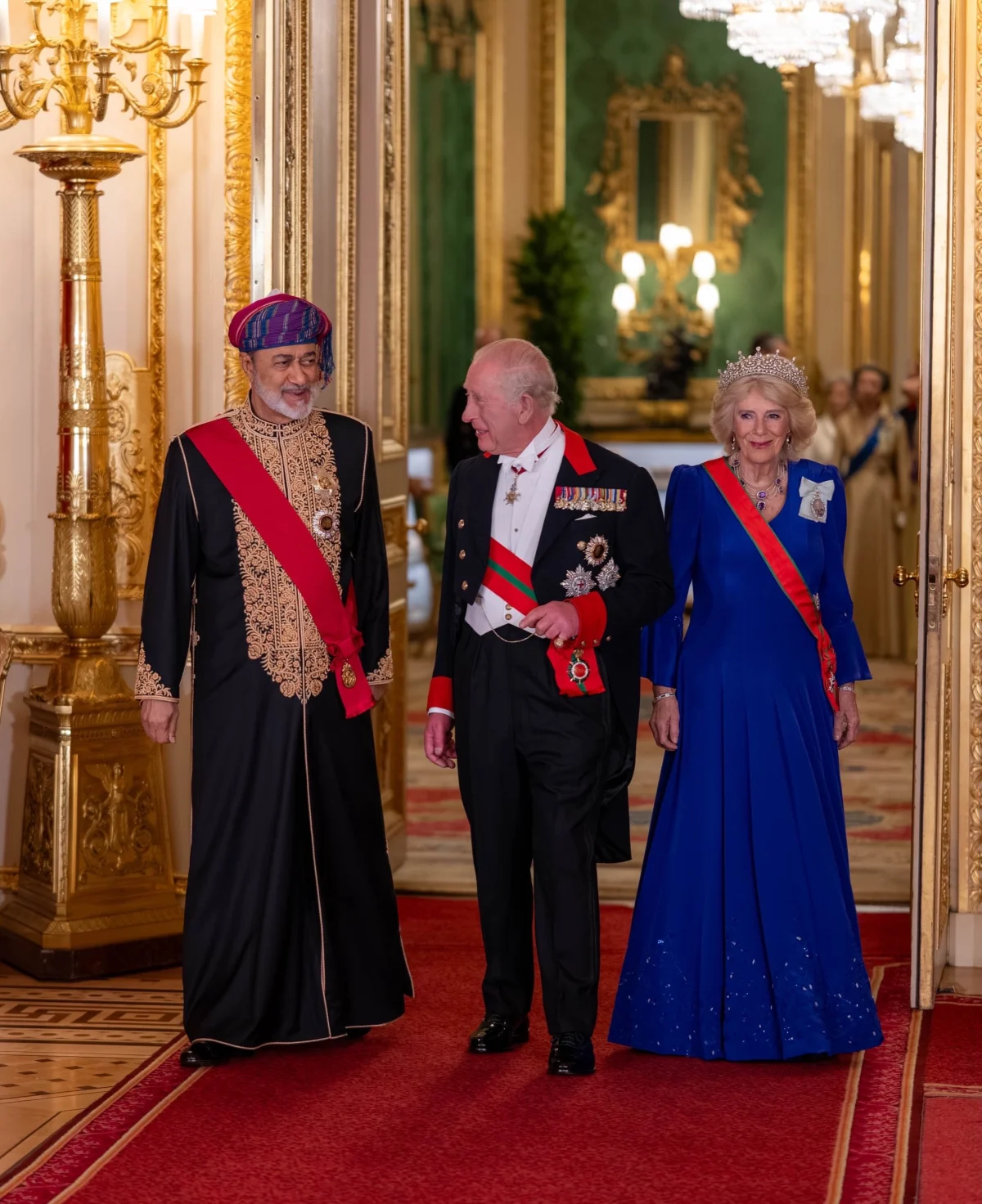
Seven months later, it was the turn of the Sultan of Oman. In the morning, he meets the king in a gray wool bisht embroidered with gold, with a white turban; in the evening, at the banquet, he wears a black velvet bisht with heavy gold embroidery and a purple and blue striped cashmere turban. This evening outfit closely resembles that of Sultan Qaboos during his 1982 visit.
Gray by day, black velvet in the evening: the Omani wardrobe distinguishes the hours, as does European clothing. Thirteen days later, in Beijing, the sultan had lunch with Xi Jinping in gray bisht, in front of the dark suits of the Chinese delegation.
Madrid, 2006: a striped sweater at the palace
On January 4, 2006, Evo Morales was not yet inaugurated president of Bolivia. He is received at the Zarzuela Palace by King Juan Carlos, wearing a chompa, a striped wool sweater. He then keeps it in Paris, in Beijing, in Pretoria.
The press is agitated. The Mexican daily Reforma speaks of a garment of discord, far from protocol. The writer José Saramago defends himself and denounces “the stupid pride of civilized countries”. In Bolivia, the response comes from the shops: a shopping center announces having sold around a hundred sweaters in three days.
For his inauguration on January 22, Morales wore a jacket designed by designer Beatriz Canedo, decorated with Tiwanaku motifs.

When the host dresses his guests
APEC took the idea further: for years, the host country dressed the leaders for the family photo. In Bogor, in 1994, President Suharto made batik the summit outfit. Then come the barong Tagalog in the Philippines, the ponchos in Chile and Peru, the ao dai in Hanoi.
In 2011, in Honolulu, Barack Obama interrupted the tradition. “I thought this may be a tradition that we might want to break,” he explains. It did not disappear, however: two years later, Bali relaunched it with endek, the island’s woven fabric.

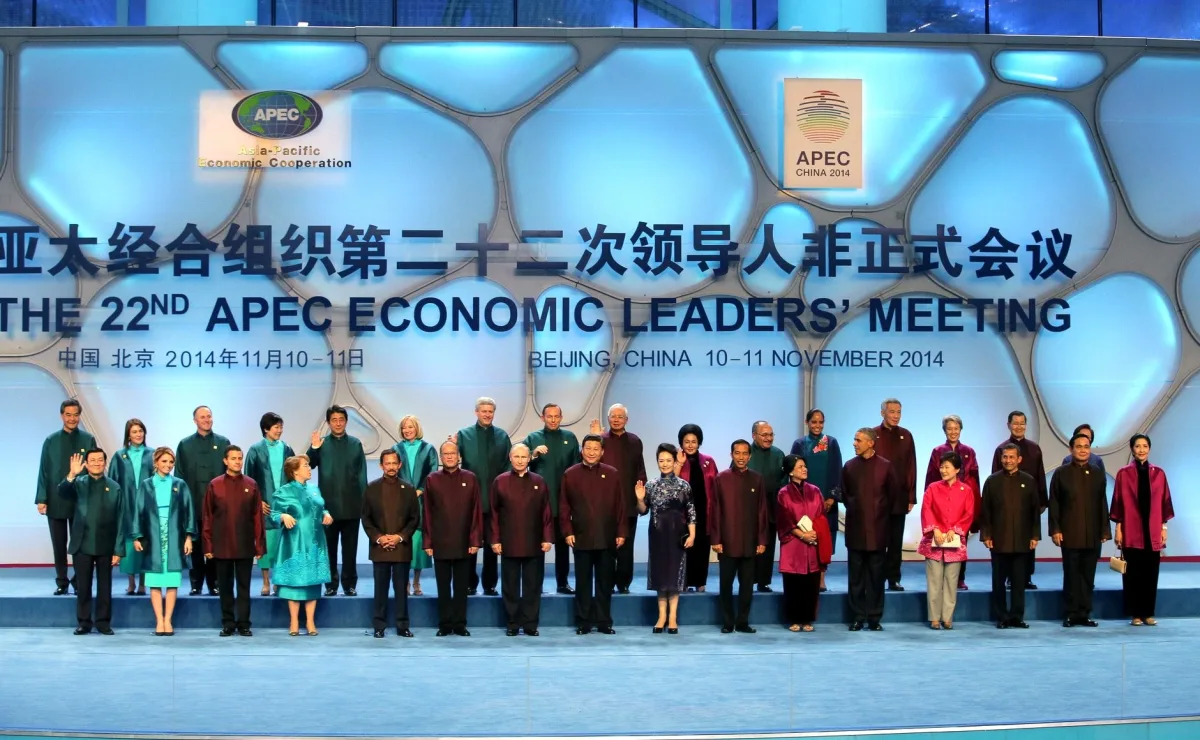
In Beijing, in 2014, China unveiled the xinzhongzhuang, the “new Chinese dress”: straight collar, crossed opening, Song brocade. Xinhua mentions 455 projects and 35 prototypes before the final choice. In Manila in 2015, designer Paul Cabral embroidered a different pattern for each leader on pineapple fiber barongs.
Xi Jinping’s right collar
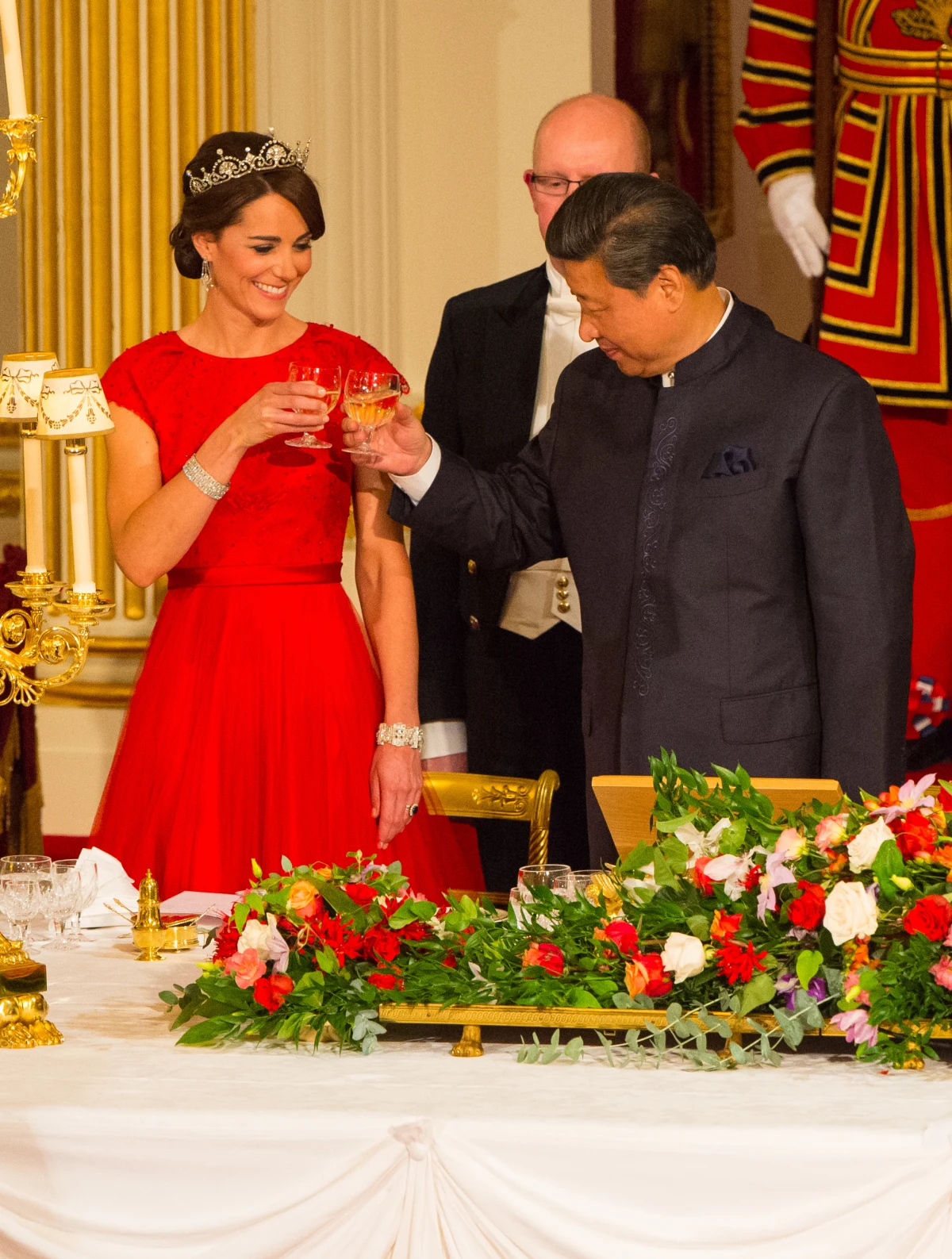
At home, Xi Jinping receives guests in a suit and tie. Abroad, when the white tie is imposed, he makes another choice.
On March 22, 2014, at the banquet at the Royal Palace in Amsterdam, he wore a midnight blue suit with a straight collar, a simplified and redesigned version of the Zhongshan suit. The Xinhua agency comments bluntly: in a tailcoat, a Chinese leader would cause his country to lose face. According to Zhou Jiali, a protocol specialist, this outfit respects international diplomatic practices while asserting a national style.
The Zhongshan itself was born from a mixture: it takes the silhouette of a Western costume by adding Chinese elements.
The guayabera, a shirt that brings people together
In 2010, Cuba made the long-sleeved white guayabera its official ceremonial outfit.
In December 2014, at the Ibero-American summit in Veracruz, Mexico proposed it to its guests. On the first day, Mariano Rajoy sits in jacket and tie. His chief of staff pointed out to him that everyone else would wear the guayabera, and the next day he adopted it. King Felipe VI chose it from the start. José Mujica, for his part, remains in a dark suit. Everyone agreed in their own way, and no one was wrong.
Hands behind the cloth
Behind each photo, there are artisans that we don’t see. In Bali, Iwan Tirta designed the 1994 batiks.
In Lima, in 2008, ponchos were coming out of Ana Teresa Freyre’s house.
In London, the tailor Dege & Skinner, on Savile Row, is a supplier to the sovereigns of Oman.
In Chile, in 2004, eight weavers from Doñihue wove the chamantos of the 21 APEC leaders. These are silk and wool capes, reversible: a dark side for the day, a light side for the evening.
SOURCES AND CREDITS
Institutional sources
- United States Department of State, “Protocol for the Modern Diplomat,” 1998: https://1997-2001.state.gov/obc/pubs/protocol.html
- APEC, “Leaders’ Official Photograph,” November 21, 2004: https://www.apec.org/Press/News-Releases/2004/1121_leadersofficialphotograph
- Ministry of Foreign Affairs of Oman, “King Charles hosts state banquet in honor of His Majesty”, October 20, 2026: https://www.fm.gov.om/en/61196/
- Ministry of Foreign Affairs of Oman, “Chinese President hosts lunch honoring His Majesty”, November 2, 2026: https://www.fm.gov.om/en/63266/
- Xinhua, comment on Xi Jinping’s outfit in Amsterdam, March 24, 2014: http://news.xinhuanet.com/world/2014-03/24/c_119901469.htm
- Xinhua, APEC Beijing outfits, November 11, 2014: https://www.xinhuanet.com/world/2014-11/11/c_1113202869.htm
Press
- Reuters, state visit of the Nigerian president, March 18, 2026: https://www.reuters.com/world/uk/king-charles-welcome-nigerian-president-uk-state-visit-2026-03-18/
- BBC, Nigerian state visit, March 18, 2026: https://www.bbc.co.uk/news/articles/cedzqqp9x2do
- The Independent, Nigerian banquet, March 19, 2026: https://www.independent.co.uk/news/uk/home-news/elizabeth-ii-windsor-castle-wales-prince-of-wales-princess-of-wales-b2941392.html
- The National, Lemma Shehadi, “Sultan Haitham mixes and matches with British style on state visit”, October 21, 2026: https://www.thenationalnews.com/news/uk/2026/10/21/sultan-haitham-mixes-and-matches-with-british-style-on-state-visit/
- Taipei Times (AFP), Evo Morales, January 14, 2006: https://www.taipeitimes.com/News/world/archives/2006/01/14/2003288976
- El País, January 20, 2006: https://elpais.com/internacional/2006/01/20/actualidad/1137711603_850215.html
- Le Monde, “After the Mao collar, here is the Evo sweater”, January 30, 2006: https://www.lemonde.fr/vous/article/2006/01/30/apres-le-col-mao-voici-le-pull-d-evo_735986_3238.html
- El País, inauguration and holding of Tiwanaku, July 21, 2007: https://elpais.com/internacional/2007/07/21/actualidad/1184968801_850215.html
- Taipei Times (AFP), Honolulu, November 15, 2011: https://www.taipeitimes.com/News/world/archives/2011/11/15/2003518382
- The Jakarta Post, Bali, September 23, 2013: https://www.thejakartapost.com/news/2013/09/23/apec-leaders-wear-balinese-endek-during-summit
- Philstar, Paul Cabral, November 9, 2015: https://www.philstar.com/lifestyle/fashion-and-beauty/2015/11/09/1520101/paul-cabral-designs-pia-barong-21-world-leaders
- San Diego Union-Tribune (AP), Lima ponchos, November 23, 2008: https://www.sandiegouniontribune.com/2008/11/23/apec-leaders-don-andean-ponchos-for-group-photo/
- China Daily, “Zhongshan suits make comeback”, March 24, 2014: https://covid-19.chinadaily.com.cn/world/2014xivisiteu/2014-03/24/content_17371951.htm
- BBC, state banquets and Xi Jinping outfit, October 20, 2015: http://www.bbc.com/news/magazine-34576551
- BBC, guayabera in Cuba, October 7, 2010: https://www.bbc.com/news/11492327
- ABC (Spain), guayaberas in Veracruz, December 10, 2014: https://www.abc.es/internacional/20141210/abci-guayaberas-cumbre-iberoamericana-201412101953.html
Specialized sources
- Humaniora (Binus University), batik and APEC 1994: https://journal.binus.ac.id/index.php/humaniora/article/view/11082/5091
- University of Leeds (White Rose eprints), study on Evo Morales’s wardrobe: https://eprints.whiterose.ac.uk/id/eprint/102201/2/What’s%20in%20your%20wardrobe-9.pdf
Photo credits (order of appearance)
- Photo 1: Windsor, the Sultan, the King and the Queen, October 20, 2026, Ministry of Foreign Affairs of Oman: https://www.fm.gov.om/wp-content/uploads/تكريمًا-لجل التِه-.-الملكُ-تشارلز-يُقيم-مأدبةَ-عشاءٍ-رسميّةً.jpg
- Photo 2: Russia-Africa summit 2019, Kremlin.ru, CC BY 4.0: https://commons.wikimedia.org/wiki/File:Russia-Africa_Summit_(2019-10-24).jpg
- Photo 3: Tinubu and Charles III, Yui Mok / WPA Pool / Getty Images, Editorial # 2266710572: https://www.gettyimages.com/detail/news-photo/president-of-nigeria-bola-ahmed-tinubu-and-king-charles-iii-news-photo/2266710572
- Photo 4: Morales and Lula 2006, Roosevelt Pinheiro / ABr, CC BY 3.0 BR: https://commons.wikimedia.org/wiki/File:Moraleslula_20060113_02.jpg
- Photo 5: APEC Bali 2013, APEC 2013, CC BY 2.0: https://commons.wikimedia.org/wiki/File:APEC_Leaders_Family_Photo_With_Spouse_(10136795774).jpg
- Photo 6: APEC Beijing 2014, Kremlin.ru, CC BY 4.0: https://commons.wikimedia.org/wiki/File:APEC_Summit_China_2014.jpg
- Photo 7: Xi Jinping at Buckingham 2015, Dominic Lipinski / WPA Pool / Getty Images, Editorial # 493455874: https://www.gettyimages.com/detail/news-photo/chinese-president-xi-jinping-and-catherine-duchess-of-news-photo/493455874