
Les Festins de Chambord: four tables through the centuries
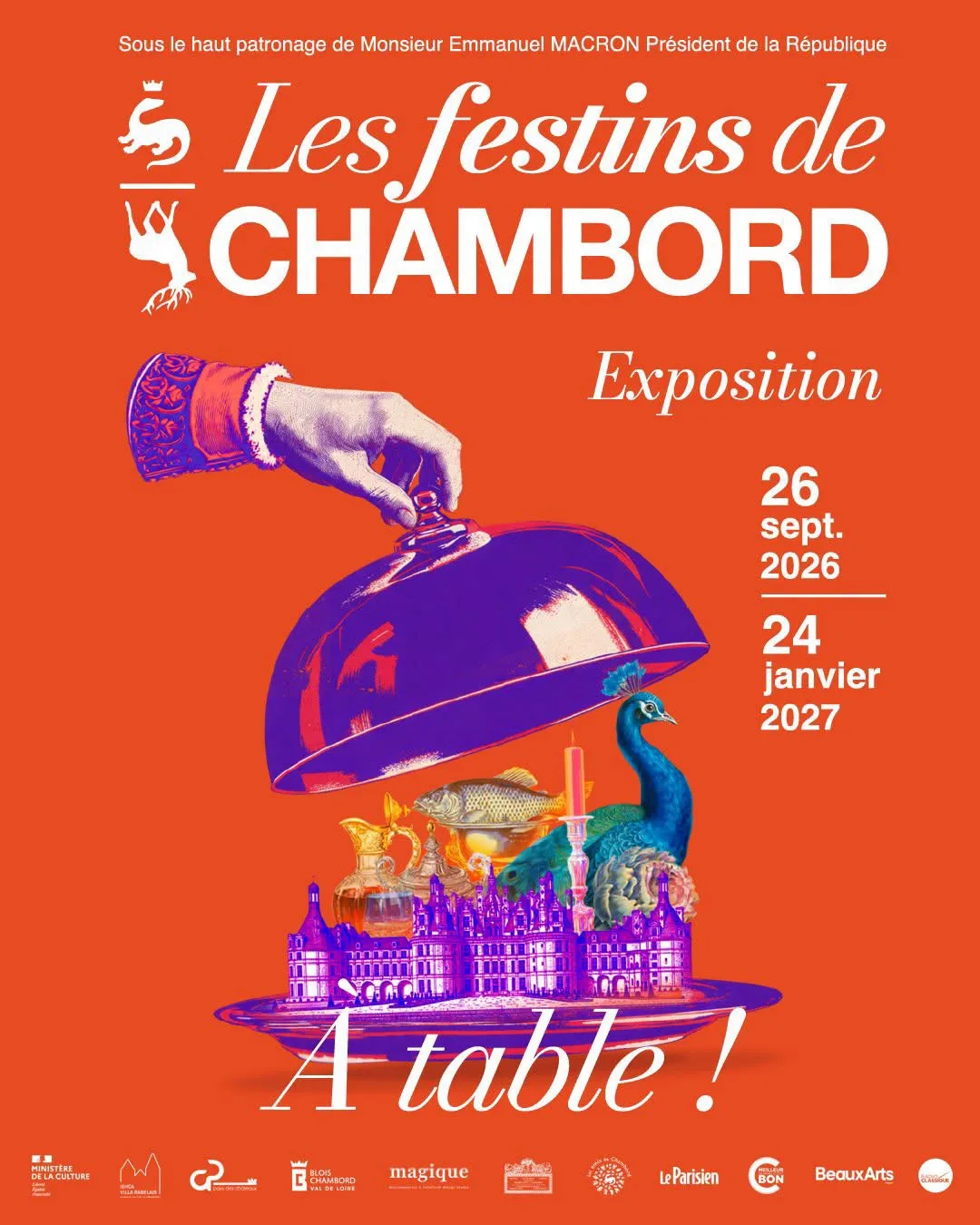
A set table is the culmination of a series of decisions that guests will never see. It was necessary to prepare the premises, gather the objects, organize the service and decide what should be eye-catching. With Les Festins de Chambord, these preparations emerge behind four scenes, from the Renaissance to the Republic.
The exhibition does not claim to tell the whole story of meals at the castle. She chooses four moments, the traces of which are sometimes abundant, sometimes very thin. This is what makes it interesting: each table reveals both the uses of its time and the way in which we can find them today.
1539: prepare Chambord for an emperor
On December 18, 1539, François I and Charles V arrived in Chambord. The preserved testimonies evoke a richly prepared castle: tapestries on the walls, flowers and herbs spread on the ground, scents in the rooms.
The dinner presented to the public is therefore an evocation. To give it shape, the exhibition draws on 16th century customs and notably recreates pieces of goldsmithing based on old drawings. Some of these pieces may never have been made at the time. They show a possible universe, not the crockery found from a dinner in 1539.

The nuance does not detract from the scene. Welcoming a guest of this rank did not only take place at the table. It began in the rooms passed through, in the decorations installed for his arrival, in the impression produced from the first steps. Before knowing what was served, we know that the castle itself had been made ready to receive.
1685: a table designed on paper
For the last stay of Louis XIV in Chambord, in September 1685, a sheet annotated by the Prince de Condé provides access to a completely different level of detail. She plans a table twenty feet long, or about six and a half meters.
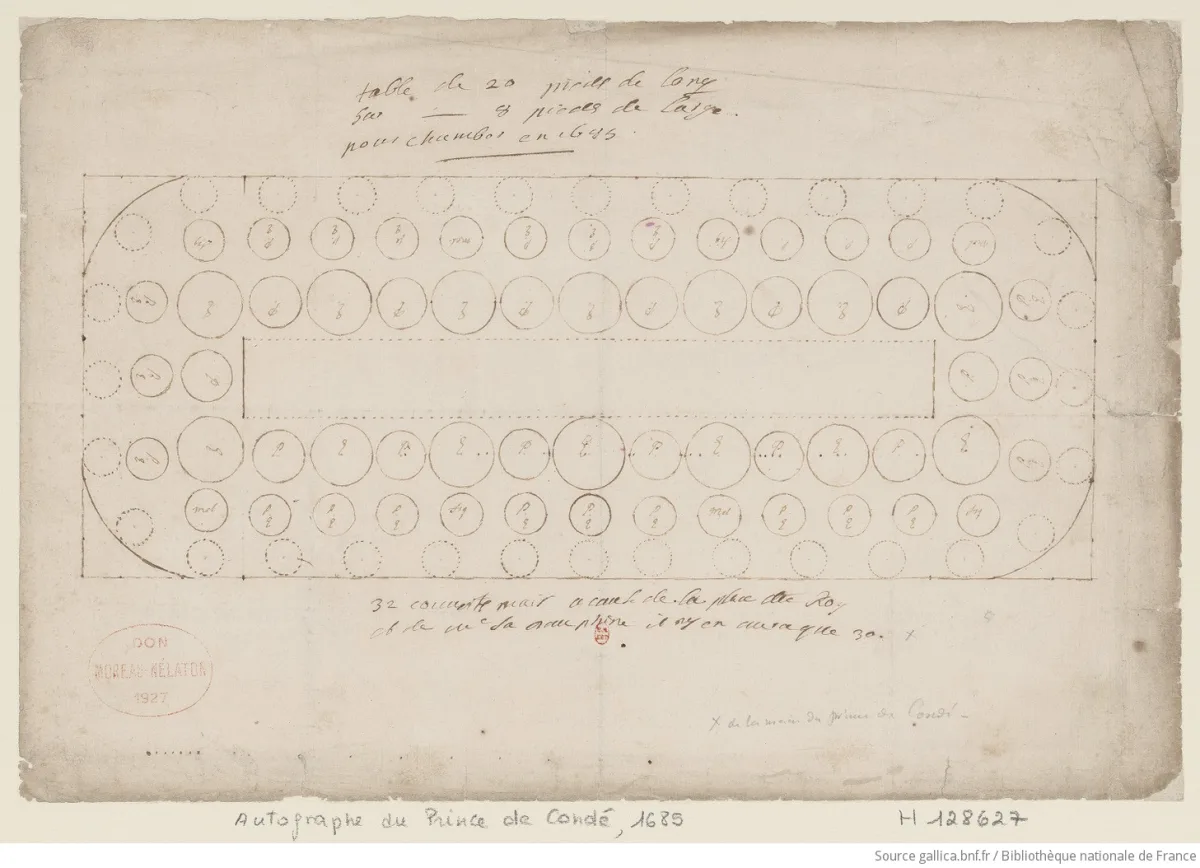
The design can deceive a hurried glance. Its numerous circles mainly represent the arrangement of the dishes, and not the placement of the guests. A few letters are enough to identify them: starters, small starters, soups, melon, figs. The exhibition uses it to recreate a French-style service, where several dishes appear simultaneously and where their position contributes to the overall effect.

Here is an archive that brings splendor back to its material reality. Such an abundant table does not hold by chance. The dishes must find their place, remain legible for guests and arrive in the expected order. The representation of power also involves this precision of execution.
Around 1750: what happens after the meal
With Marshal de Saxe, Chambord changed scale. The exhibition reconstructs a “coffee room” based in particular on its inventories after death. Tea, coffee and chocolate reflect new tastes, but also a different organization of hospitality: once the meal is finished, guests can find a space dedicated to these drinks.
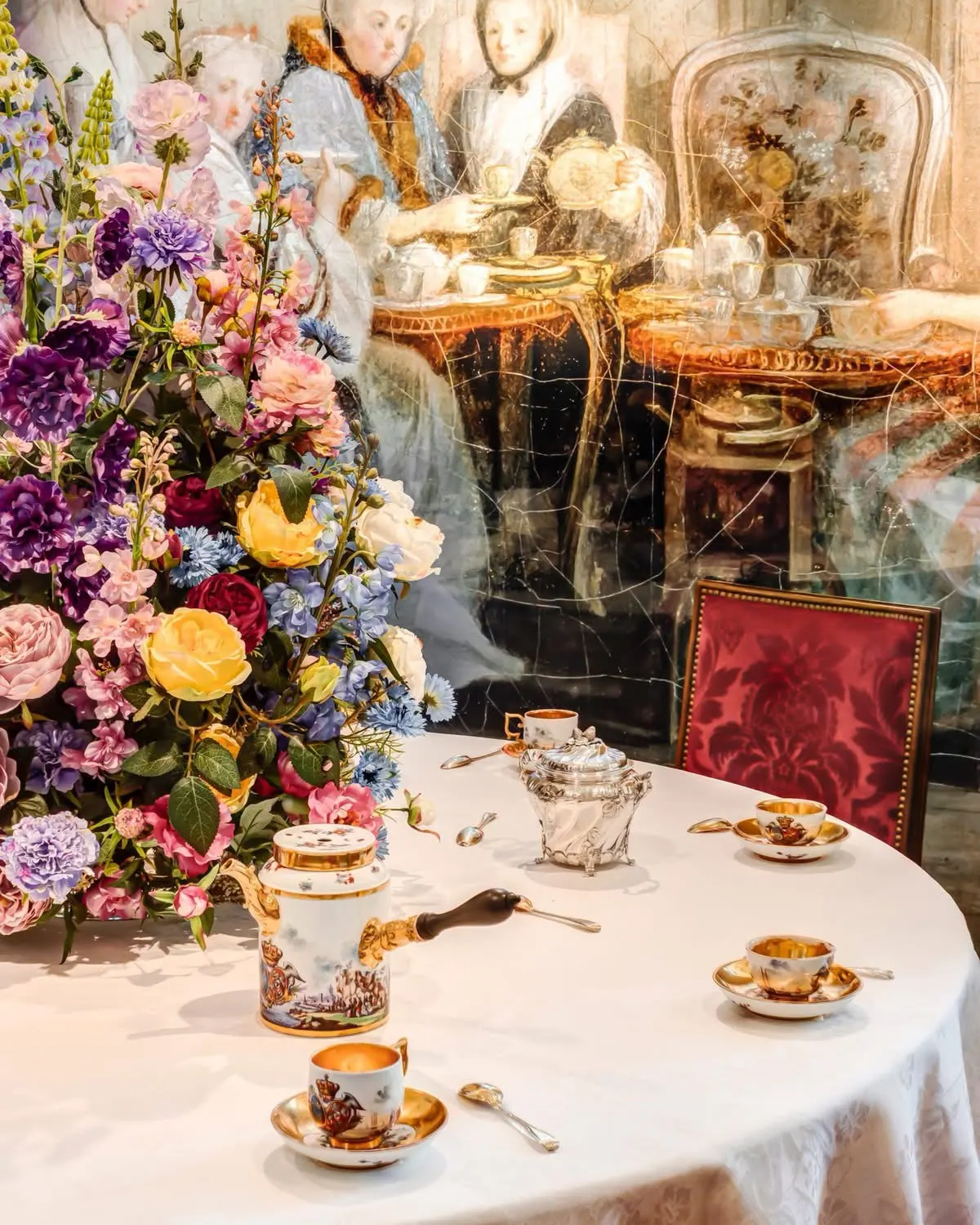
A Meissen porcelain tea and chocolate set, kept in Versailles, is presented in this scene. Maurice of Saxony offered it to Queen Marie Leszczynska in 1737, on behalf of Augustus III. The object sheds light on tastes and exchanges between European courts; nothing establishes that he was used at Chambord.
The coffee room shows something discreet, but decisive. Entertaining doesn’t stop with the last dish. The place where the conversation continues, the objects suitable for each drink and the transition from one moment to the next also need to be planned.
1988: a table gathered for an official visit
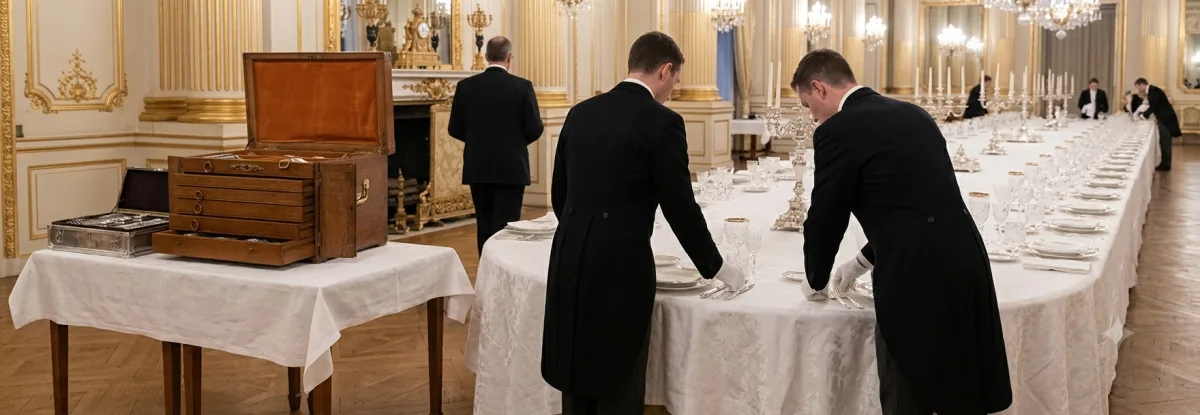
On November 9, 1988, a gala dinner was given in Chambord in honor of Prince Charles and Princess Diana, under the presidency of Minister of Culture Jack Lang. This time, the commissioners have photographs, archives and testimonies. They can find objects used during the evening and recreate as closely as possible the head table of sixteen guests.
The plates are in Sèvres porcelain, the glasses in Baccarat crystal. A Christofle piece and Puiforcat cutlery complete the table. The tableware and decor come in particular from the funds of the Presidency of the Republic and the National Furniture.
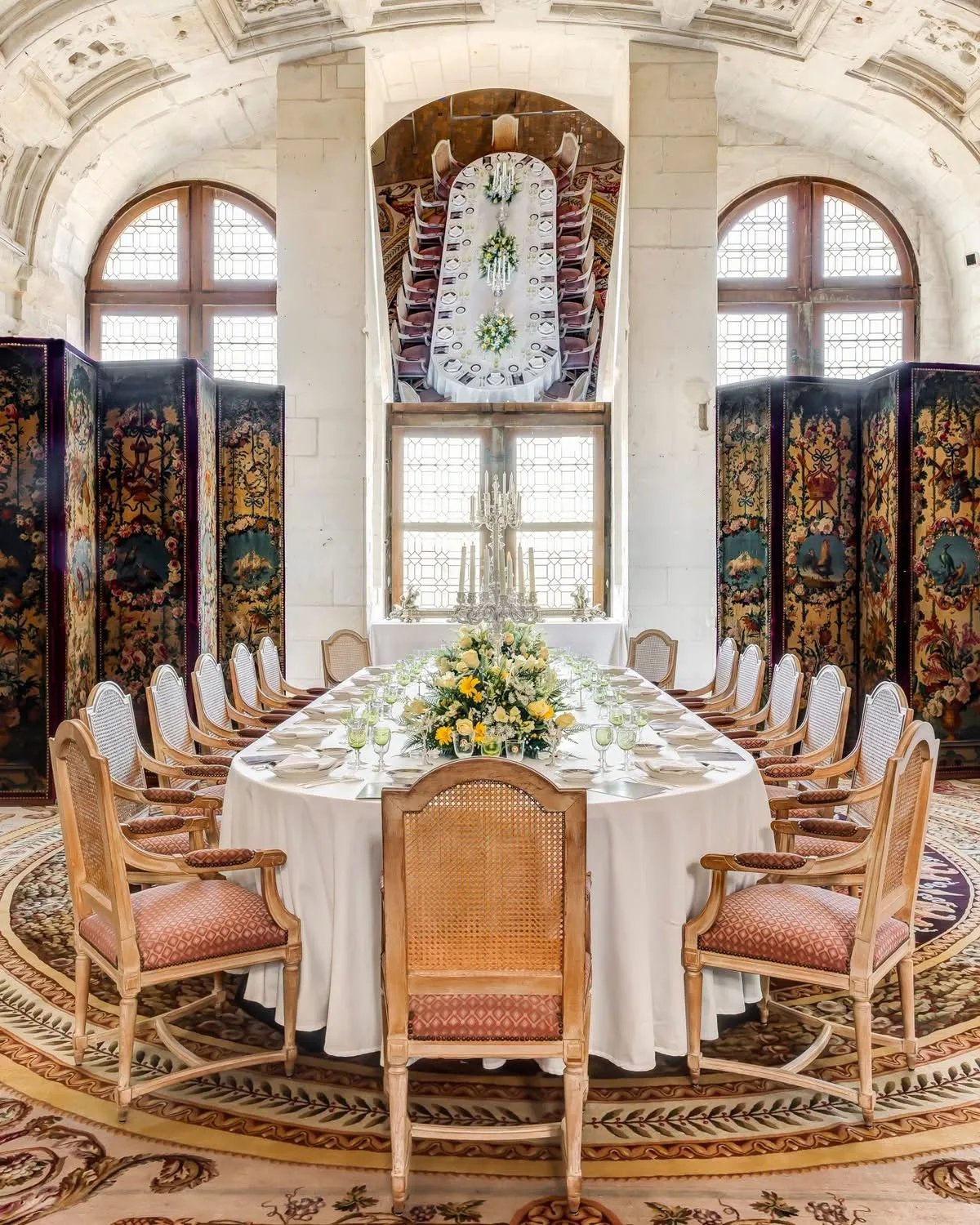
These prestigious names only tell part of the story. It was necessary to choose pieces belonging to different ensembles, bring them together in Chambord and compose a coherent table for this reception.
The four scenes do not depict a simple progression, from ancient improvisation to modern mastery. The sources from 1539 and those from 1988 do not allow the same story. However, they reveal a constant: behind the pleasure of receiving lies a work of preparation whose success lies precisely in its discretion.
Sources
- Domaine national de Chambord, presentation of the exhibition Les Festins de Chambord, from September 26, 2026 to January 24, 2027.
- Domaine national de Chambord and European Institute of Food History and Cultures, exhibition press kit. Curator: Virginie Berdal and Loïc Bienassis. Main reference for the four scenes, the limits of the reconstructions and the objects presented.
- National Library of France, Table 20 feet long by 8 feet wide for Chambor in 1685, document annotated by the Prince of Condé, reference VA-41 (6)-FOL. Reproduction and transcription in the Chambord press kit.
- Château de Versailles, The taste of Marie Leszczynska, document from the 2019 exhibition, for the Meissen porcelain kit offered in 1737.
Image credits
- Goldsmith pieces presented in the exhibition: © Léonard de Serres / Domaine national de Chambord.
- Drawing of the Chambord table in 1685: © Bibliothèque nationale de France / Gallica, reference VA-41 (6)-FOL.
- Detail of the dishes from the reconstructed 1685 table: © Léonard de Serres / Domaine national de Chambord.
- Reconstructed coffee room: photograph published on Intendance Palace under the name IMG_4930; photographer to be confirmed.
- Reconstructed 1988 dinner table: © Léonard de Serres / Domaine national de Chambord.