Thirty years in the intimacy of the Comandante
In 1959, a sixteen-year-old apprentice cook joined the Cuban Revolution as a bodyguard. The chance of a camp will make him the man who, for three decades, will feed Fidel Castro - and receive at his table some of the greatest figures of the century. Portrait of a life spent very close to power.
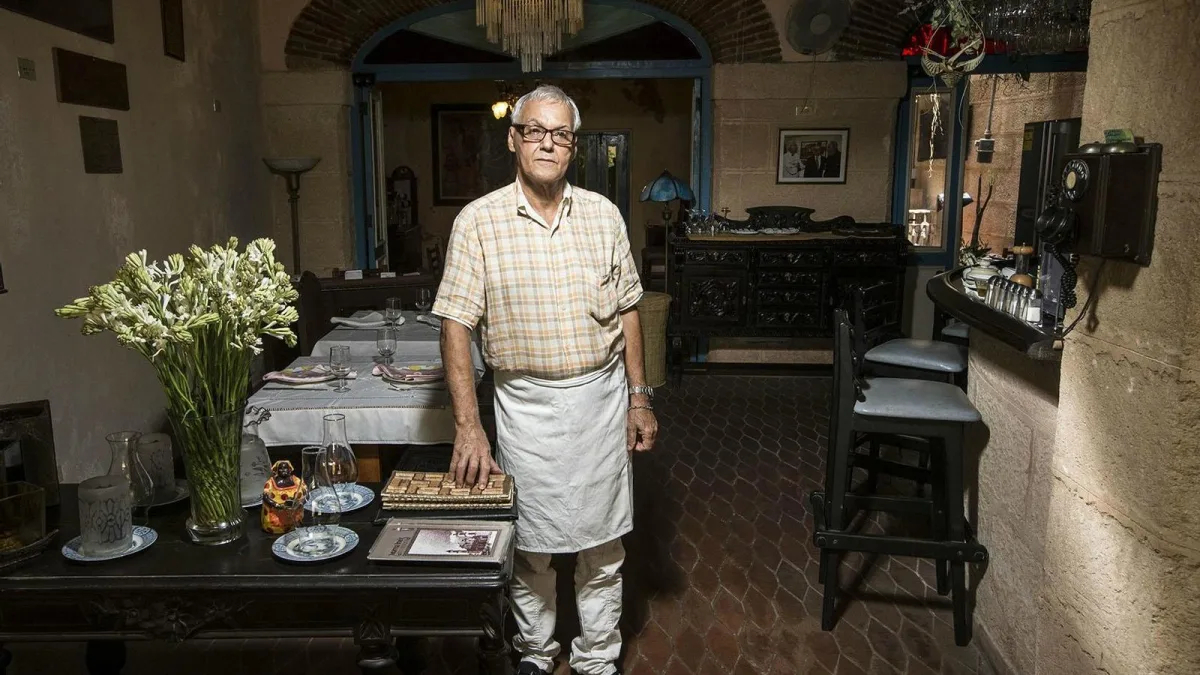
There are destinies that depend on a detail. That of Tomás Erasmo Hernández León is based on a saucepan. In 1959, he was only sixteen years old and learned the trade in a hotel in Havana when the Revolution took the island. The young man enlisted and joined Ernesto “Che” Guevara’s column as a bodyguard. Life in the Sierra Maestra is harsh, made of endless walks, hunger and long waits under the trees. One day, at a bivouac, the fighters make a discovery that will seal their future: among them, this kid trained in the kitchens of a hotel in the capital is the only one who really knows how to cook. We entrust him with the stoves. He will never leave them again. What was only a campaign expedient was to become the affair of a lifetime.

From this improvised promotion was born one of the longest loyalties in the culinary history of power. For almost thirty years, Erasmo Hernández will be Fidel Castro’s table. Contrary to the image that one might have of him, the Comandante was not a capricious gourmet. He loved simplicity: spaghetti that he happily prepared himself, a vegetable soup that he loved, lamb with coconut honey, lechón asado marinated in mojo criollo. But this apparent sobriety concealed a requirement of a completely different order - that of confidence. Because nurturing a head of state means accessing his most vulnerable part every day, the one where the public figure once again becomes a man like any other. Erasmo thus became much more than a cook: a familiar, a man in the shadows, a silent confidant whose daily presence was worth every recommendation.
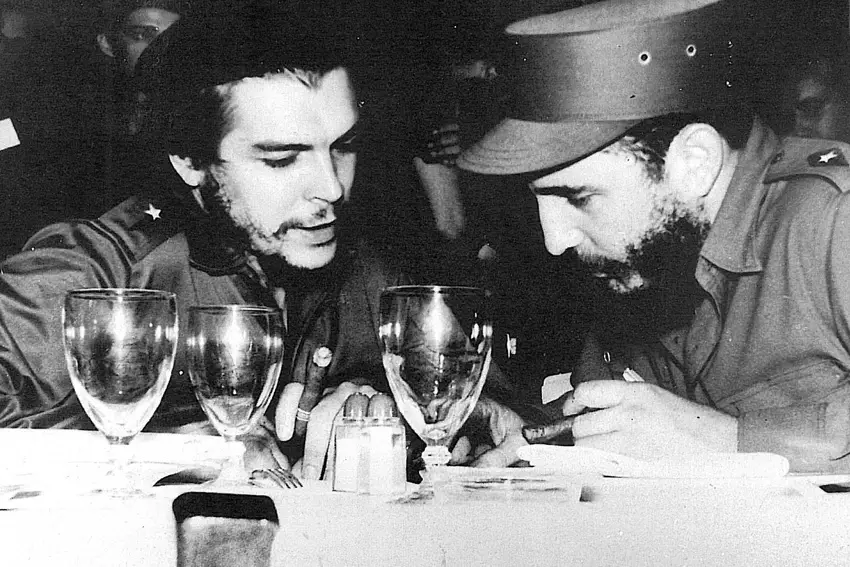
His kitchen was also, without him ever having sought it, one of the most discreet crossroads of the 20th century. The table he set included Che, of course, but also the writer Gabriel García Márquez, a close friend of the Cuban leader, and even Mao Zedong during major state visits. Behind each dish were conversations that history has not all recorded, friendships and alliances that weighed on the destiny of entire continents. A steaming soup, a simmered dish, and it was sometimes the climate of a diplomatic meeting which shifted towards confidence. The cook heard everything and said nothing.
It is at this price, precisely, that longevity is paid for by the powerful: unfailing loyalty and absolute discretion, never found wanting.
But this closeness has its downside, and it is perhaps the most disturbing lesson of this story. Fidel Castro didn’t have one cook: he had two. The second, known under the name Flores, also served with the same devotion, the same self-sacrifice. Their paths, however, diverged in striking ways. While Erasmo passed through the decades without incident, Flores gradually lost his mind and ended his life in a ruined house in Havana, forgotten by everyone. It was the Polish journalist Witold Szablowski who, in an investigation devoted to the chefs of the greats of this world, crossed their two biographies. They tell the same, almost cruel truth: serving as close as possible to the top offers no guarantees. The chef of power gives everything - his talent, his youth, his years of silence - without ever receiving anything but a revocable favor in return. Two men, the same passion, two ends that nothing foreshadowed: the fortune of one and the oblivion of the other depend on little, and this little escapes all logic. We would like to believe that merit or talent decides; it is nothing of the sort. What separates the light from the shadow, in these existences dedicated to a single man, is partly unfathomable - the temperament, the ability to endure, and undoubtedly this form of composure which allows one to see everything without ever letting anything show.
Erasmo had the wisdom - or the grace - to never betray the privacy of those he served.
Today, he runs a paladar, one of those private restaurants that Cuba ended up authorizing, called Mama Inés, in the heart of old Havana.
Lobster is served every evening to a wealthy clientele, a thousand miles from the camps of the Sierra Maestra. His trajectory follows that of his island: from the Revolution to the mixed economy, from the gun to the stove, from the collective ideal to personal enterprise. Through this man we can read an entire Cuban century, its fervor and its disillusionment.
What remains of this extraordinary life is an image of disarming simplicity: that of a sixteen-year-old teenager who is handed a ladle, and who understands, without knowing it yet, that he has just entered the narrowest circle of power. Because from Versailles to Havana, History never ceases to repeat: the one who feeds the prince is never far from his heart.
Sources
- Vice.fr - At the table of Erasmo, the former chef of Fidel Castro: https://www.vice.com/fr/article/a-la-table-derasmo-lancien-chef-de-fidel-castro/ Literary Hub - What I Learned Speaking to Fidel Castro’s Personal Chef*: https://lithub.com/what-i-learned-speaking-to-fidel-castros-personal-chef/
- Translating Cuba - Fidel Castro’s Cooks: In Squalor or Opulence, Both Adore Him: https://translatingcuba.com/fidel-castros-cooks-in-squalor-or-opulence-both-adore-him/
- Witold Szablowski, How to feed a dictator, ed. Black on White, 2020 (survey cross-referencing the biographies of the cooks of several heads of state, including Fidel Castro’s two cooks).
- The place of the chef with authority, research report, June 2026 (chap. 25, “Caribbean”).