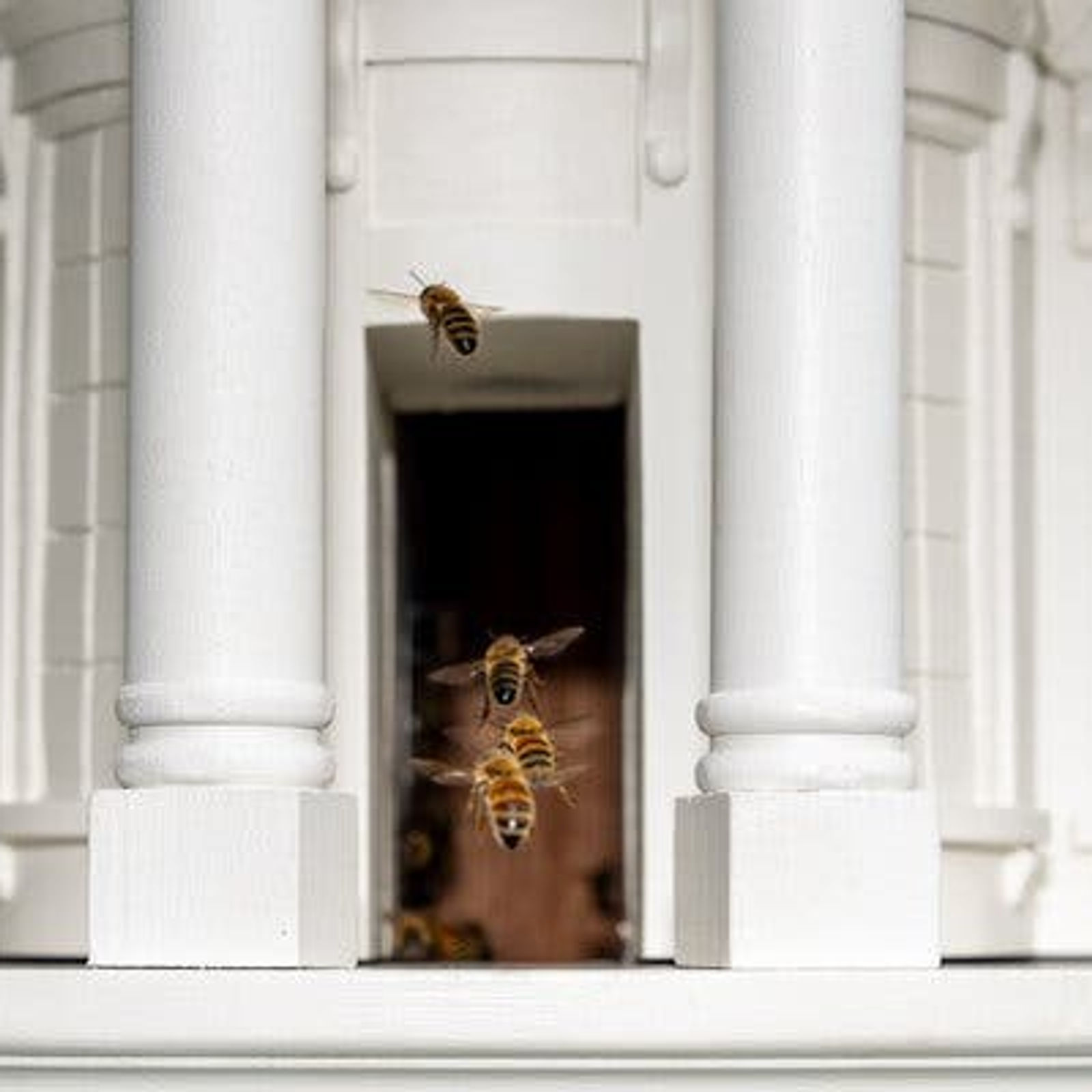
In the second part, the honey of the palaces passed from the apiary to the table and, in Scotland, to the seal of law. He still had to cross the borders.
A small country, a big hive
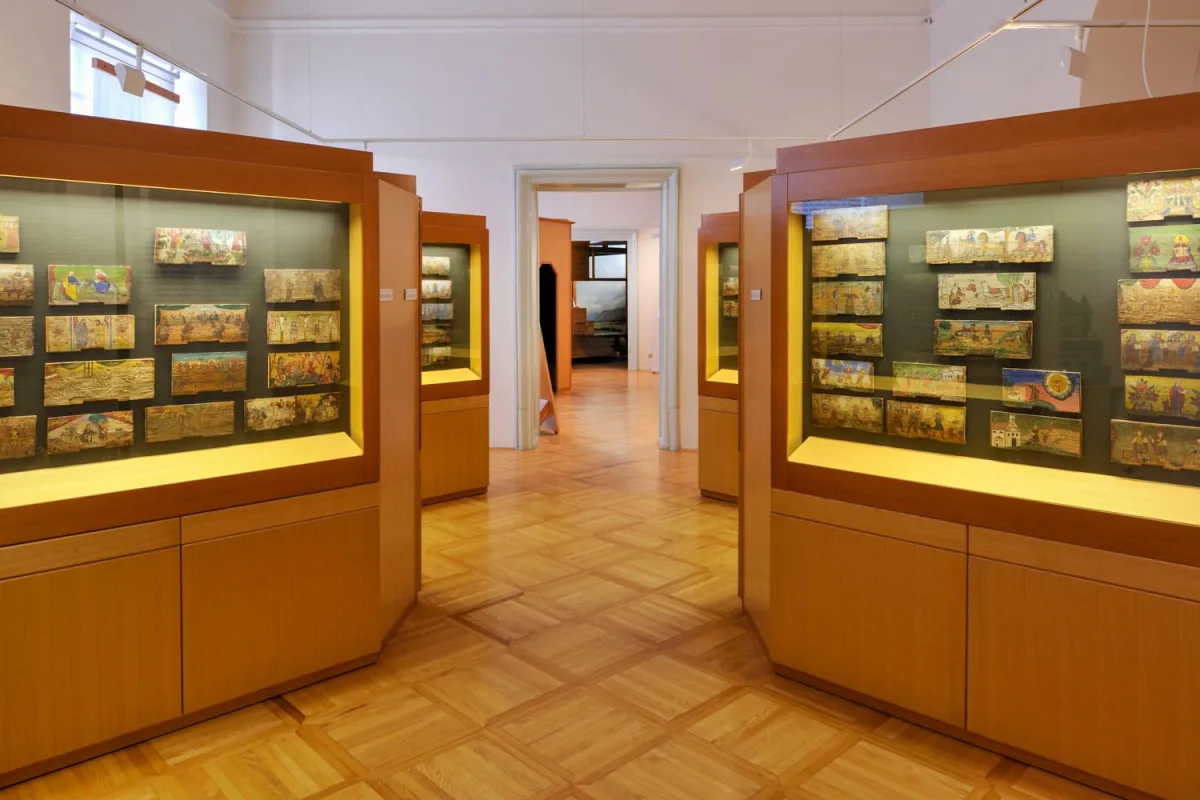
In Slovenia, beekeeping is a national heritage. In the 18th century, Anton Janša, born in a village in Upper Carniola, became the first professor of beekeeping at the Habsburg court in Vienna. His compatriots paint the front boards of their hives: scenes from the Bible, saints, village satires. The Radovljica Beekeeping Museum preserves hundreds of them.
In September 2014, the president of the Slovenian beekeepers’ association, Boštjan Noč, proposed making May 20, Janša’s birthday, a world bee day. President Pahor supports the idea, the government adopts it, Slovenian diplomacy takes it to New York. On December 20, 2017, the United Nations General Assembly adopted it by consensus, with 115 co-authoring countries.
Since then, Slovenian embassies have increased the number of projects linked to pollinators, almost three hundred according to the Ministry of Foreign Affairs. In Seoul, the embassy installed a beehive on its roof. At the Vatican in May 2023, President Nataša Pirc Musar presented Pope Francis with a replica of Janša’s hive.
Slovenia has made the bee one of the threads of its foreign policy.
The Queen’s Basket
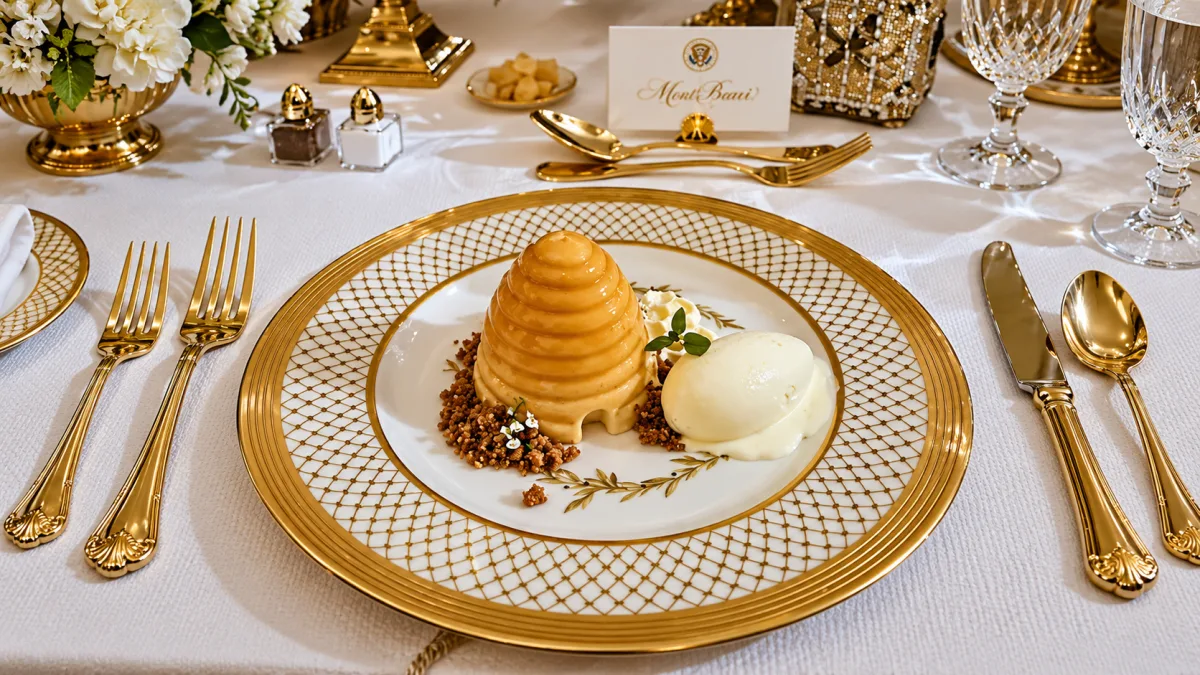
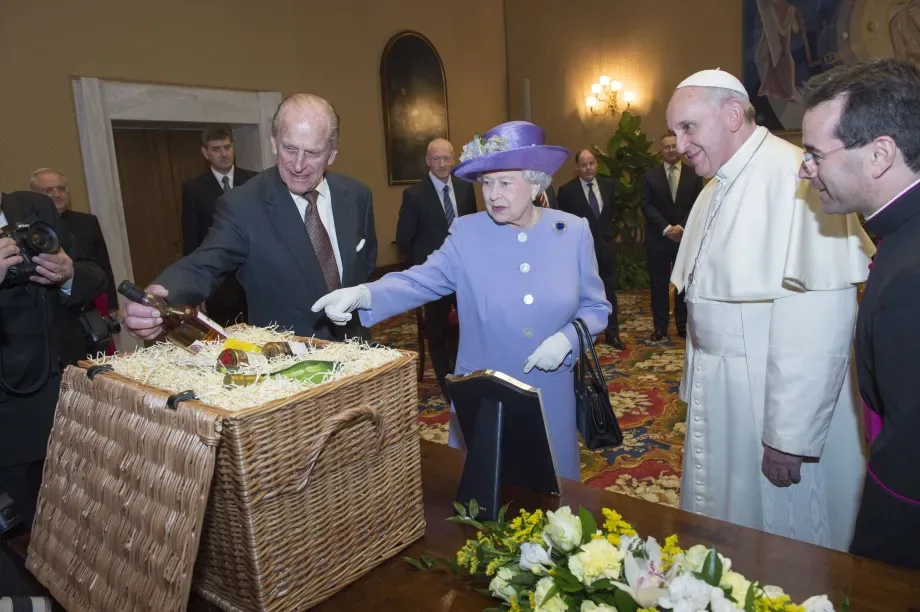
The British chose the pot rather than the hive. On April 3, 2014, for her first meeting with Pope Francis, Elizabeth II brought a basket of products from the royal domains. There are eggs, game, Windsor ale, Sandringham chutneys, Balmoral whiskey and a pot of honey from Buckingham Garden. When presenting it, the Queen reportedly said she hoped it would be an unusual gift for him.
The gesture caught on. On September 15, 2026, while visiting Zambia, the Duchess of Edinburgh offered President Hakainde Hichilema three pots of honey from the hives of Buckingham, Windsor and Bagshot Park, according to the British press. In the spring the Archbishop of Canterbury brought Leo XIV honey from the hives of Lambeth.
A head of protocol quickly understands why this gift circulates so well. Honey says where it comes from: it is named after a garden, sometimes a tree. It asks no question of value, which avoids awkward comparisons between gifts. It is eaten, so it does not end up in a reserve. And it doesn’t engage anyone beyond the pleasure of tasting it.
What researchers say
There remains a question that palaces rarely ask: does one more hive help the bees?
Ecologists invite us to distinguish. The domestic bee is a livestock animal. Wild bees number in the hundreds of species in Europe, and they are often the ones in decline. In 2018, two researchers recalled in the journal Science that protecting the honey bee does not amount to protecting biodiversity, and that a high density of hives can harm wild pollinators.
Paris offers a case study. In 2015, the city had 687 declared colonies, or 6.5 hives per square kilometer, compared to 2.5 on average in France. A team has shown that visits by wild pollinators decrease when the density of hives increases within a radius of 500 meters to one kilometer. In Switzerland, a study of fourteen cities concluded that green spaces were no longer enough to nourish colonies in most neighborhoods, even if its method was discussed. In London, researchers estimate that beyond 7.5 hives per square kilometer, floral resources become exhausted; some neighborhoods exceed fifty.

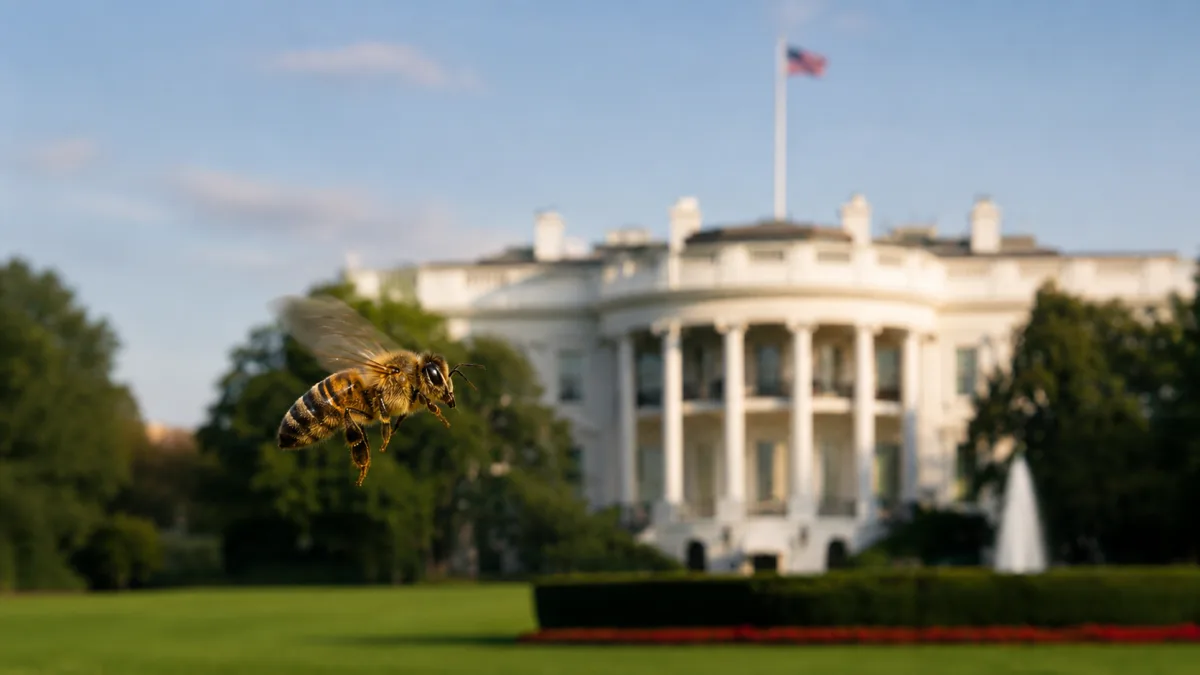
None of these studies measured the effect of a specific palace apiary, and none accuse an official hive of harming its neighborhood. Their conclusion is simpler: without flowers around, one more hive does not help wild bees. The word bee washing appeared to refer to initiatives that show off the bee without taking care of the rest. In Scotland, the state nature agency is now recommending caution before installing new hives in protected areas.

Some institutions have already shifted their focus. In Canberra, the Australian Parliament added colonies of native stingless bees alongside its European hives in 2018. They produce very little honey and will never go away as a gift. They are at home.
Sources and credits
Institutional sources
- Slovenian Government,
state visit to Norway, November 8, 2019
. * Slovenian Government,
. * United Nations,
, December 20, 2017. * Slovenian Ministry of Foreign Affairs,
Success Stories of Slovenia’s Pollinator Diplomacy
, 2024. *Vatican News,
Pope Francis receives the Slovenian president, May 22, 2023
. * GOV.UK,
, 2014; Royal.uk,
. *Royal.uk,
the Duchess of Edinburgh in Zambia, September 16, 2026
. * FAO,
. *NatureScot,
honey bees and beekeeping in protected areas
, July 2, 2025. * Australian Parliament,
. * Radovljica Beekeeping Museum,
.
Press
*CBS News,
, April 3, 2014. *People,
the Duchess of Edinburgh in Zambia
, September 17, 2026. *The Telegraph,
, April 28, 2026. *Region Canberra,
, 2019.
Scientific sources
*Geldmann and González-Varo,
Science
, 2018,
. *Ropars et al.,
“Wild pollinator activity negatively associated with honey bee colony densities in urban context”
,
PLOS ONE
, 2019. * Casanelles-Abella and Moretti,
, 2022, and
,
Journal of Apicultural Research
, 2023. * Written contribution to the British Parliament,
(London, Montreal, Munich).
Image credits
- Main image: Slovenian Ministry of Agriculture, Forestry and Food
- Image 1: Radovljica Beekeeping Museum
- Image 2: Royal.uk
- Image 3: Sofia Mangili / WSL, press use.
- Image 4: Presidency of the Republic of Estonia