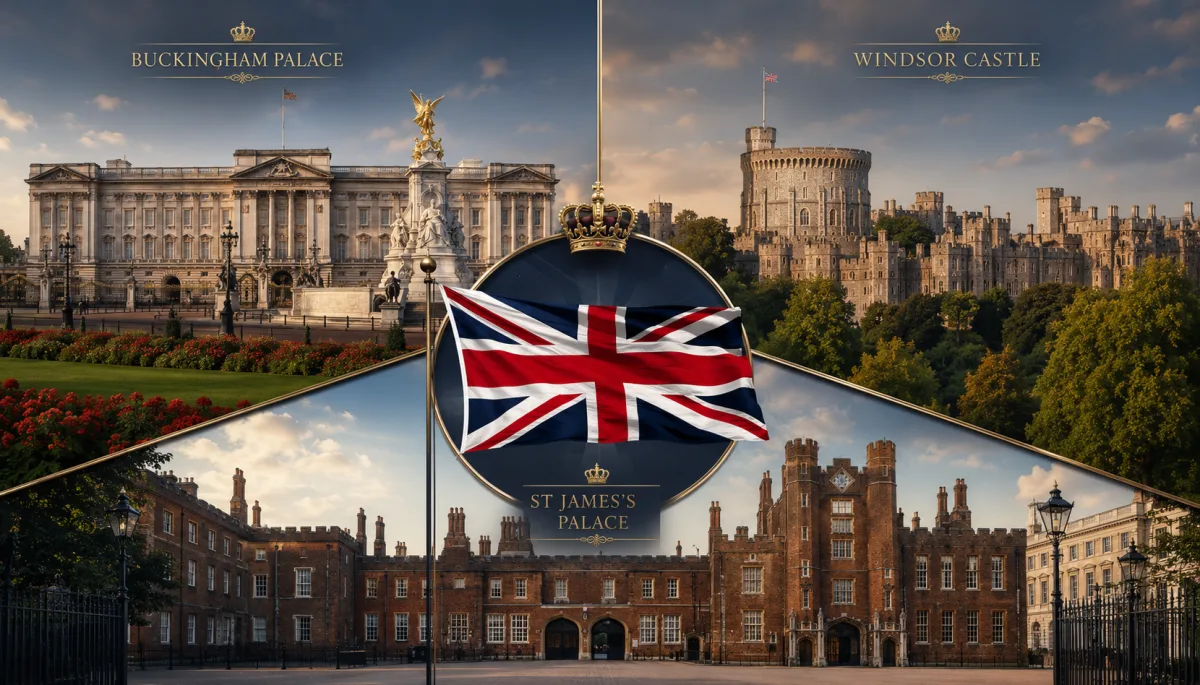
While Buckingham Palace completes a ten-year project worth 369 million pounds, the British monarchy is redistributing its places of representation. Windsor inherits state visits and their banquets, St James’s maintains quiet diplomacy, and the great London palace prepares to become less a residence than a ceremonial headquarters. Deciphering a reconfiguration where stewardship says a lot about the institution.
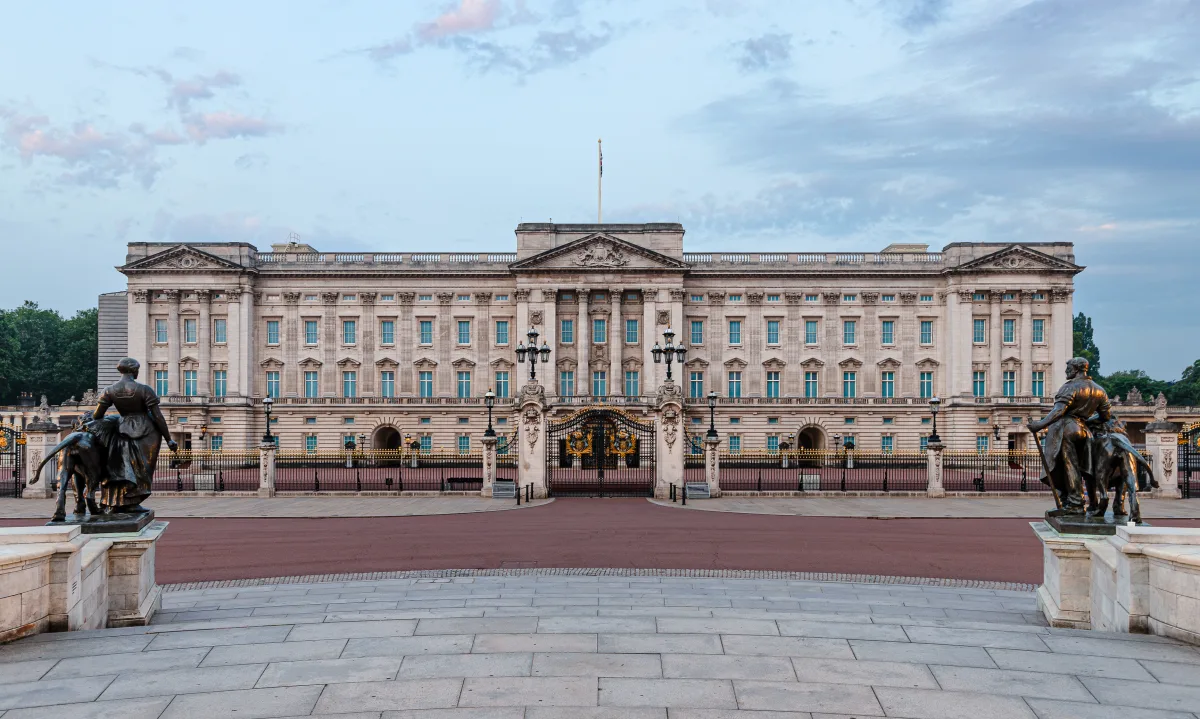
Behind the Portland stone façade overlooking the Mall, part of Buckingham Palace lives to the rhythm of scaffolding and cable ducts. The large state rooms close in turn: Throne Room, Ballroom, Blue, Green and White rooms, State dining room. What we take to be the beating heart of the monarchy looks, in 2026, like a vast infrastructure project.
But to reduce the episode to a matter of work would be to miss the point. A palace is never just a building: it is a tool of power, a stage, a device. The way a monarchy distributes its residences, offices and banquet halls tells what it believes it to be. From this point of view, the Buckingham construction site acts as a revelation: it forces the Crown to shift its dramaturgy and specify the real function of each of its palaces.
A 369 million pound project
The program has a technical name: the Reservicing Program. Launched in April 2017, it runs over ten years, with completion expected around 2027, for an approved budget of 369 million pounds. Its purpose is not decorative: to replace essential installations - boilers, wiring, pipes, tanks - essentially unchanged since the 1950s, in order to preserve the building for decades to come.
Funding comes through the Sovereign Grant, the monarchy’s public endowment. The preservation of occupied royal palaces absorbs a major part: in 2025-2026, a little more than half of the endowment, or around 67.5 million pounds, was devoted to it. For 2026-2027, the last year of the program, the Royal Trustees approved a reinforced envelope - of the order of 137.9 million pounds - before an announced reduction. Ultimately, the renovated palace is expected to generate savings estimated at £3.4 million per year. The logic is less that of splendor than of heavy maintenance of aging equipment.

From the palace-residence to the ceremonial headquarters
Once the work is completed, Buckingham Palace will not become the main residence of the sovereign again. King Charles III and Queen Camilla chose to stay at Clarence House. The decision is not anecdotal: it breaks with an almost two-hundred-year-old tradition which made Buckingham the London residence of every sovereign since Queen Victoria.
Stripped of its domestic function, the palace is not emptied of meaning - on the contrary. The royal household affirms it: Buckingham must remain the “ceremonial and operational center” of the monarchy, its headquarters. The Washington Post summarized the evolution of a formula: the renovated palace as the future “royal office building.” Concrete consequence: freed from its residential vocation, the place can open up more - wider public access, multiplication of events, increase in attendance, while it already receives some 700,000 visitors per year. A machine to receive and administer more than a home.
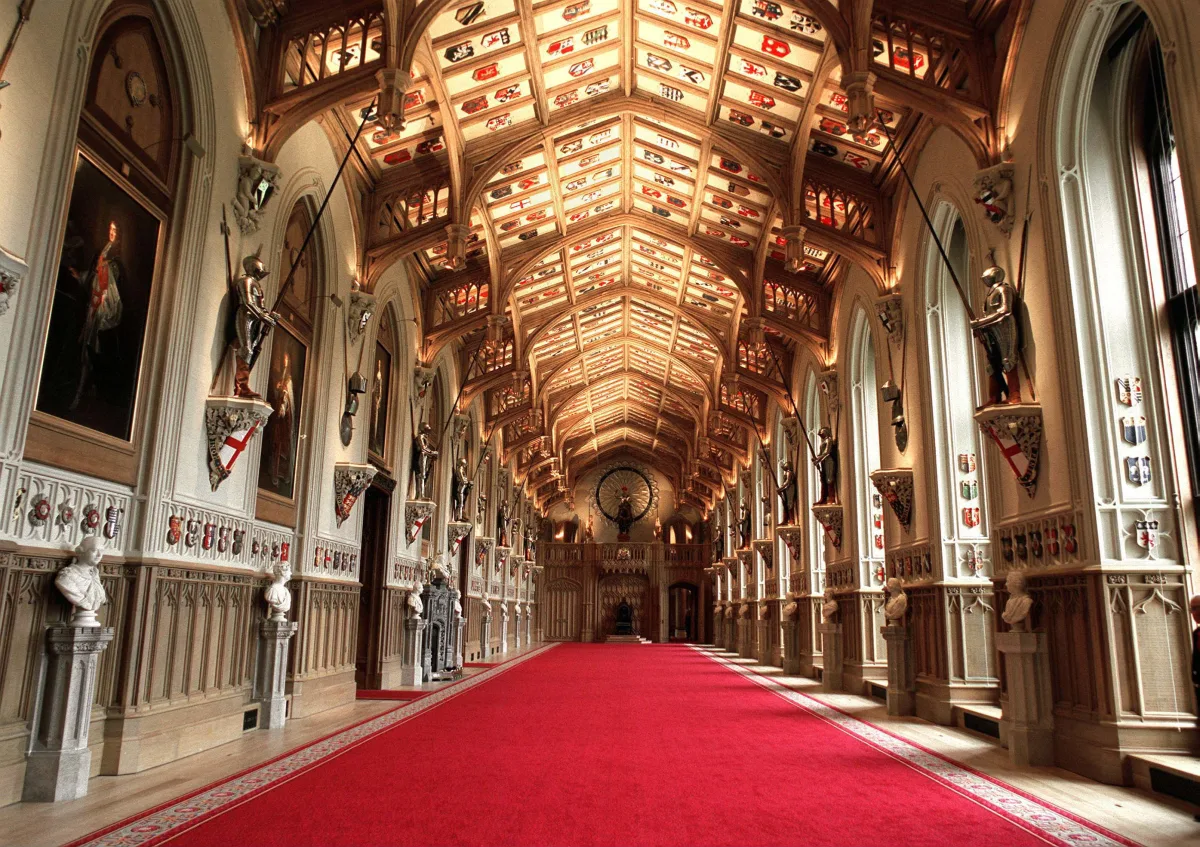
Windsor, provisional scene of state visits
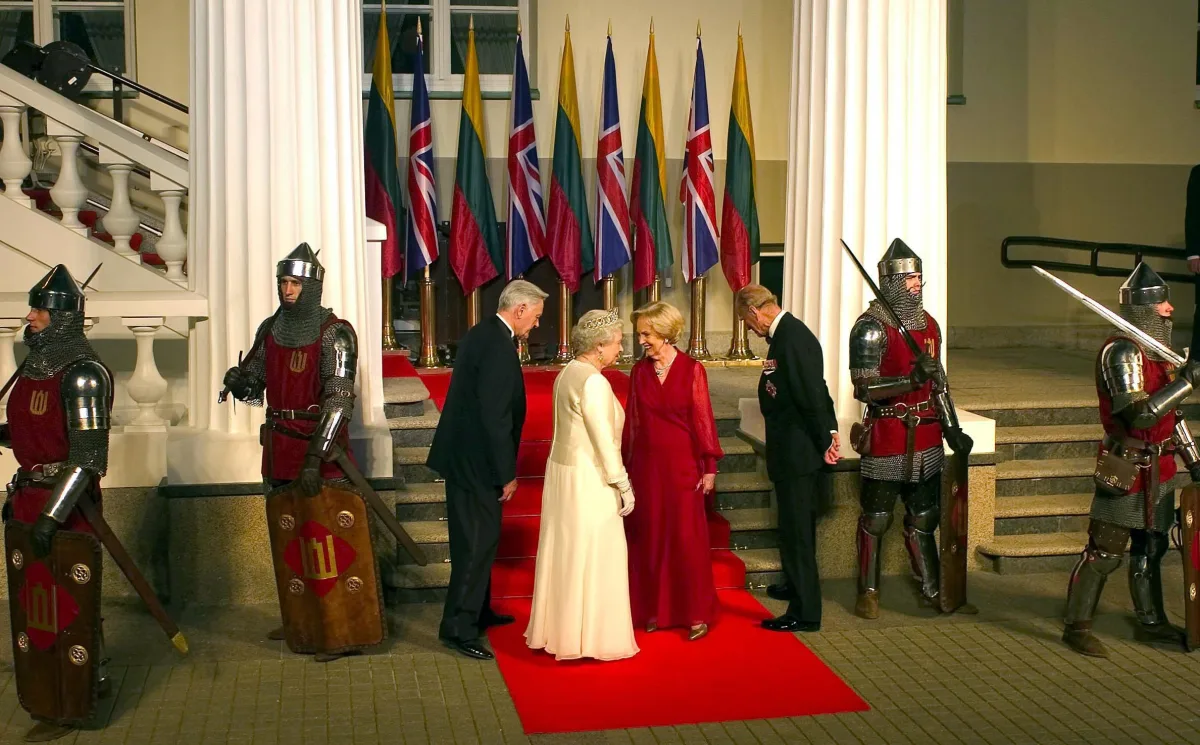
During the work, the great diplomatic liturgy moves. Since the Buckingham Ballroom - the usual setting for state banquets - is one of the closed spaces, it is Windsor Castle which becomes, until 2027, the scene of state visits: foreign heads of state are received there rather than in London.
The transfer moves an entire protocol circuit. In Windsor, the welcome unfolds differently: carriage procession of the Household Cavalry, review of the guard of honor, then a banquet set up in St George’s Hall, a huge room capable of lining up to around 160 guests around a single table. The grammar of the ritual remains the same - guard of honor, procession, banquet for around one hundred and fifty guests, exchange of speeches - but it changes decor, and therefore resonance. Windsor, it is true, has long been a top destination for state visits; the London site only gives it back the centrality that it had always been intended to exercise.

St James’s, more discreet diplomacy
A third palace plays a muted but revealing score: St James’s. He remains, protocolarily, the oldest and most senior: it is at the “Court of St James’s” that foreign ambassadors are accredited to the sovereign, even though court life has moved to Buckingham. This status is not just a vestige: British diplomacy maintains, in its very topography, an address distinct from the royal residence.
In fact, St James’s is a ceremonial hive. Its state apartments are used for entertaining during incoming state visits, and the palace hosts around a hundred receptions each year linked to works supported by the royal family. It also houses part of the Crown administration - from the Royal Collection Trust to the Marshal of the Diplomatic Corps - and is where the Accession Council meets on the death of a sovereign. A backstage palace, away from the main staging, essential to the smooth running of what is happening elsewhere.

A monarchy that distinguishes its functions
What this redistribution represents is not a weakening of the institution, but a clarification of its functions. The period shows, almost like a diagram, four uses that are usually confused under the single word “palace”. The private residence is Clarence House: the place where we live, now dissociated from the rest. The palace of representation and administration is the Buckingham of tomorrow: seat of the Crown more than home. The grand diplomatic scene, provisionally, is Windsor. And the most intimate diplomatic place is St James’s.
This decoupling between the place where the sovereign lives, where he works and receives, and those where the Crown deploys its liturgy says a lot about the contemporary monarchy: an institution which assumes itself as a public and symbolic function more than as a household, manages a heritage, optimizes its costs and distributes its roles. Many of these developments remain, at this stage, orientations - the timetable may evolve, the exact purpose of the post-construction palace will become clearer with use. But the direction is readable: the British monarchy does not have a palace; she has a network of palaces. The Buckingham site did not invent anything - it made this geography visible.