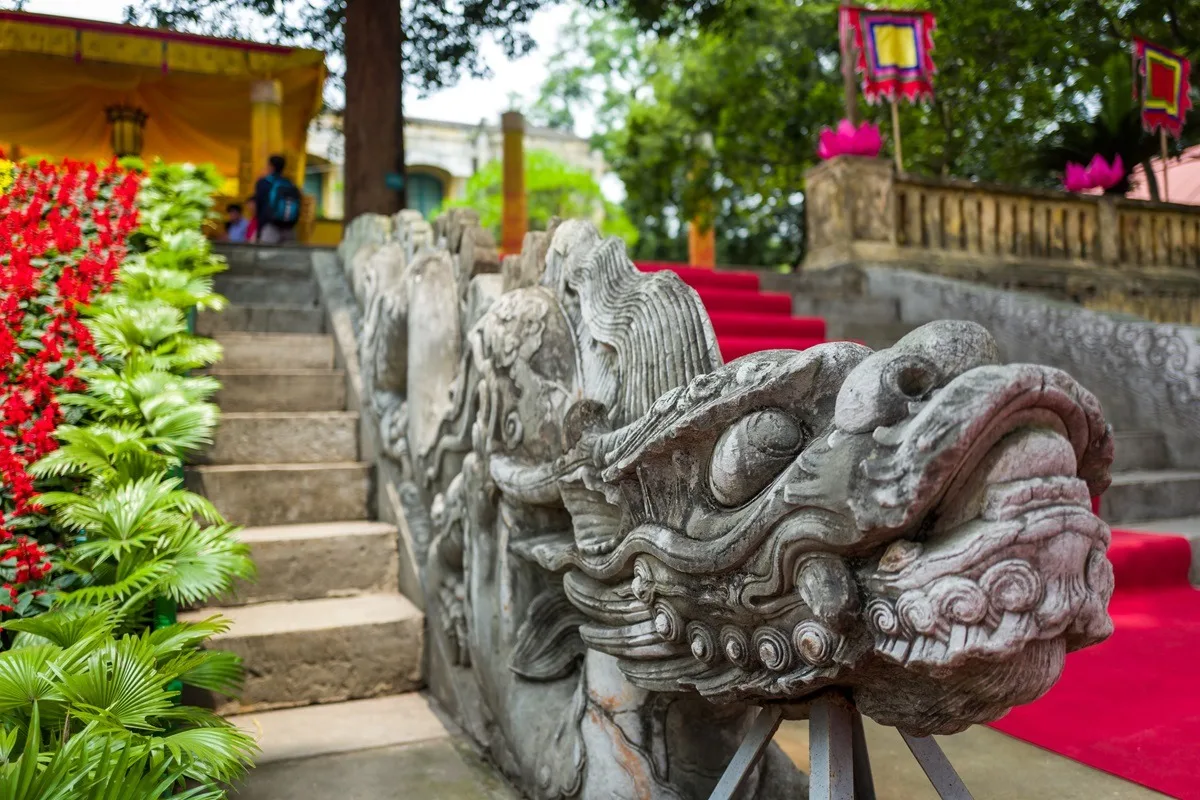
On September 29, in front of a ten-step staircase guarded by stone dragons, Vietnam launched the reconstruction of the Kính Thiên Palace, the throne room of the ancient imperial city of Hanoi.
The Secretary General of the Party and President of the Republic, Tô Lâm, was present, alongside the director of the UNESCO World Heritage Center.
The stone dragons have been there since 1467.
They saw the Lê palace collapse, an imperial residence succeed it, then the colonial artillery installed in its place.
Since then, archaeologists have dug six meters of earth to find what is missing.
A staircase has survived; anything higher will have to be proven, and what the excavations prove best is a 17th century palace, not the one of legend.
Three disappearances and a staircase
Kính Thiên Palace was born in 1428. King Lê Thái Tổ had just driven out the Ming armies and restored his capital, Thăng Long. According to the annals of Đại Việt, the work was completed under Lê Thánh Tông, on the foundations of the palaces of the Lý and Trần dynasties. For four centuries, it was here that the court held its audiences, received foreign envoys and celebrated its major rites.
The south staircase dates from 1467. Four stone balustrades form three passages, and two large sculpted dragons frame the way up. To the north, a second, smaller staircase carries later dragons, 3.4 meters long.
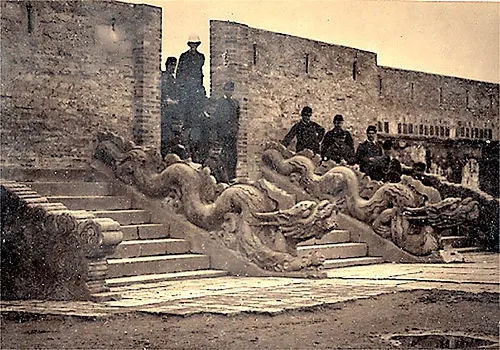
The palace then disappears in three stages. In 1788, the capital moved south to Huế. In 1816, according to historian Phan Huy Lê, the Lê palace collapsed, and Emperor Gia Long ordered it to be demolished to build in its place a stopover residence, used during imperial journeys to the north. In 1886, the French army in turn razed this residence and erected a two-story building on the platform for the artillery headquarters. The dragons remain in front and behind: the new building takes the nickname “Dragon House”.
After October 10, 1954, the site became the headquarters of the Vietnamese Ministry of Defense. Part of it was handed over to the city of Hanoi in 2004, and the central sector of the citadel became a world heritage site in 2010.
“The most famous image of Kính Thiên Palace does not show Kính Thiên Palace. »
One detail still traps visitors. Photographs taken in 1884 and 1885 by the military doctor Charles-Édouard Hocquard, where we see French soldiers on the steps, are often presented as images of the palace. Phan Huy Lê reminded us: they show the Nguyễn building, not the Lê throne room.
Six meters of earth and 81 layers
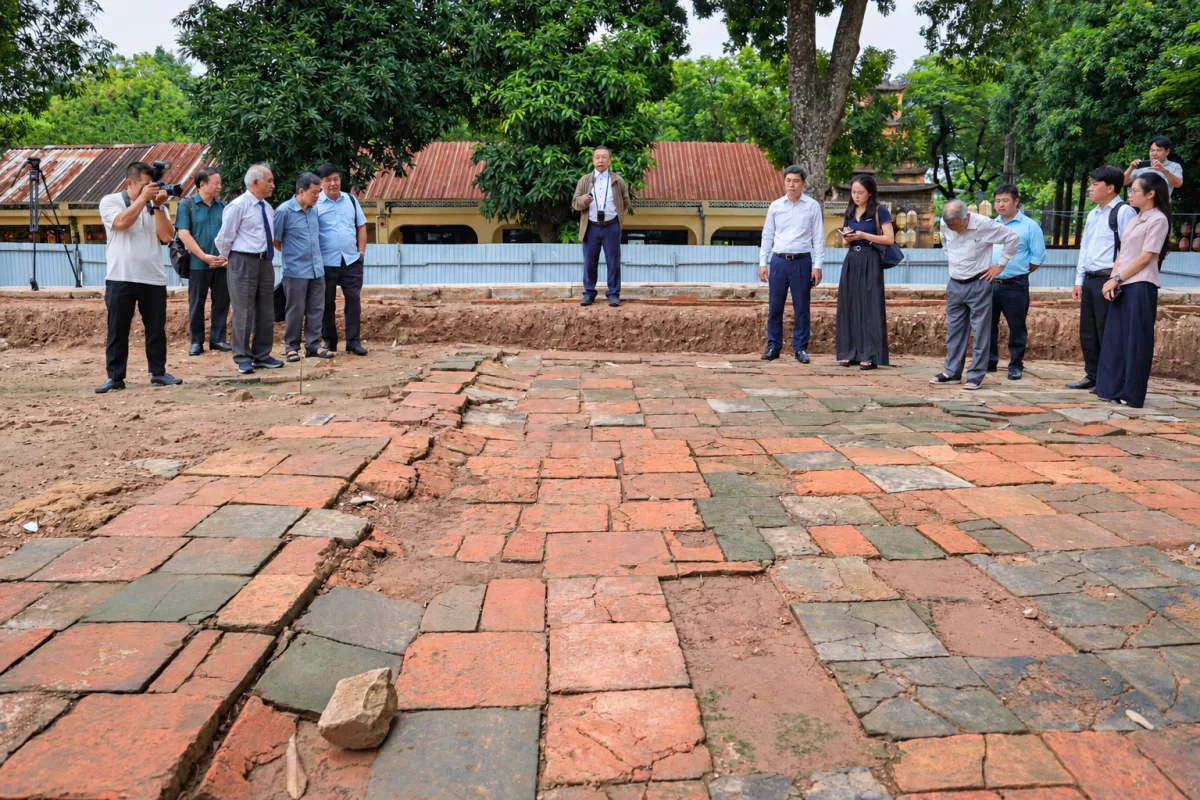
To find out what the palace was, we first had to remove what was covering it. In 2025, with the agreement of the World Heritage Committee, the artillery building was dismantled according to a controlled protocol. Below, over 580 square meters, archaeologists read a six-meter stratigraphy: six stacked eras, since the 7th century. The Lê layer is the thickest, almost three meters alone.
The figure that struck the specialists is elsewhere. Each column foundation was mounted in 81 layers of packed earth, four meters deep. The Thăng Long Conservation Center presents them as the largest ever recorded in the history of Vietnamese architecture. By the end of 2025, 30 foundations out of an estimated thirty and a half had been identified.
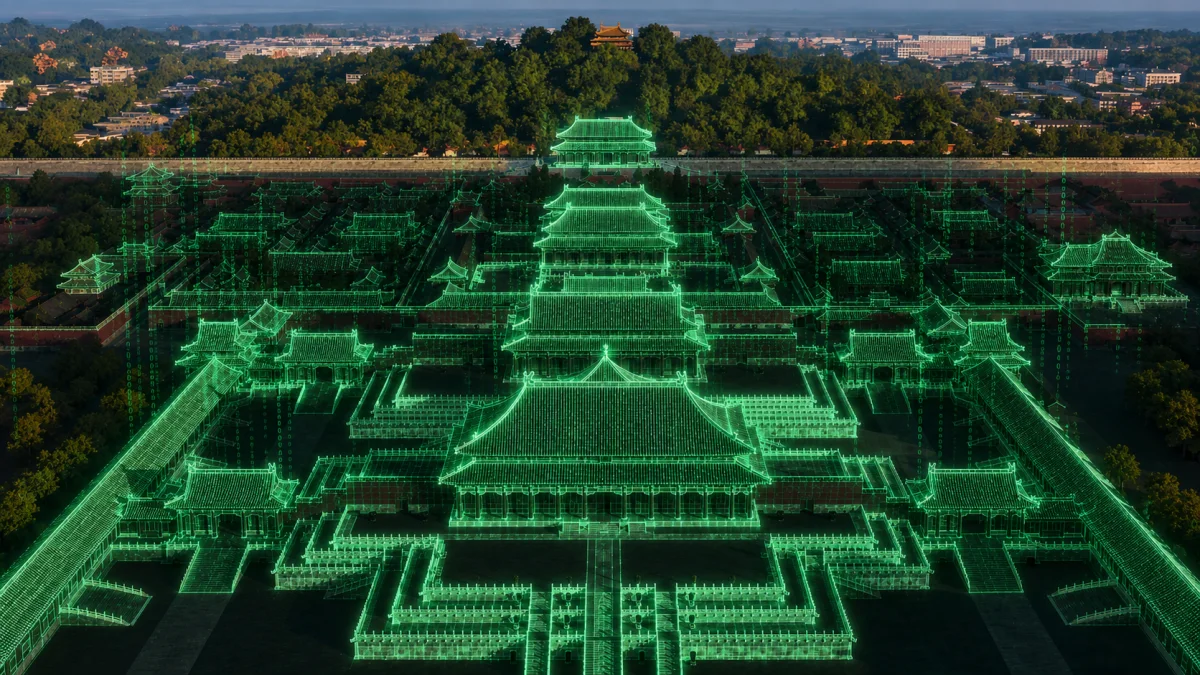
The fourth campaign, presented on September 14, 2026 on 910 square meters, clarified the scale. Archaeologist Tống Trung Tín, who heads the site, places the platform at 56 meters by 30, or approximately 1,600 square meters. For the first time, the team found “cores” inside the foundations, from which engineers deduced wooden columns 1.1 to 1.3 meters in diameter. A fragment of a broken stone base is still 1.2 meters wide. The plan is taking shape: nine bays from east to west, five from north to south.
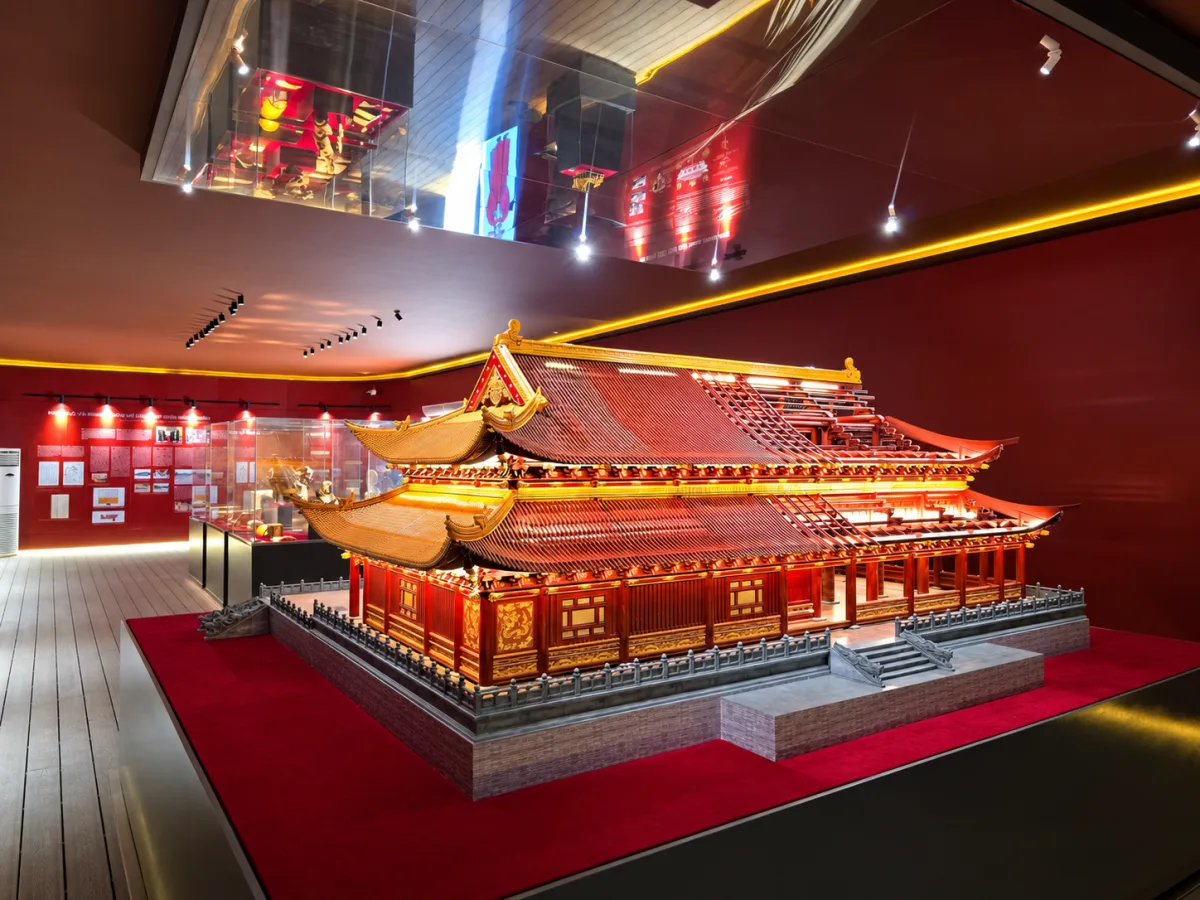
Above ground, on the other hand, almost everything remains to be deduced. UNESCO experts say it bluntly in their 2026 analysis: it is still necessary to clarify which elements of architecture are well supported by the evidence, and with what degree of certainty. The Venice Charter, the reference text for restoration since 1964, sets the limit in one sentence: the restoration stops where the hypothesis begins.
A 17th century palace under a 15th century name
This is the least known paradox of the construction site. The Kính Thiên of national stories is that of the 15th century, the golden age of Lê Thánh Tông. But the fourteen column foundations uncovered in 2025 date from the Lê restoration, in the 17th and 18th centuries, when the palace was rebuilt on a more massive framework. It is these foundations, the best preserved and the best readable, which give the project its material basis.
UNESCO noted this choice of time. In its July 2026 decision, the Committee notes that the new version of the project gives more weight to the Lê layer than to other attested periods. He asks what, in terms of knowledge, a reconstruction of the 18th century state would bring.
Experts also ruled out a convenient model. The Vietnamese project cited the imperial city of Huế, where several buildings were rebuilt. Response from the advisory bodies: Thăng Long was for centuries a multi-layered seat of power, which Huế was not, and therefore Huế cannot become the benchmark to copy.
None of this is unique to Vietnam. Any rebuilt palace requires choosing a moment in its history. Japan did it in Nara with the great hall of Heijō Palace, Korea in Seoul with the axis of Gyeongbok Palace. In Hanoi, this choice is made before the eyes of UNESCO, and in writing.
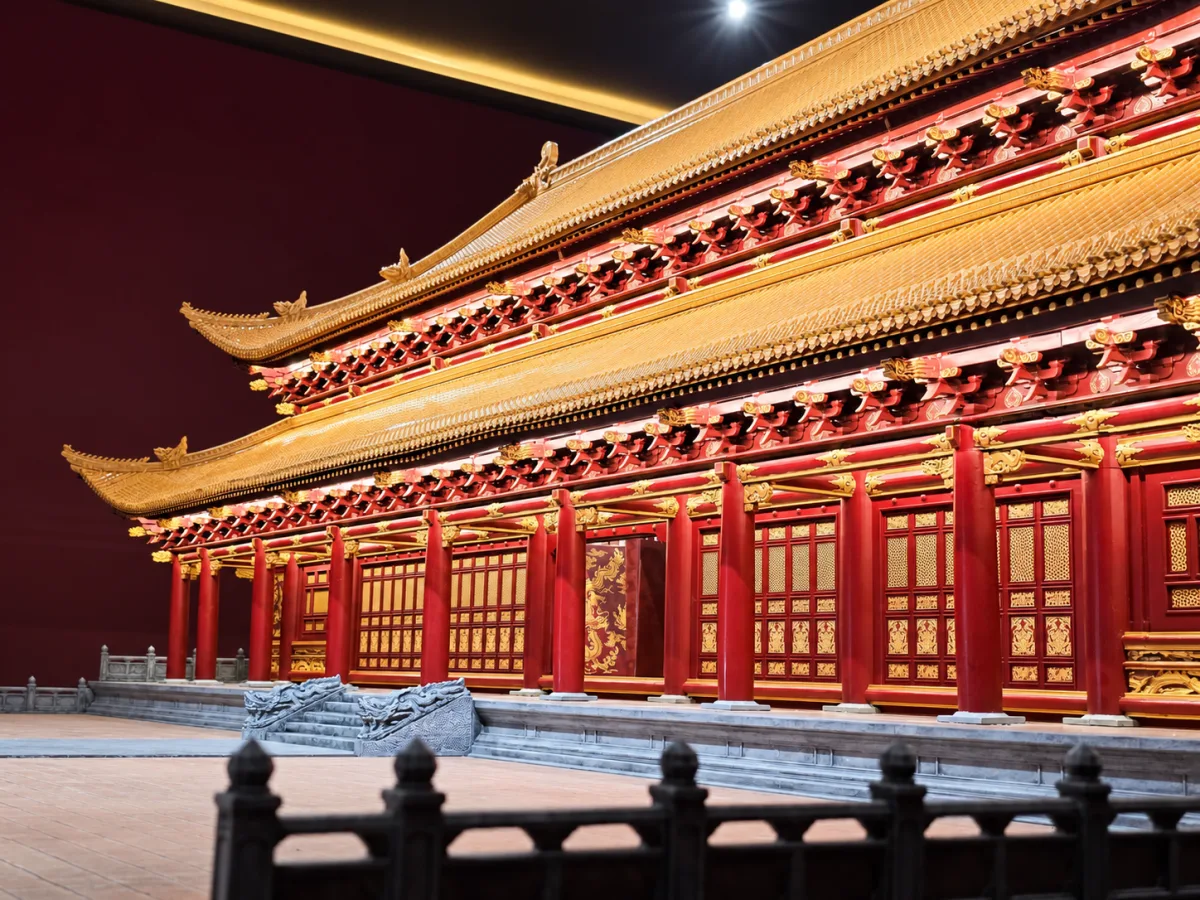
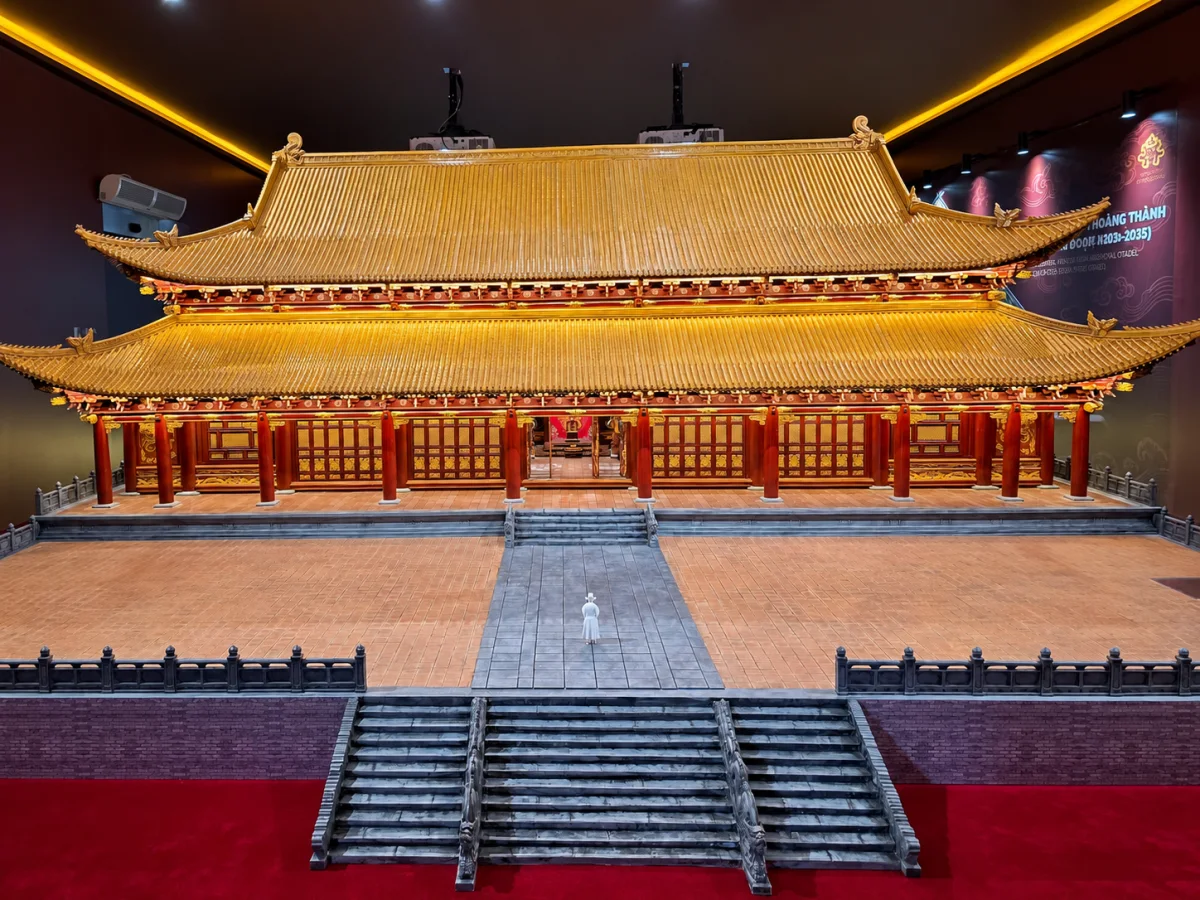
UNESCO approves palace but awaits evidence for its gate
On September 29, work began with a partial and precise agreement. Meeting in Busan in July, the World Heritage Committee confirmed the first phase of the project, from 2025 to 2030, except for the reconstruction of the Kính Thiên Gate. We must first establish, through new archaeological and architectural evidence, what it was and how far it can be restored. According to UNESCO analysis, its remains are probably located under a more recent building, the former Operations Department building, designated CT17.
The second phase, from 2030 to 2035, which provided for other reconstructions and other demolitions, is considered insufficiently supported. No further demolition or reconstruction should be considered before further evidence and impact studies. A report is expected by December 1, 2027.
The experts also asked a question of method. In their eyes, the excavations seemed designed to clear the ground and facilitate construction, rather than to learn. They point out that the archaeological deposits are themselves protected, that they must remain in place, and that a reconstruction is a tool to explain the site, not an element of its universal value.
On the Vietnamese side, the project is based on fifteen years of interdisciplinary research. The president of the Hanoi People’s Committee asked that any new archaeological evidence be isolated and submitted to scientists, without rushed intervention to meet deadlines. The work is entrusted to the Vietnamese group Sun Group. Three days after the ceremony, Hanoi welcomed the adoption of a “Hanoi Document on Heritage and Authenticity”. The word is at the center of the entire debate.
A question that the steward asks himself:
Where did we eat? The offices, the kitchens?
Kính Thiên was a ceremonial hall, not a dining room. On the first day of the year, the court celebrated Chính đán: the king ascended his throne, twelve addresses of greetings from the provinces were read, the mandarins prostrated themselves in the court. But in the 17th and 18th centuries, when real power belonged to the Trịnh lords, the banquet that followed was held at the lord’s house, not the king’s. The throne room gave the rite. The table was elsewhere.
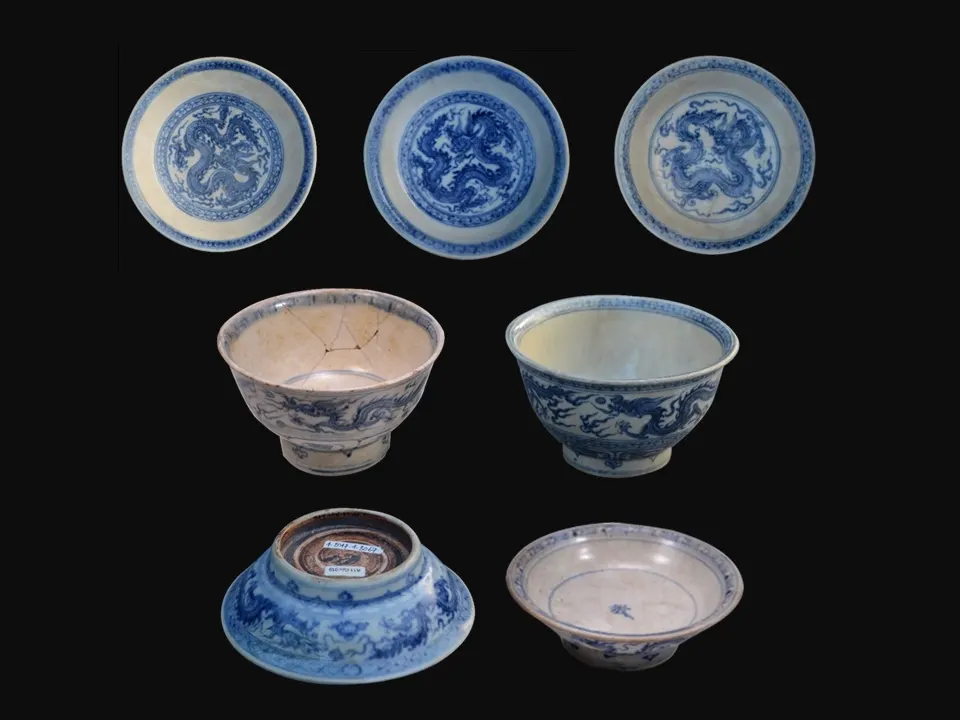
The publications consulted do not locate any palace cuisine. The ground, however, gave a clue. In 2002, the excavations at 18 Hoàng Diệu revealed a blue and white service of seven pieces, painted with five-clawed dragons, reserved for the sovereign and classified as a national treasure in 2023. On one of the plates, we read in the center the character 敬, “respect”. Under the foot, another character: 廚, “cooking”. A mark of office, like a silversmith engraved on his cutlery.
“The pans survived, but only in the registers. »
The menus of the Lê court have not been preserved. The registers of hospitality remain. Scholar Phan Huy Chú notes that at the end of the Lê restoration, the Chinese envoy received a banquet every two days, of 30 platters each. To the relays on his route, the commissary delivered rice, a pig, a goat, fish, 30 eggs, fish brine, vinegar, pepper and betel. The last relay before the capital included two buffaloes, two oxen, 500 oranges, 200 coconuts and 1,000 bananas. The same register lists the equipment supplied to the relay kitchens: woks, pots, jars, basins, knives, cutting boards.
A later banquet sets the scale. In 1821, in Thăng Long, the Nguyễn court received the Qing envoy who had come to invest Emperor Minh Mạng. According to a 1943 work, the farewell banquet has a table of 50 dishes, seven of 40 and 25 of 30: swallow’s nests and sea cucumbers on the head table, next to boiled pork and caramelized pork.
The project does not plan to rebuild the kitchens. He announces “intangible cultural practices of the court” to animate the future palace. With what recipes and what dishes? If Huế cannot serve as a model for the walls, he cannot serve as a model for the table.
In a window in Hanoi, a porcelain plate still bears the word “cuisine” under its foot. The palace will rise above. His cuisine, for the moment, is based on this character alone.
FAQ
Why did Kính Thiên Palace disappear? The Lê Palace collapsed and was demolished in 1816 on the orders of Emperor Gia Long, who built a stopover residence in its place. It was razed in 1886 by the French army to build an artillery building.
Did UNESCO approve the reconstruction? Yes, in part. In July 2026, the World Heritage Committee confirmed the first phase 2025-2030, except the reconstruction of the Kính Thiên Gate, and judged the second phase 2030-2035 insufficiently supported.
What remains of the original palace? The platform, the foundations of the columns and the stone staircases carved with dragons, including those of the southern staircase dated 1467, classified as a national treasure.
Can we visit the site? Yes. The Thăng Long Imperial Citadel, at 19C Hoàng Diệu in Hanoi, is open daily from 8 a.m. to 5 p.m., according to the Conservation Center.
Sources and credits
Institutional sources
- UNESCO, World Heritage Committee,
Decision 48 COM 7B.25: Central sector of the Imperial City of Thăng Long, Hanoi
, 48th session, Busan, 2026. * UNESCO, ICOMOS, ICCROM,
WHC/26/48.COM/7B.Add.2: State of conservation of World Heritage properties
, July 3, 2026. * Thang Long-Hanoi Heritage Conservation Center,
Kinh Thien Palace, the Heart of the Imperial Citadel of Thăng Long
, updated August 18, 2026. * Thang Long-Hanoi Heritage Conservation Center,
, December 29, 2025. * Thang Long-Hanoi Heritage Conservation Center,
Lễ Chính đán thời Lê qua các nguồn tư liệu
, January 31, 2024. *ICOMOS,
International Charter on the Conservation and Restoration of Monuments and Sites (Venice Charter)
, 1964, article 9.
Press
- VietnamPlus (Vietnamese Information Agency),
Vietnam launches the conservation and restoration project of the Kinh Thiên Palace
, September 29, 2026. * VietnamPlus (Vietnamese Information Agency),
The Hanoi Document affirms Vietnam’s role in safeguarding world heritage
, October 2, 2026. * Dân trí,
Hé lộ địa tầng quy mô 1,300 năm của Kinh đô Hoàng thành Thăng Long
, September 15, 2026. *VnExpress,
Bộ bát đĩa gốm hoa lam của vua nhà Lê
, April 1, 2023. *Znews,
Yến tiệc triều đình Việt Nam đãi sứ thần có những món gì?
, July 31, 2019.
Specialized sources
- Phan Huy Chú,
Lịch triều hiến chương loại chí
, section
Bang giao chí
, ed. NXB Trẻ, 2014, cited by
. * Sông Bằng and Vân Hạc,
Việt Hoa thông sứ sử lược
, 1943, reed. NXB Hồng Đức, 2014, cited by
.
Iconographic credits
- Main image: the dragon staircase of Kính Thiên Palace. ©
[source to be completed] 2. French soldiers on the steps of the Nguyễn residence, 1884-1885. Photography Charles-Édouard Hocquard, via
Thăng Long-Hanoi Heritage Conservation Center
. 3. Excavations of the Kính Thiên Palace platform, September 2026. © Nguyễn Hà Nam /
. 4. to 6. Restitution model of the Kính Thiên Palace, overview and details. ©
[source to be completed] 5. Blue and white service of the Lê court, national treasure. © Cục Di sản văn hóa (Vietnam Cultural Heritage Department), via
.