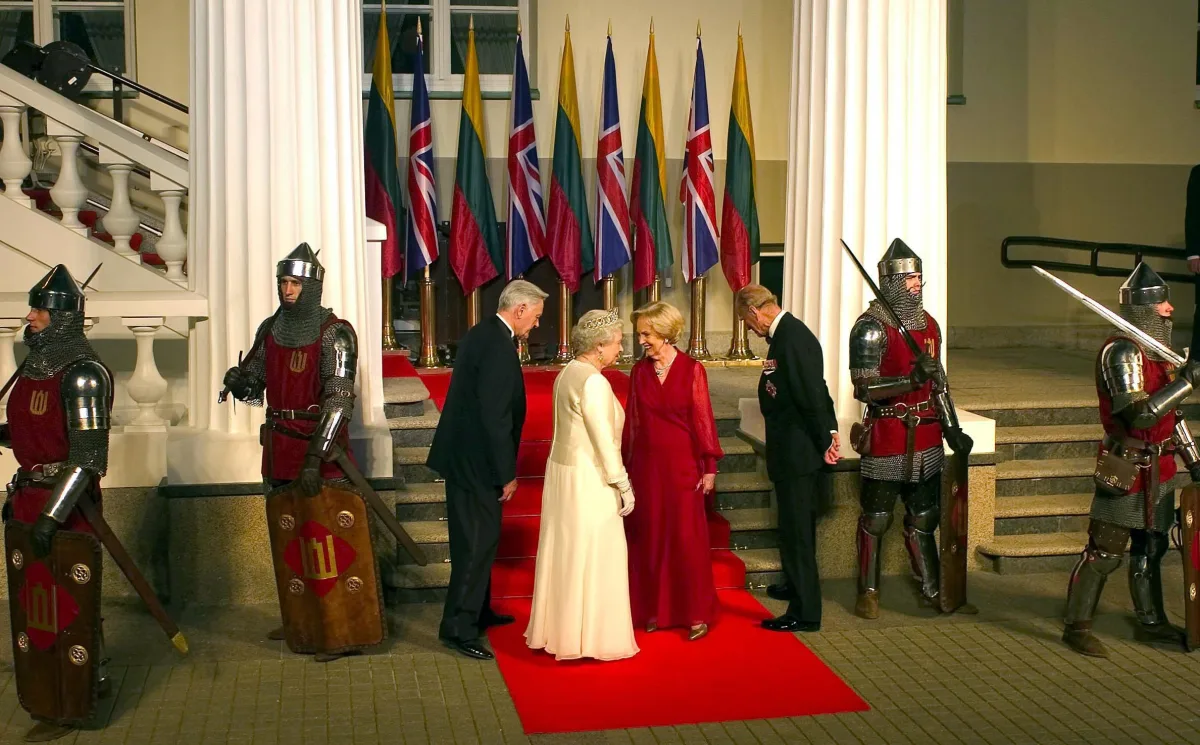
Every Sunday at noon, soldiers in 14th century armor pass through the gates of the Presidential Palace in Vilnius, alongside the guard of honor in parade uniform. In this palace which saw Napoleon and his pursuer pass, guarding the place means watching over centuries of history.
In October 2006, Queen Elizabeth II climbed the steps of the Presidential Palace in Vilnius to be received on a state visit. On the landing, soldiers in 14th century armor paid him the honors. The scene was not a fitting decor: at the Presidential Palace of Lithuania, the Prezidentūra, on Daukanto Square, the medieval guard honors distinguished guests and watches over the place every Sunday. In this palace, the guard does not only protect a head of state: it watches over centuries of national history, and reminds those who cross the threshold.
Story of a palace that has been through everything, and of a guard that goes back in time.
A palace that has survived all regimes
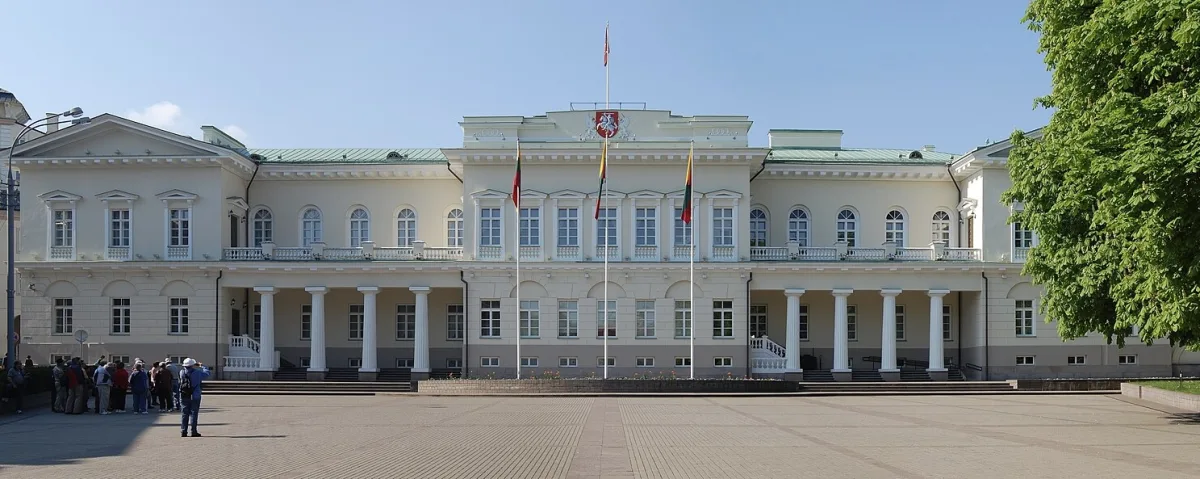
The building is one of the oldest witnesses of power in Vilnius. Residence of the city’s bishops since the 16th century, it was rebuilt in 1750 by the architect Laurynas Gucevičius after several fires. When Lithuania was absorbed by the Russian Empire at the end of the 18th century, the palace became the residence of the Governor General of Vilnius.
That’s when he enters the big story. In 1812, he welcomed Napoleon during his campaign towards Moscow, then his adversary, the Russian general Kutuzov, who pursued him on the way back. The same palace will have housed both sides of the same war. Rebuilt between 1824 and 1834 in the Empire style by the Petersburg architect Vassili Stassov, it then served as a club for Soviet officers, then housed for a time the French embassy, before becoming, in 1997, the official headquarters of the president of Lithuania, which had become independent again.
The Sunday ceremony
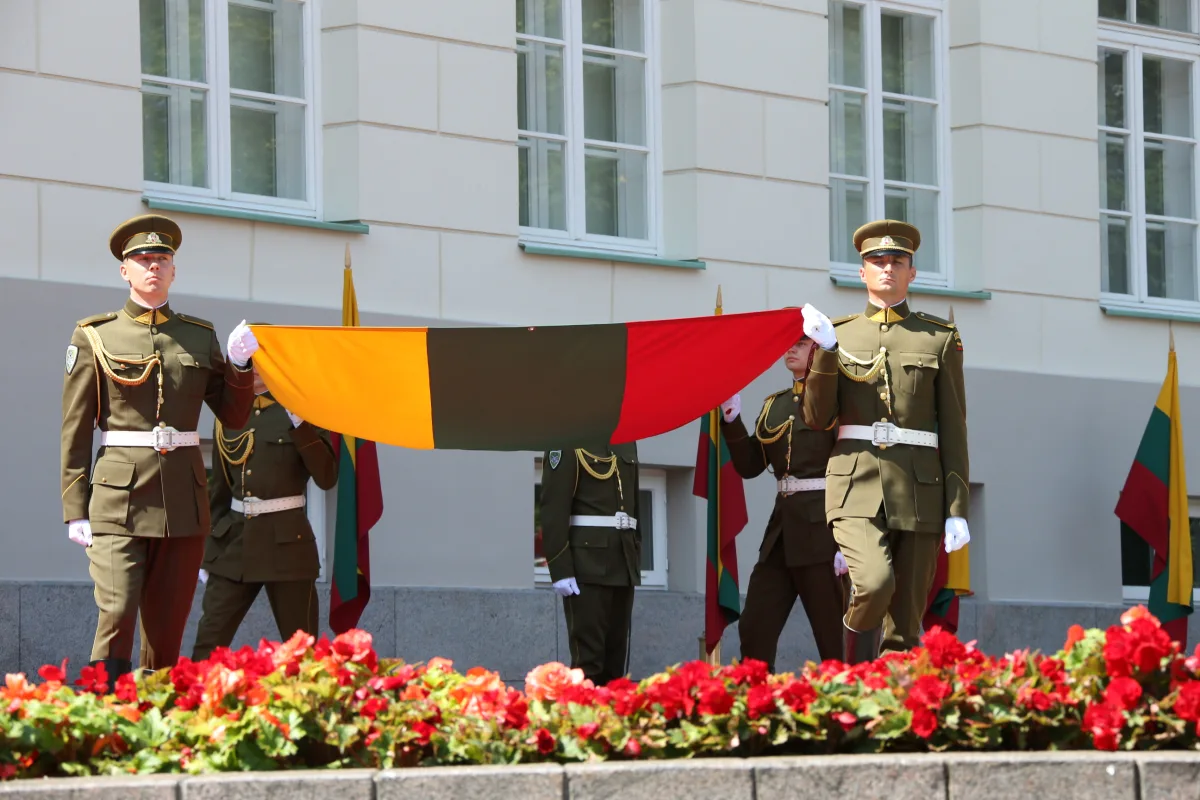
Every Sunday at noon, the flag replacement ceremony is held in front of the palace. Soldiers of the Honor Guard Company of the Lithuanian Armed Forces, in contemporary parade uniform, lower the colors, replace them and raise new flags. The ceremony is brief, regulated to the precise gesture, and followed every week by locals and visitors alike.
But it doesn’t stop there. Soldiers dressed in 14th century weaponry, from the time of Grand Duke Algirdas, cross the main gates and carry out a medieval maneuver in the square, before two of them stand guard for an hour. The message is clear: today’s army wants to be the guardian of a history dating back several centuries.
When the Middle Ages stand guard
This is where the palace becomes unique. By parading soldiers in 14th century outfits in front of the headquarters of a member state of the European Union and NATO, Lithuania is reminding us that its sovereignty is not new. The Grand Duchy was, in the Middle Ages, one of the largest States in Europe, and the current Republic is the direct heir of this greatness.
Protecting this palace is not just about guarding the doors. It is to maintain a living link with a history that the occupation had sought to erase. The medieval guard is not simple folklore for tourists: it silently affirms a national continuity across centuries and regimes.
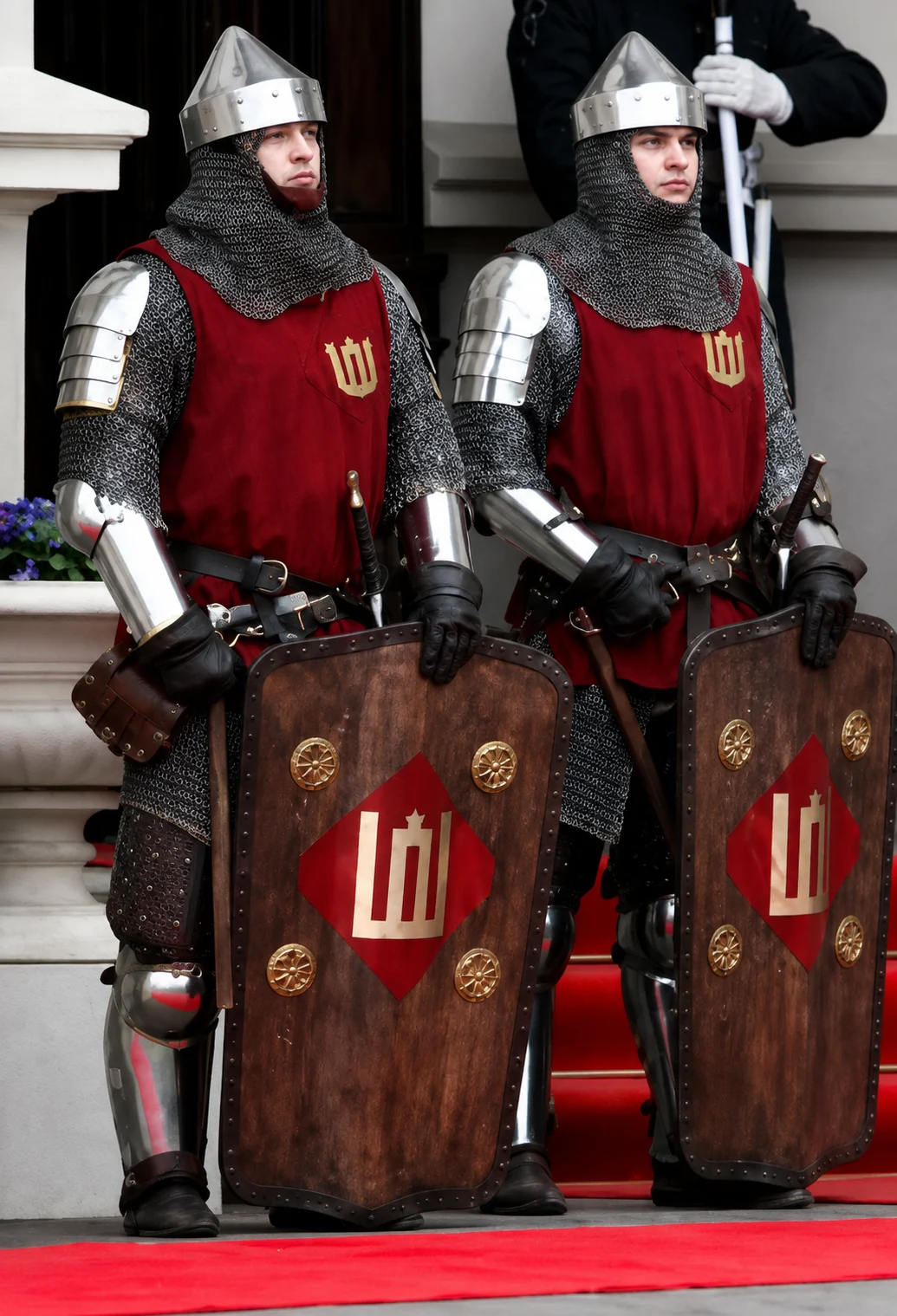
To watch is also to receive
Behind its gates, the palace is a place of work and reception. The president receives ambassadors and heads of state there, signs and decorates there. In October 2006, he welcomed Queen Elizabeth II and the Duke of Edinburgh on a state visit: the sovereign was honored on the threshold by guards in 14th century armor, and the press reported that, impressed, she asked to see them again before the state dinner. That day, President Adamkus presented him with the Order of Grand Duke Vytautas, the highest Lithuanian distinction. Closer to home, in 2023, the palace received Allied leaders on the eve of the NATO summit held in Vilnius. Its state rooms, its grand grand staircase and its White Hall make up the solemn framework of Lithuanian diplomacy.
The palace is not limited to a building. Together with the administrative building on Universiteto Street, the park and the conference hall, it forms an enclosed ensemble in the heart of the Old Town of Vilnius, a UNESCO World Heritage Site.

A park that keeps the memory of the soil
The palace park is also worth a look. Under its paths, archaeological excavations carried out from 1995 onwards revealed a cultural layer more than three meters thick, with remains dating back to the 16th century and even older objects. The ground itself preserves the memory of the centuries that the guard above celebrates.

The Presidential Palace in Vilnius is not the largest or most gilded seat of power, but it is one of the most eloquent.
A palace which housed bishops, governors, a French emperor and his Russian pursuer, before returning to the nation, could not be satisfied with an ordinary guard.
By bringing the Middle Ages alongside the present every Sunday, Lithuania says one simple and powerful thing: we only protect a State well by protecting, with it, the long history from which it was born.