In 2009, South Korea set itself a target worthy of an industrial plan: to place its cuisine among the top five in the world. A first lady, a foundation, tens of millions of dollars. And a flagship restaurant in Manhattan that never found a single taker.
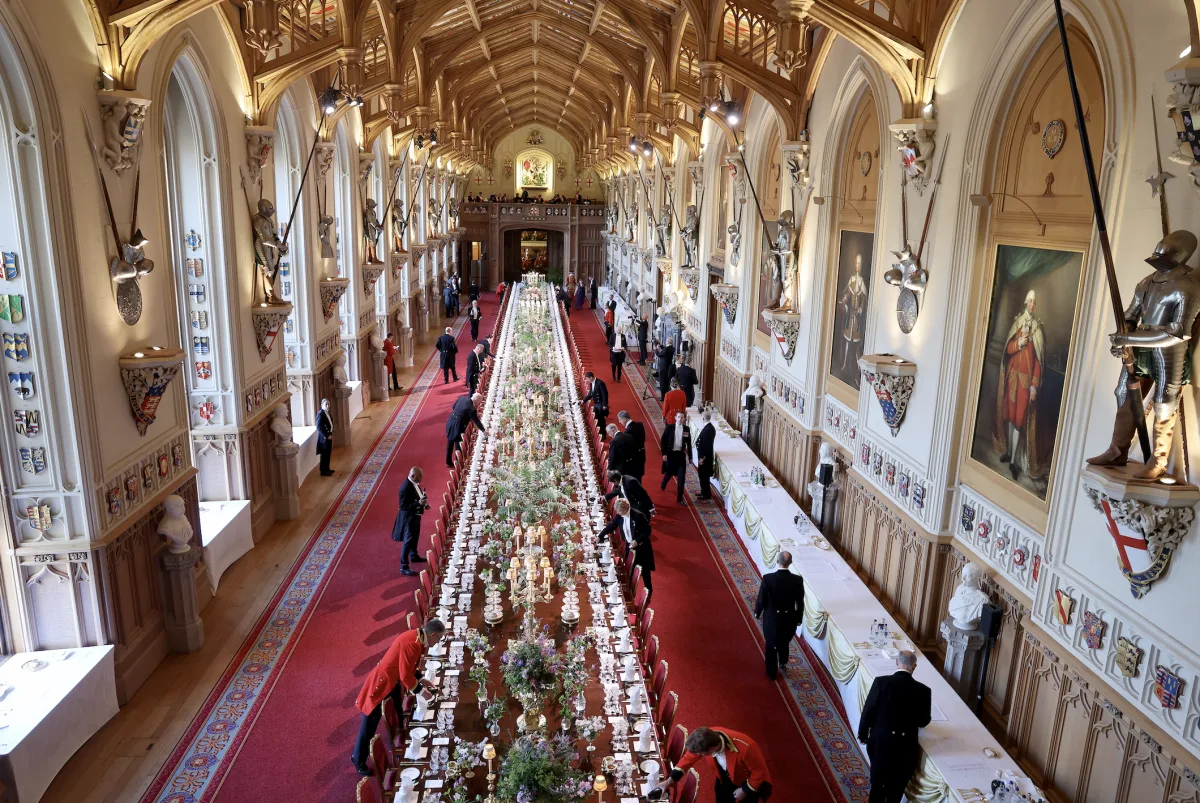
Seoul, May 2009. Several hundred delegates spend a full day in seminars, then sit down to a long, multi-course lunch. On the menu, a single question. The world already knows Chinese, Japanese, Indian, Thai and Vietnamese food. Why not kimchi, bulgogi, kalbi? For many foreigners, Korean cuisine is still, at this point, a curiosity reserved for Koreans. The government has decided that this must change.
After Cars, Taste
South Korea first exported cars, televisions, semiconductors. Then its television dramas and its music, the “Korean wave”. In 2009, it decided to export its cuisine by the same method: a plan, resources and numbers.
The project was launched under the presidency of Lee Myung-bak and championed personally by the first lady, Kim Yoon-ok. The Ministry of Agriculture was put in charge. The objective was set down in black and white: to bring Korean cuisine into the world’s top five, and to raise the number of Korean restaurants abroad to 40,000 by 2017. The campaign, christened “Korean Cuisine to the World”, was given a budget of around 40 million dollars.
The administration followed. In 2009, a working group and a preparatory committee were created. In March 2010 the Korean Food Foundation was born, tasked with making Korean cuisine known around the world. As early as 2009, Seoul also had gochujang, doenjang and ginseng registered with the Codex Alimentarius, the international food standards body. Even chilli paste went through diplomatic channels.
After cars and televisions, Korea decided to export its taste.
Backpacks, Documentaries and UNESCO
The campaign needed faces. In 2011, five young Koreans, the “Bibimbap Backpackers”, travelled through fifteen countries in 255 days to cook and share their cuisine, with the backing of the government and a major Korean food group. The state also paid television channels in Europe and the United States to broadcast documentaries on Korean dishes.
The strongest blow was diplomatic. In December 2013, UNESCO inscribed kimjang, the communal making and sharing of kimchi before winter, on the list of the intangible cultural heritage of humanity. The Korean Ministry of Foreign Affairs said so itself: it had worked to secure that inscription. But a dish this famous also attracts quarrels. We tell the rest of the story, all the way to the online battle with China, in our feature Kimchi: The Cabbage That Went Viral.
The Restaurant Nobody Would Take On
Political will has its limits. In 2012, a member of parliament accused the project of having swallowed 80 billion won without results to match. The flagship restaurant planned in the heart of Manhattan, with 5 billion won of public money, attracted not a single Korean company. Under President Park Geun-hye the campaign ran out of steam, before being relaunched by the Ministry of Agriculture.
That is the real lesson of this story. A government can fund festivals, chefs and documentaries. It can have a tradition inscribed by UNESCO. It cannot make anyone, in Paris or in Chicago, crave kimchi on a Tuesday night.
A state can fund a cuisine. It cannot decree an appetite.
Who Really Won?
Fifteen years on, Korean cuisine is no longer a curiosity. In 2024, Stanford University devoted an entire symposium to it, describing it as one of the most fashionable cuisines in the world. But the scholars gathered that day also stressed the role of the Korean diaspora, of chefs settled abroad and of popular culture.
Success, then, has several parents. The state opened doors, provided resources and a direction. The dramas and the music created curiosity. The cooks of the diaspora did the rest, restaurant by restaurant.
Korea did not invent gastrodiplomacy: Thailand had launched it as early as 2002. But Korea made it an avowed policy, with numerical targets, a dedicated administration and public failures. That is what makes it a textbook case, studied as early as 2013 by the researcher Mary Jo A. Pham. And that is what makes it useful to any country tempted to put its cuisine in the service of its image: ambition can be decreed, taste has to be earned.
Also in our pages: Culinary Diplomacy: When the Plate Plays Politics; Taiwan: Bubble Tea as Ambassador; Kimchi: The Cabbage That Went Viral.
FAQ
What was the campaign to globalise Korean cuisine? A plan launched in 2009 by the South Korean government to place Korean cuisine among the world’s top five and raise the number of Korean restaurants abroad to 40,000 by 2017.
Who was behind the project? President Lee Myung-bak and the first lady, Kim Yoon-ok, together with the Ministry of Agriculture and, from 2010, the Korean Food Foundation.
Did the campaign succeed? Partly. It suffered public failures, such as the flagship restaurant planned for Manhattan. But Korean cuisine is now one of the most popular in the world, thanks also to the Korean cultural wave and the diaspora.
Sources
- The Christian Science Monitor, “South Korea: Korean food goes global”, 5 May 2009.
- The Korea Times, “Globalization of Korean food hits snag”, 11 October 2012.
- The Korea Times, “Korea’s ‘hansik’ globalization bears fruit”, 16 April 2017.
- UNESCO, “Kimjang, making and sharing kimchi in the Republic of Korea”, inscribed in 2013.
- Ministry of Foreign Affairs of the Republic of Korea, press release of 5 December 2013.
- The Hustle, “The $40m bet that made South Korea a food and cultural power”, April 2024.
- Shorenstein APARC, Stanford University, “Korean Cuisine Gone Global”, proceedings of the symposium of 11 April 2024.
- Mary Jo A. Pham, “Food as Communication: A Case Study of South Korea’s Gastrodiplomacy”, Journal of International Service, vol. 22, no. 1, spring 2013.
Picture Credit
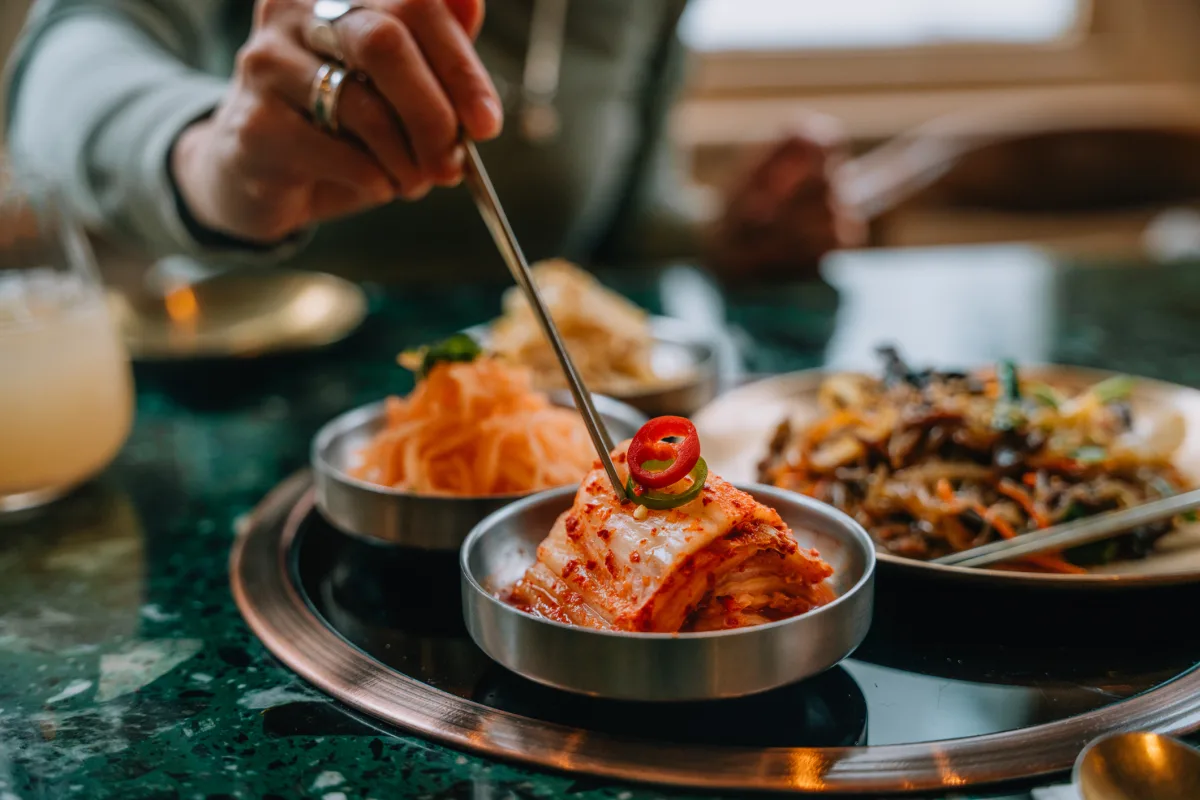
Main photograph: kimchi served with other banchan, the small Korean side dishes, in a restaurant. Illustrative image. Oscar Wong / © Getty Images, ref. 2154410471.
With the contribution of Mary Jo A. Pham.