Diplomatic Cuisine
By the editors of Intendance Palace
November 2015. Tehran asks the Élysée for a dinner without wine. Paris refuses, offers a breakfast instead, and Iran finds it too modest. Two months later, the Iranian president is received at 3 p.m., an hour when nothing is served. Welcome to the palace kitchens, where every dish can become an incident.
On 17 November 2015, Hassan Rouhani is due to be received in Paris by François Hollande. His delegation asks that alcohol be removed from the state dinner and that the dishes be halal. France refuses: custom dictates that a selection of French wines be served at official meals at the Élysée. Paris then proposes a breakfast, which Iran deems “too cheap”. The Paris attacks push the visit back to 28 January 2016. On that day, the Iranian president is received at the Élysée at 3 p.m. No meal.
In Rome, three days earlier, Italy had made the opposite choice. Wine was banned from the lunch with President Sergio Mattarella and from the dinner with Matteo Renzi. At the Capitoline Museums, the nude statues were even hidden behind wooden panels. Italy’s culture minister, Dario Franceschini, called the decision “incomprehensible”, insisting that neither he nor the head of government had been told. Hassan Rouhani, for his part, said he had asked for nothing.
One question, two opposite answers. That is the whole problem with official menus: there is no right recipe, only choices, and each one sends a message.
A Menu Is Drafted Like a Treaty
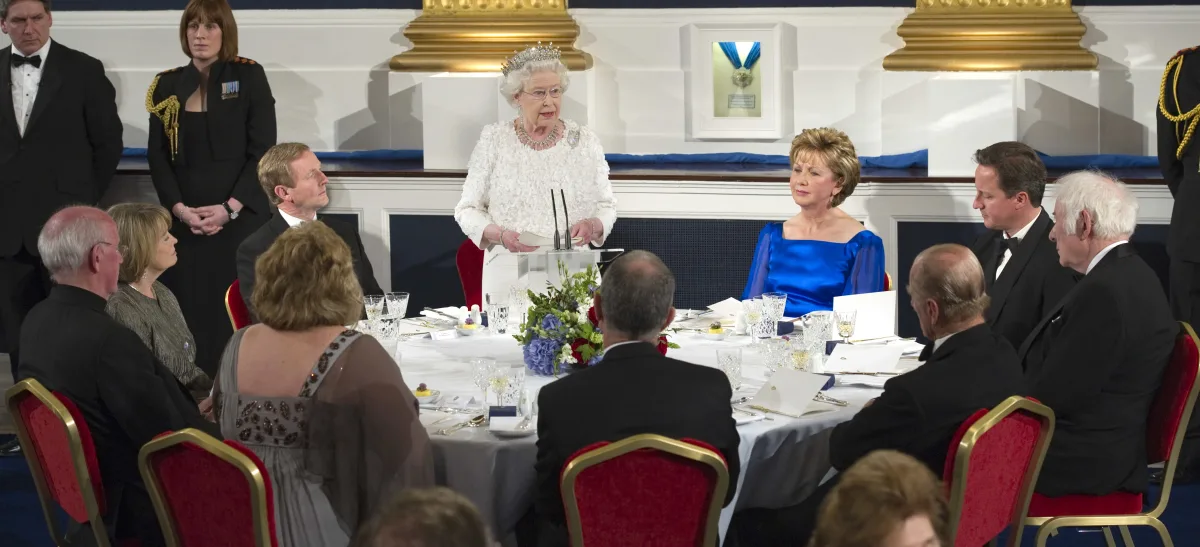
At Buckingham Palace, everything begins far from the kitchens. Darren McGrady, who cooked for the royal family for fifteen years, recounts that the Foreign Office would pass on the guests’ tastes, dislikes and dietary restrictions. The chefs would then prepare four menus, and the Queen would choose one. For a state banquet, all twenty chefs of the royal kitchen were mobilised for the whole week, instead of the usual ten.
The gold-edged invitations go out two months before the evening. The banquet brings together around 170 guests on the first night of the visit. The menu is written in French, by unbroken custom. The wines are chosen by the keepers of the royal cellars together with the head of government hospitality.
At the Élysée, the same exacting standard has a face. Guillaume Gomez entered the palace kitchens in 1997, became their chef in 2013 and served four presidents before leaving in 2021. Nicolas Sarkozy, on leaving office, had told him he could not imagine how much he mattered to the image of France. His successor, Fabrice Desvignes, came from the kitchens of the Senate.
Five Constraints for a Single Table
Faith
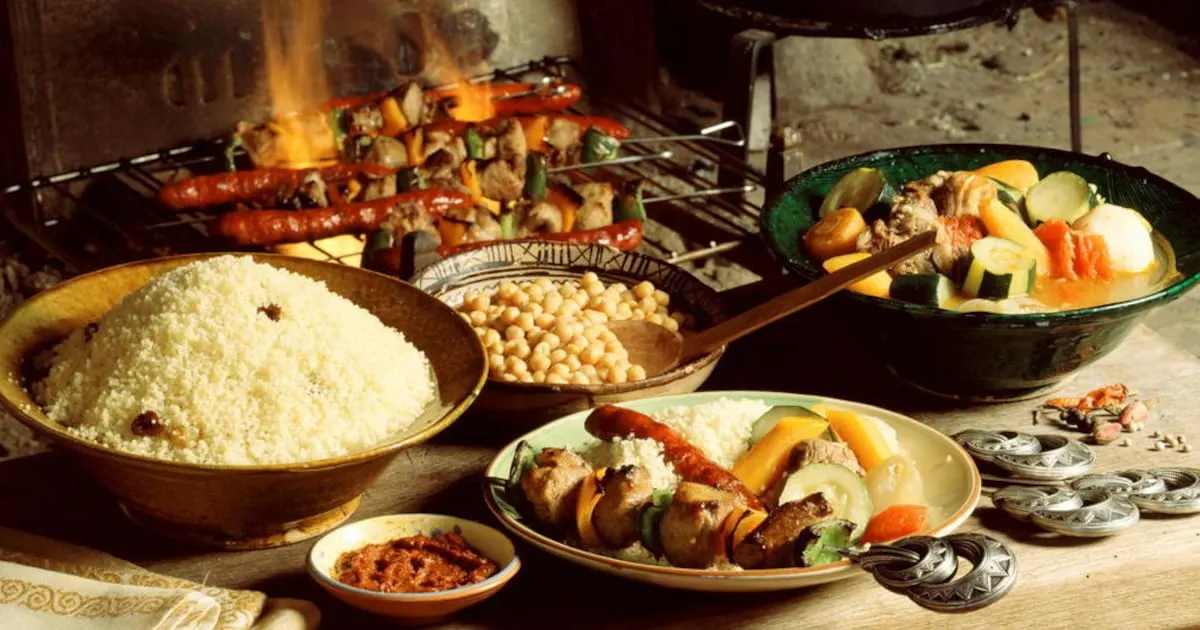
This is the most visible fault line. Palaces routinely adapt their menus to dietary prohibitions. But a diplomatic principle also holds that the customs of the host country apply during an official visit, as the diplomat and academic Jean-Paul Pancracio points out. Between these two rules, each house draws its own line. France holds on to its wine, Italy does without. Neither is wrong: each says something about itself.
The Body
Before it is an art, a state dinner is a public health operation. Allergies, diets, medical treatments: everything is catalogued in advance. And nothing about the produce is left to chance. Darren McGrady remembers that if 96 pears were needed, 250 were ordered, so that each could be inspected one by one.
Politics
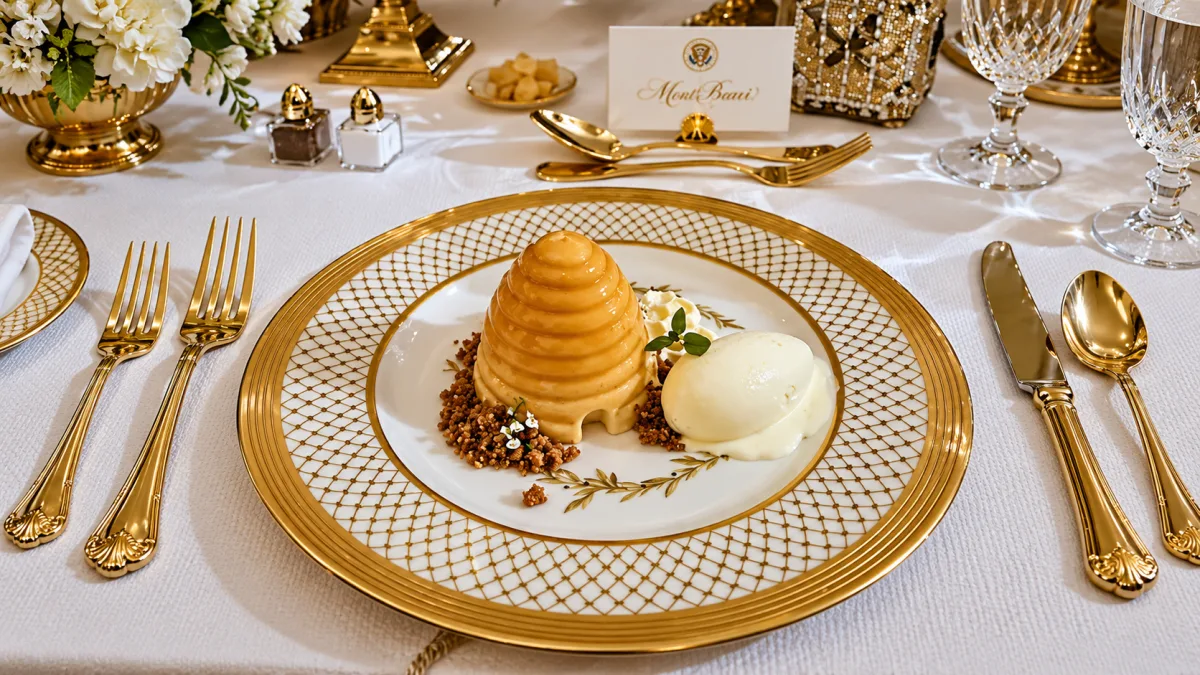
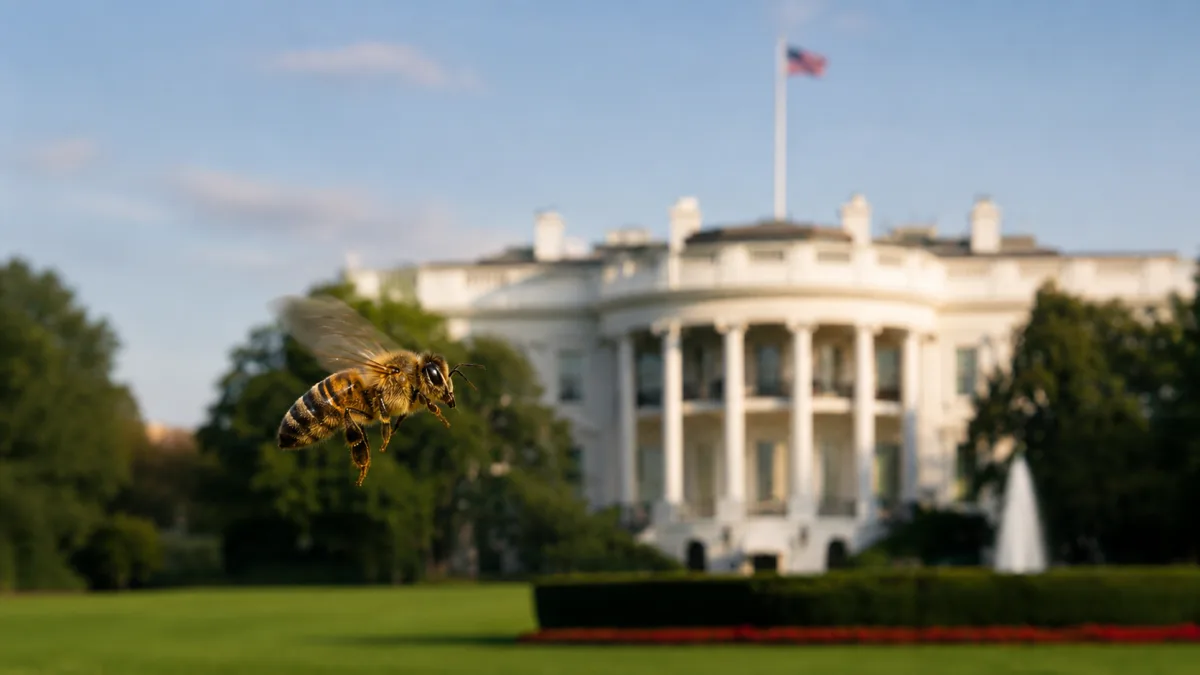
The menu replays, in negative, the state of a relationship. In June 2023, the White House receives Narendra Modi, a strict vegetarian. For the first time in recent history, the state dinner is entirely plant-based: no meat, no dairy, no eggs, for 400 guests. Guest chef Nina Curtis gives pride of place to millet, and the red wine comes from an Indian-owned Napa Valley estate. A fish course remains available to those who ask for it.
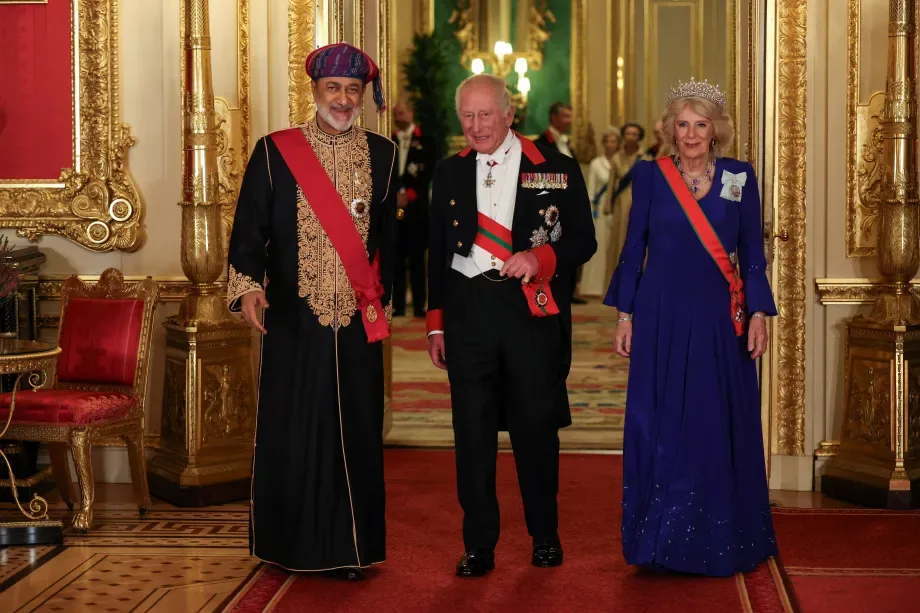
At Windsor, in July 2025, King Charles III receives Emmanuel Macron. The French chef Raymond Blanc cooks the starter and the dessert with the royal teams, in a partnership Buckingham Palace presents as placed under the sign of the Entente Cordiale. The menu, as always, is written in French.
Precedence
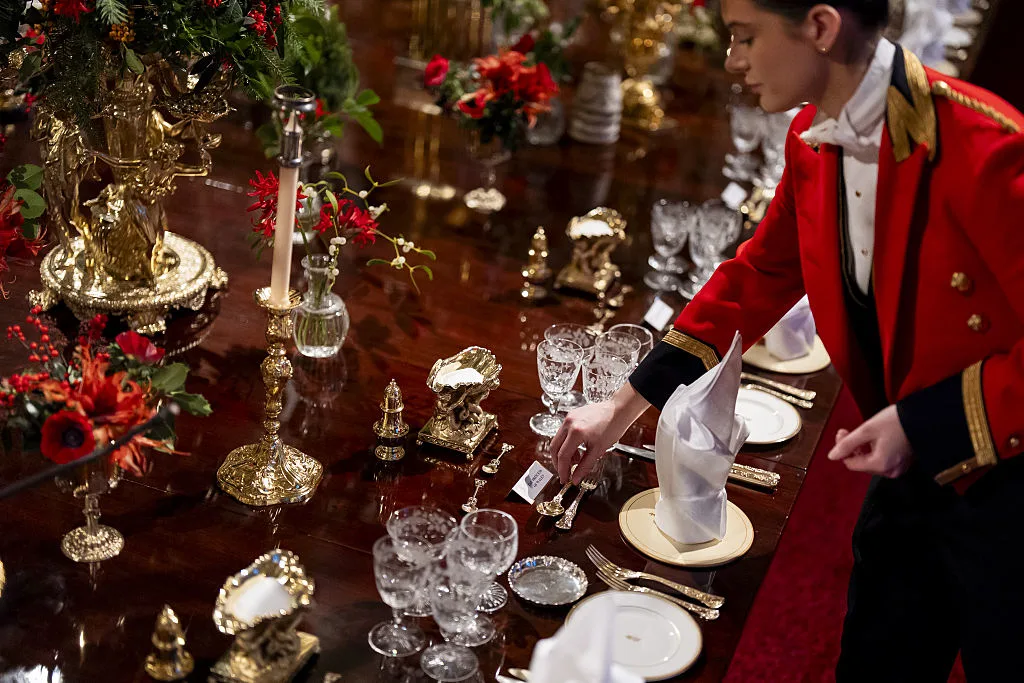
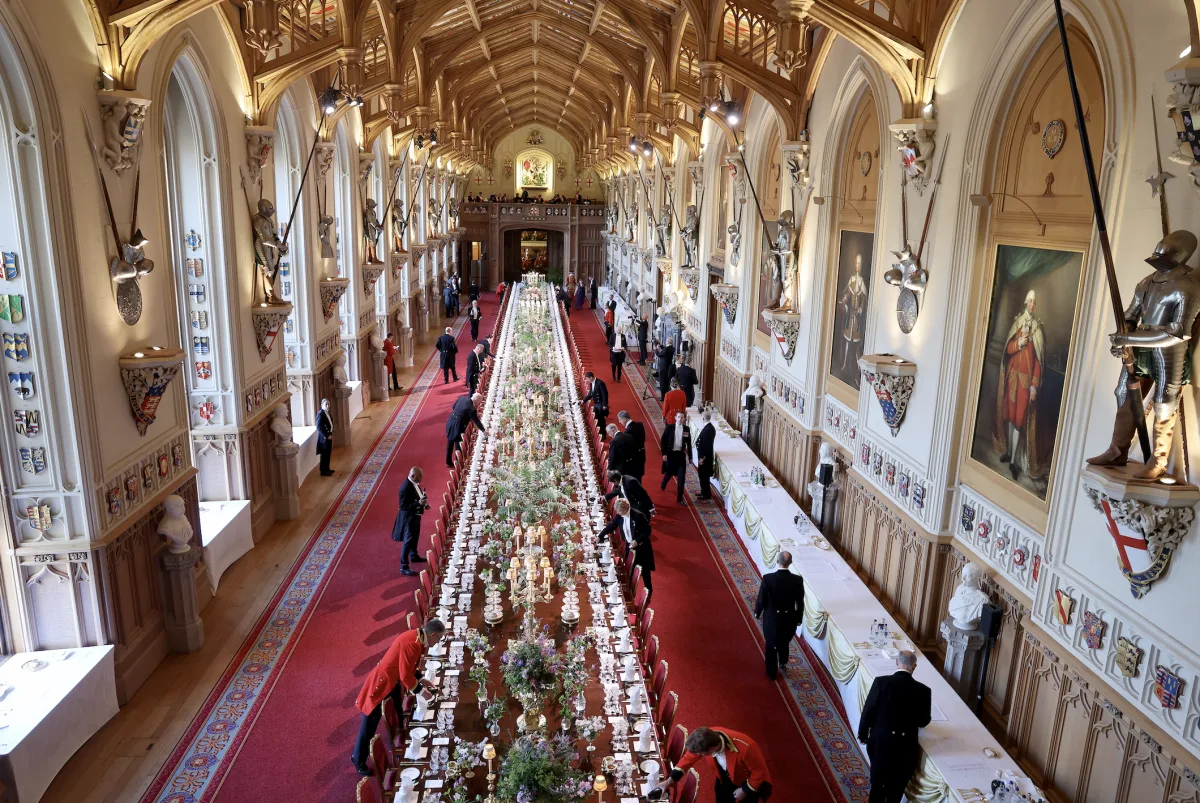
The seating order matters as much as the menu. At Buckingham Palace, the table traditionally takes the shape of a horseshoe, with the sovereign and the guest of honour at its head. It is laid with the Grand Service, a silver-gilt service of more than 4,000 pieces. Before a banquet, every piece is taken apart, washed and polished: more than 8,000 components, eight people, three weeks.
Image
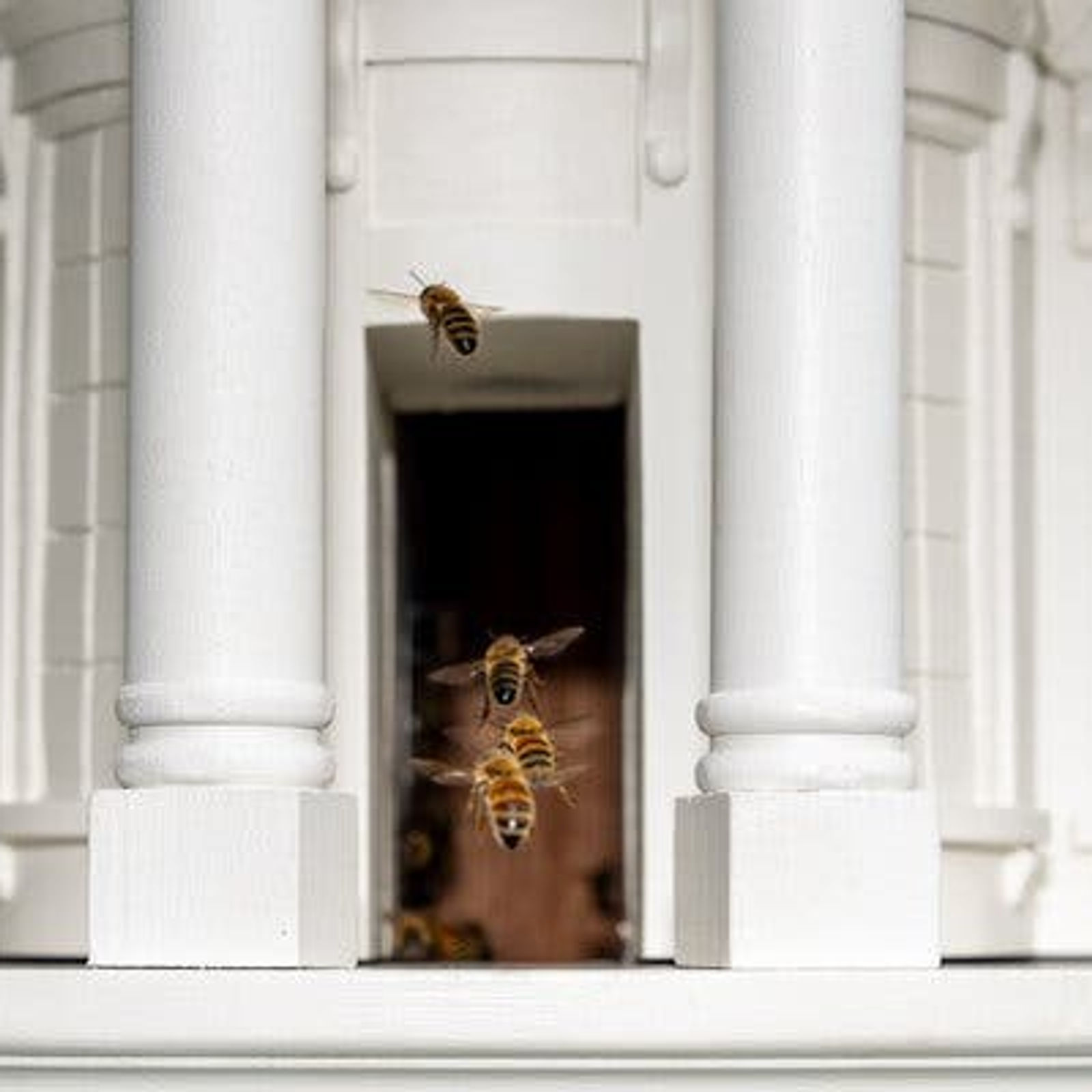
Finally, the plate speaks of the host country. At Windsor, the kitchen draws on the produce of the estate: honey, herbs, fruit and vegetables from the castle gardens. This is the most openly declared part of the official meal, the one that turns it into a self-portrait.
A successful state dinner is judged by everything that did not happen.
An Invisible Human Chain
None of this holds together without a discreet chain. Diplomats catalogue the constraints. Protocol fixes the seating and the running order. The kitchens translate these imperatives into dishes. The butlers orchestrate a service timed to the second. The Korean American chef Edward Lee, invited to cook for the state dinner given for the South Korean president in April 2023, sums up what is at stake: in a restaurant, a failed dish makes a few customers unhappy. At the White House, the stakes are of another order.
A successful state dinner is judged not by the number of stars in its kitchen but by everything that did not happen: the gaffe avoided, the prohibition worked around, the allergy anticipated, the sensitivity spared.
Gastronomy here is only a surface. Beneath it works a precision mechanism in which religion, health, politics and protocol play out in silence. The great art of the palaces is to pass this tension off as simple hospitality, and to make sure the guest, well fed, never suspects how many messages he has just swallowed.
Also in our pages: Tables of State: The Luxury That Does Not Lie; Culinary Diplomacy: When the Plate Plays Politics.
Sources
The Rouhani affair
- France 24, “Italie : le musée du Capitole habille ses statues dénudées pour la visite de l’Iranien Rohani”, 26 January 2016.
- Franceinfo, “Des statues nues du Capitole cachées avant la visite du président iranien à Rome”, 28 January 2016.
- Franceinfo Culture, “Vénus couvertes au musée du Capitole : Rohani n’aurait rien demandé à l’Italie”.
- Le Journal du Dimanche, “L’Italie cache ses statues dénudées pour la visite du président iranien”, 27 January 2016.
- L’Orient-Le Jour, “Alcool et protocole : quelques explications et précédents”, remarks by Jean-Paul Pancracio.
Buckingham and Windsor
- Royal Collection Trust, “State Banquets at Buckingham Palace”.
- Royal Collection Trust, “The Grand Service”.
- Royal Collection Trust, “A footman polishing silver at Buckingham Palace”.
- Marie Claire, “Former Royal Chef Reveals Secrets Behind Lavish State Banquets”, July 2025, remarks by Darren McGrady.
- Country & Town House, “The Royal State Banquet: What Was On The Menu?”, September 2025.
- ITV News, “State banquet: Who is on the guest list and what’s on the menu?”, 8 July 2025.
- Yahoo Lifestyle, “The Secret Rules of a Royal State Banquet”, 2026.
The Élysée
- Boursorama / Le Particulier, “Qui est le chef cuisinier d’Emmanuel Macron ?”, September 2021.
- Tuoi Tre News, “A rendezvous with the Élysée’s head chef in Vietnam”, July 2023.
The White House
- NPR, “For Modi’s state dinner, the White House is elevating the mushroom”, 22 June 2023.
- NPR, “On tonight’s state dinner menu for vegetarian Modi, mushrooms are the star”, 22 June 2023, remarks by Edward Lee.