In the first part, the bee left Napoleon’s mantle to settle in the gardens. It remains to be seen who takes care of it.
The Carpenter of the South Lawn
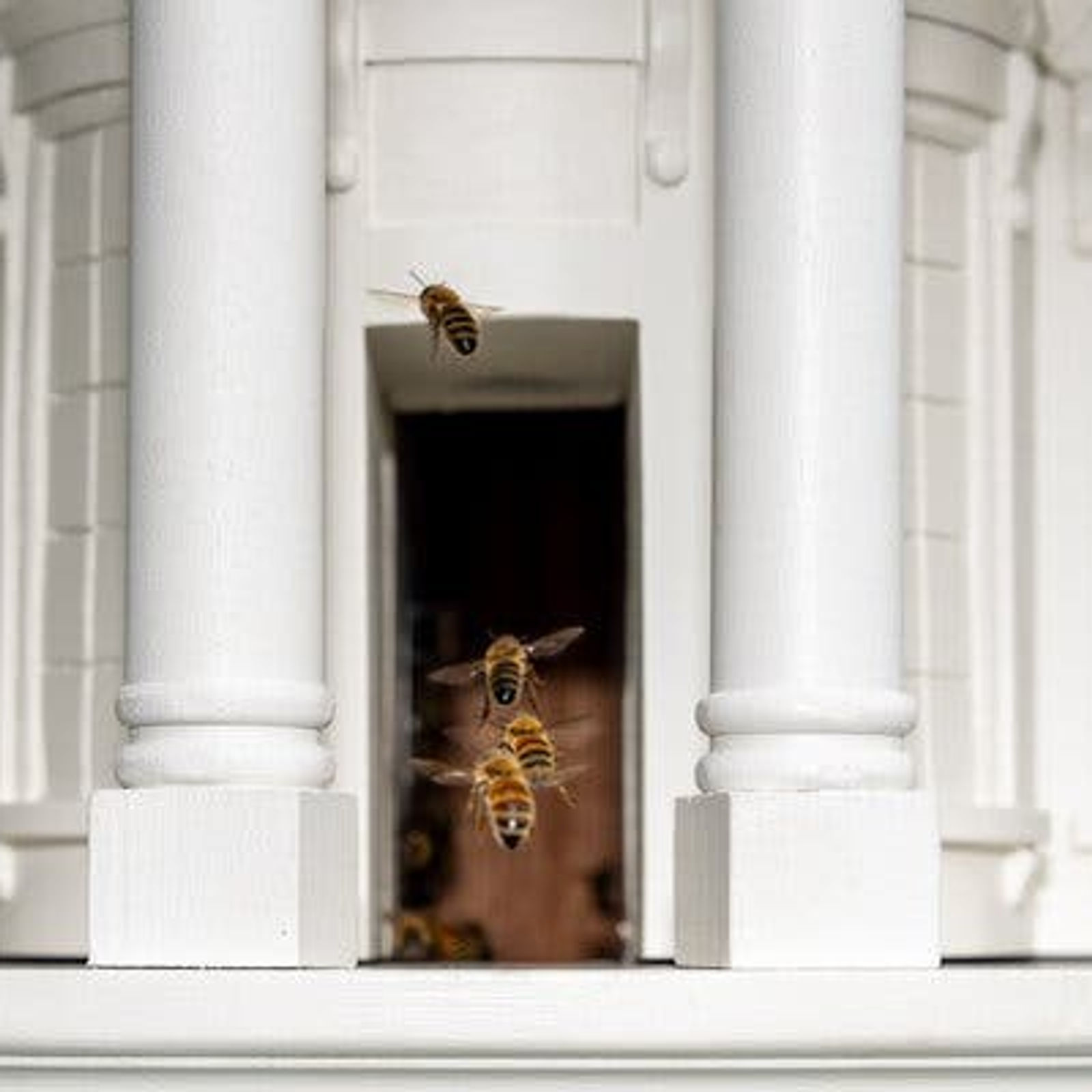
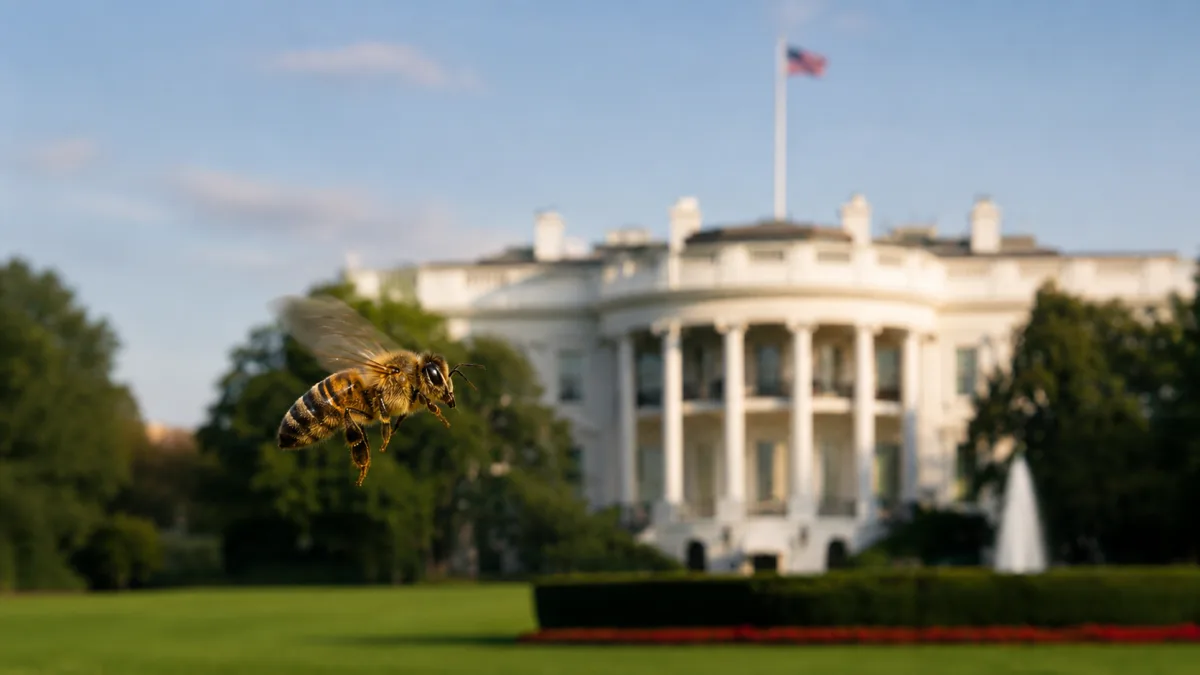
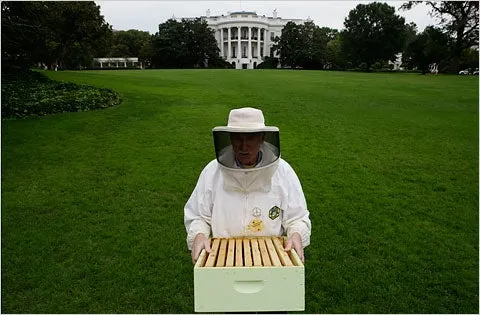
At the White House, the beekeeper was first a carpenter. In March 2009, Charlie Brandts, who works on the maintenance of the residence and raises bees as an amateur, was approached by chef Sam Kass. Michelle Obama has just dug a vegetable garden. We need pollinators. Brandts installs a beehive. On June 10, an official photographer captured him harvesting the first honey.
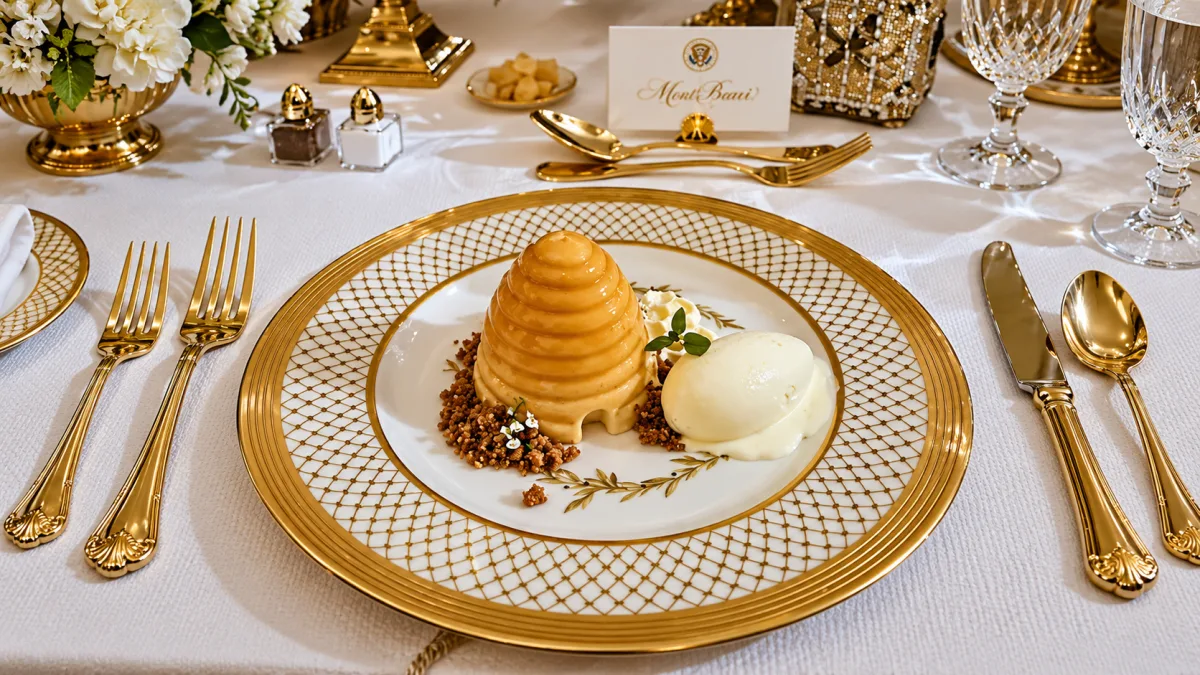
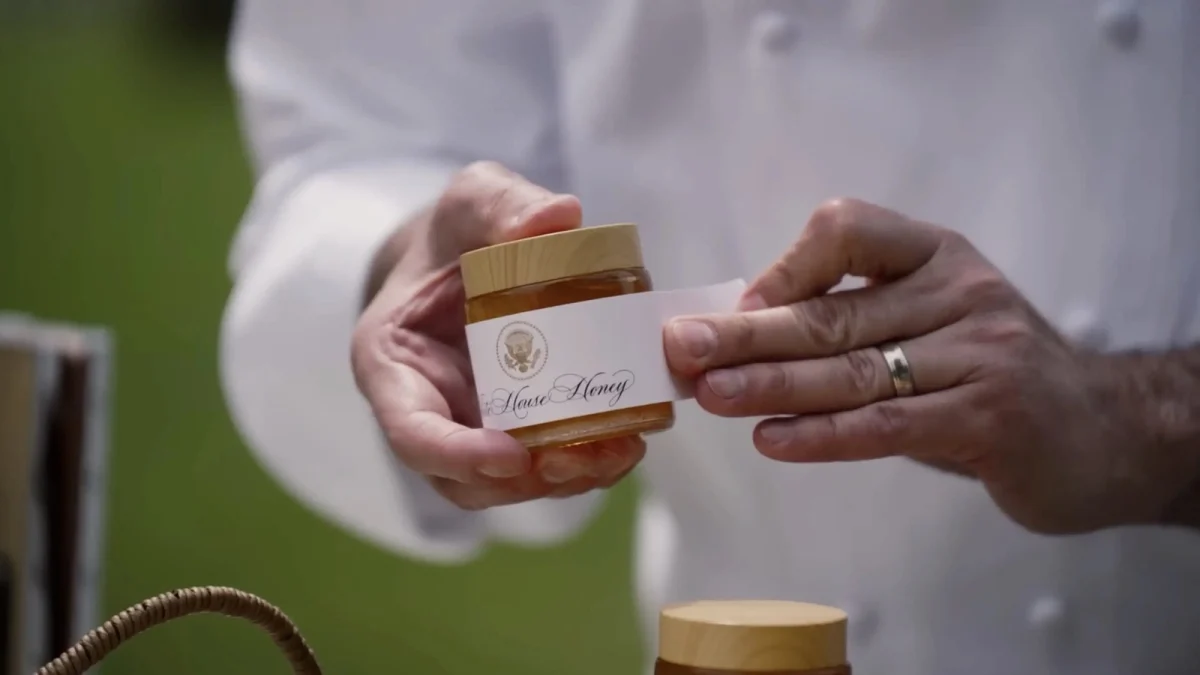
Seventeen years later, two historic colonies produce between 90 and 100 kilos of honey in good years. A third hive was inaugurated on April 24, 2026, three days before the arrival of the British sovereigns. Honey ends up in teas and salad dressings, in desserts at receptions, and among the official gifts of the presidential couple. Part of it goes to soup kitchens. Under Barack Obama, it was even used to brew a beer, White House Honey Ale, the recipe for which was published in 2012.
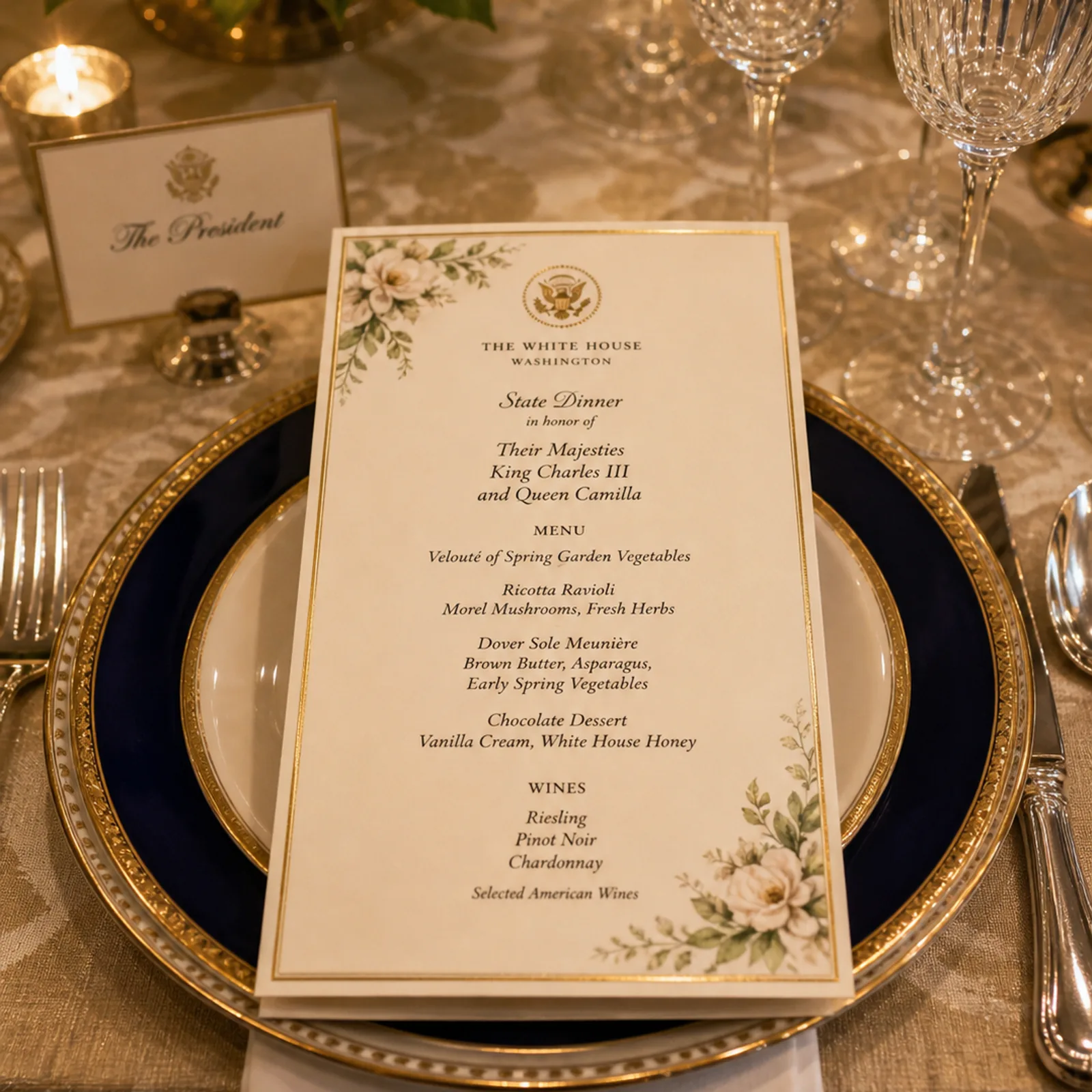
For Charles III’s dinner, the First Lady reportedly requested that extra pots be provided for the King and Queen, “because they like honey.” The compliment had substance. The king has been a beekeeper for a long time.
An island on Lake Buckingham
In London, Buckingham’s hives were placed at the end of the 2000s on an island in the lake, at the bottom of the garden. There are four of them. Their honey does not go to a store: it enters the kitchens of Mark Flanagan, royal chef since 2002, who makes madeleines, truffles and a cream biscuit served at Garden Parties. The royal family website speaks of more than three hundred pots harvested in one year.
The other family houses have their own apiaries. Clarence House has two. At Highgrove, the king’s estate in Gloucestershire, beehives occupy a dovecote, and honey is sold there under the estate’s name.
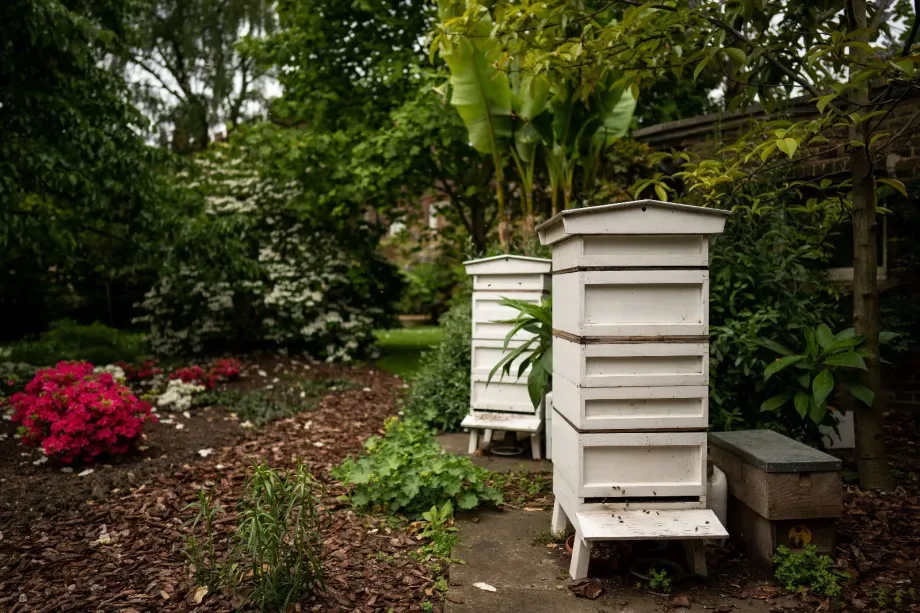
The lime tree of the Élysée
Rue du Faubourg-Saint-Honoré, the story is less linear. Hives already existed in the park in 2016, according to the Corrèze beekeeper who said he installed them there. In May 2021, two new hives arrived from Vexin, entrusted to Xavier Frémin, whom the president had met during a trip to Eure. The first harvest, in October, yields around fifteen kilos.
Since autumn 2023, four hives made in Haut-Jura have occupied the park. Their first harvest provided 35 kilos of an all-flower honey dominated by the lime tree, the most common tree in the garden. Presidential agents can purchase them every year.
The honey of parliaments
In the Bundestag, the project was born in 2015 from the meeting of an environmentalist MP, Bärbel Höhn, and a Berlin beekeeper, Daniel Holstein. A first colony was established in April 2016. The hives now occupy the roof of the Jakob-Kaiser-Haus, neighboring the Reichstag. The honey has a vintage name, Bundestagsblüte, the flower of the Bundestag, and is sold to staff.
In Canberra, the Australian Parliament has chosen another destination. Since 2017, beekeeper Cormac Farrell has looked after his hives, with most of the honey reserved for visiting foreign leaders. The rest becomes soap, mead and even vodka, on sale at the shop.

The wax of the Great Seal
It is in Edinburgh that the apiary goes furthest into the life of the State. The Scottish Parliament is home to around fifteen hives, or around a million bees according to the BBC. When the sale of their honey was announced at the store, beekeeper Stuart Hood called it a “little rush”.
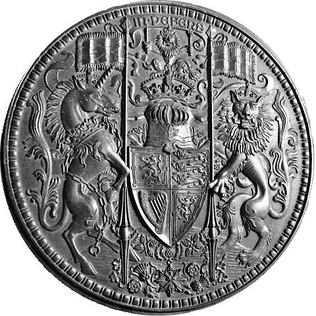
Honey, however, is not the most remarkable. The Hood family also purified the wax from the combs and handed it over to the National Archives of Scotland. There it is melted, tinted red, and then cast into the Great Seal of Scotland. This seal authenticates the decree by which the sovereign gives royal assent to laws passed at Holyrood.
A Scottish law receives its sanction under a seal which owes part of its wax to the hives of Parliament.
Palace honey most often ends up on a plate or in a box. In Scotland, the wax from their hives accompanies the sanction of the laws.
Sources and credits
Institutional sources
- White House,
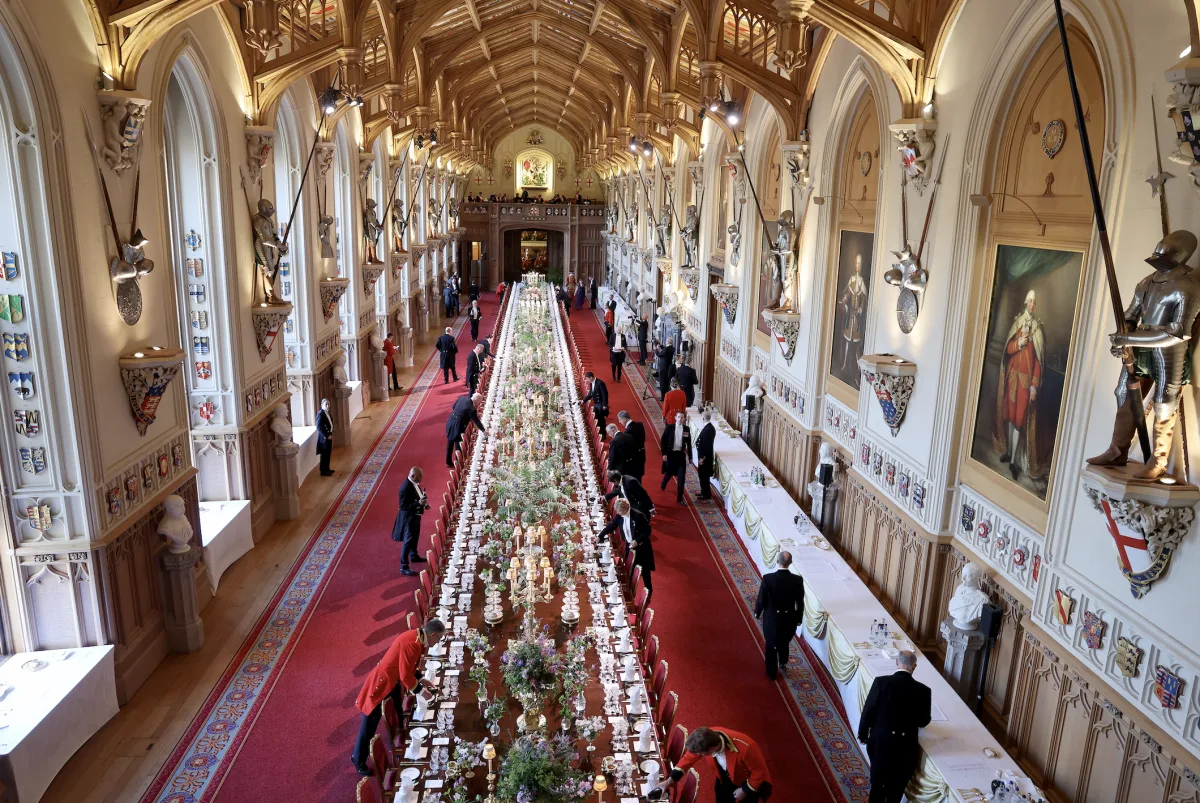
menu and decor of the state dinner of April 28 2026
. * White House,
New Beehive on South Lawn, April 24, 2026
. * White House (Obama archives),
White House Honey Ale recipe, September 1, 2012
. *Royal.uk,
. * Élysée,
. * Scottish Parliament,
. * Australian Parliament,
.
Press, by country
- United States: Fox News,
honey given during the royal visit, May 2, 2026
; Bee Culture,
. * United Kingdom: BBC,
Holyrood bees and the Great Seal, August 20, 2023
. * France: Le Parisien,
two hives from Vexin, May 8 2021
; actu.fr,
first harvest, October 12, 2021
; Paris Match,
the Élysée in ecological transition, October 9, 2024
. * Germany: Das Parlament,
Bundestag bees, January 2, 2023
; South German Zeitung,
parliament honey, May 11, 2025
. * Australia: Region Canberra,
hives of Parliament, August 24, 2019
.
Image credits
- Main image: Chris Jackson / Getty Images, ref. 2273613899.
- Image 1: Lawrence Jackson / White House, public domain.
- Image 2: Royal.uk
- Image 3: DBT / photothek / Florian Gärtner
- Image 4: Scottish Parliamentary Corporate Body, Open Scottish Parliament License v1.0.
- Illustration: image generated by artificial intelligence for Intendance Palace.