…three years later, the door closed.
On May 10, 2022, a South Korean president returned to the people the palace from which the country had been governed since 1948. Three years and eight and a half million visitors later, the door closed: power returned home. History of a democratic parenthesis - and what it reveals.
We think we know the story: a leader, seized by a democratic impulse, opened his palace to the people, and we now visit the “Blue House” of Seoul as we visit Versailles. That’s half true, and that half is already out of date. Because the opening of the Maison Bleue, on May 10, 2022, was not an end point: it was a parenthesis. It closed on December 29, 2025, when another president relocated his office there and raised the presidential flag with the two phoenixes at midnight. The palace returned to the people has once again become the seat of power.
Investigation on a round trip that says a lot about South Korea.
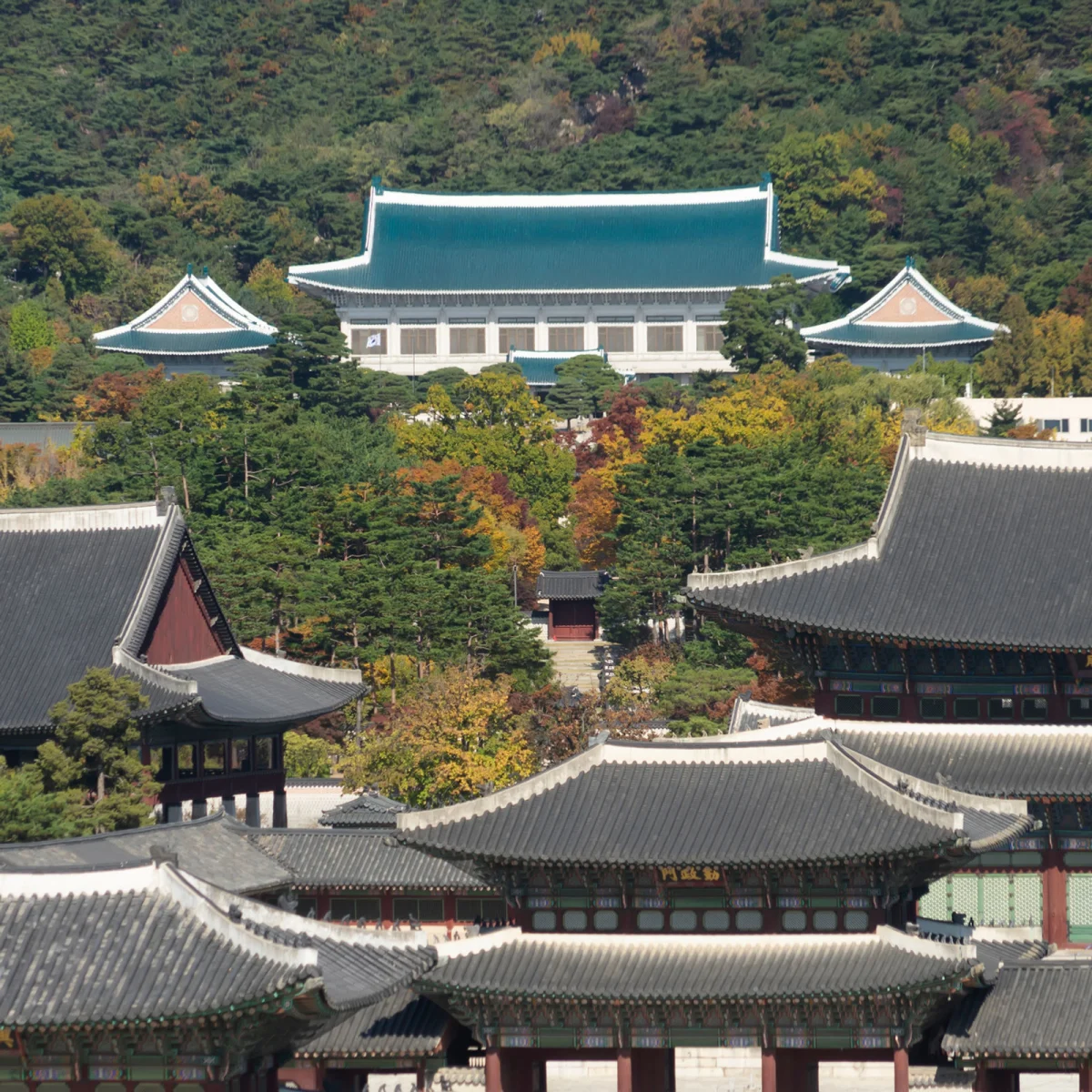
It’s this shift that we never talk about. Most guides still describe Cheong Wa Dae as a public park, access to which can be reserved online. They’re running late. The true story is not that of an opened palace: it is that of a palace that was opened, then closed - and the question that the Blue House asks is not how we give a palace to the people, but whether a place of power can ever cease to be one.
A palace born from a garden of kings
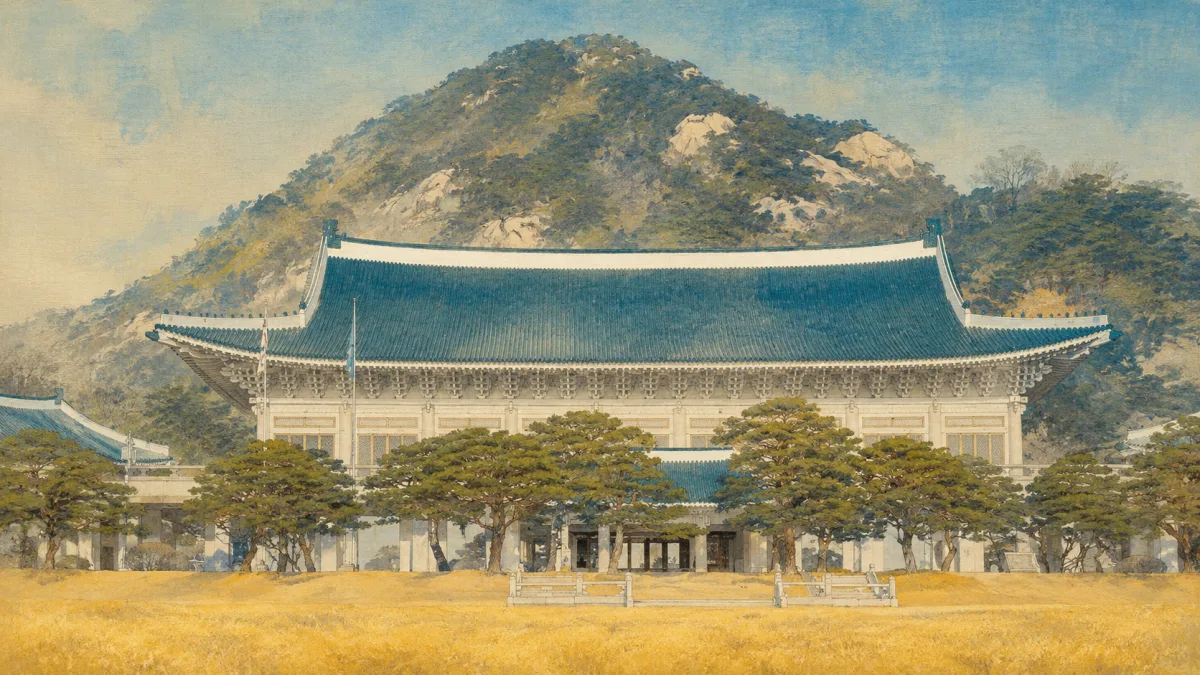
To understand what happened in 2022, we have to go back well before the Republic. The site of the Maison Bleue has never been neutral: it was first and foremost a garden. During the Joseon Dynasty, the space behind the great Gyeongbokgung Palace at the foot of Mount Bugaksan served as a royal garden - a sacred hinterland, backed by the mountain that protected the old capital.
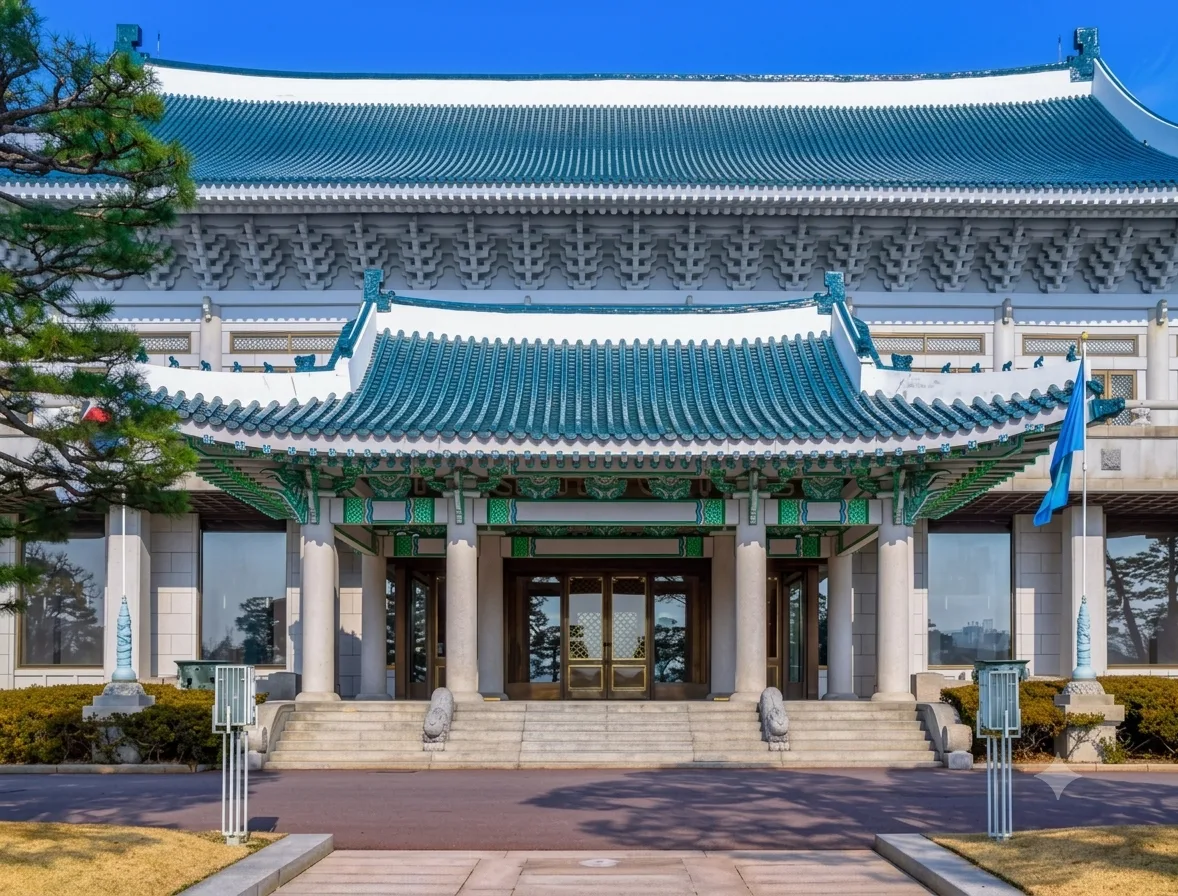
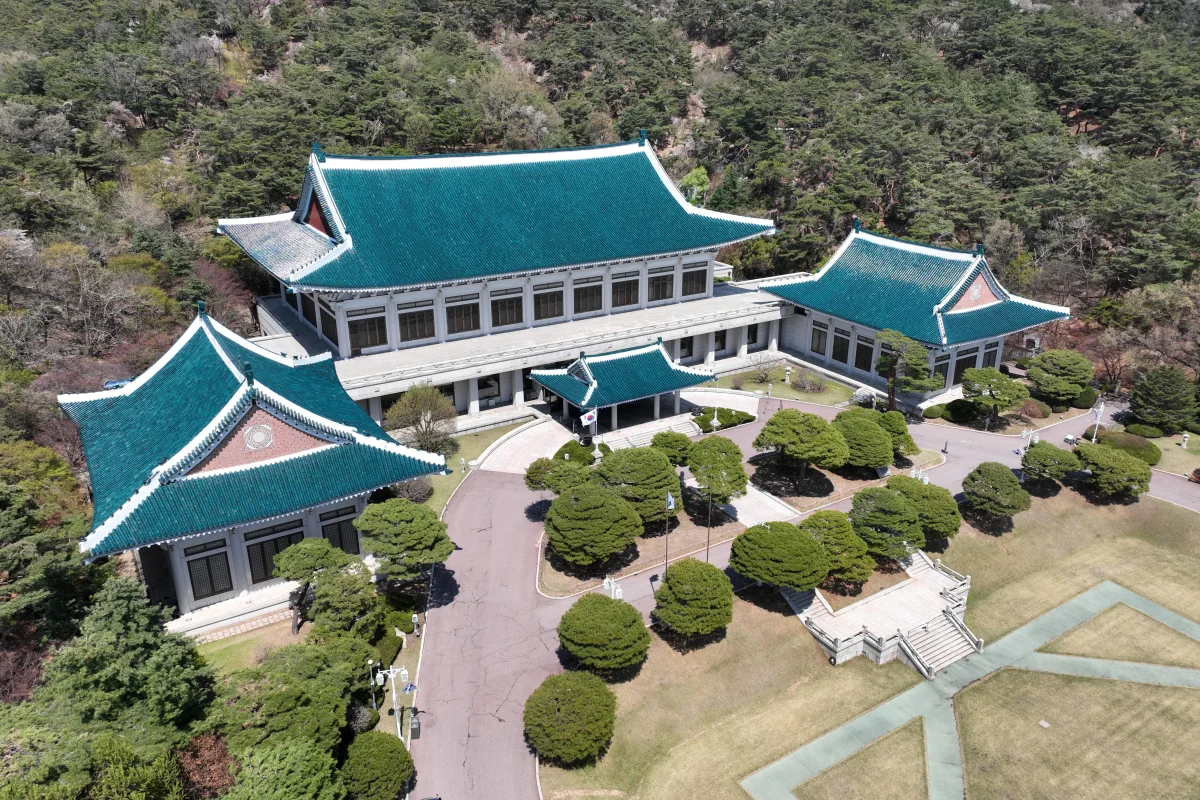
The Japanese occupation installed the governor general’s residence there: the colonial power also chose this discreet and defensible promontory. Then, in 1948, the young Republic of Korea made it the seat of its presidency. The first president, Syngman Rhee, named it Gyeongmudae; It was the fourth, Yun Bo-seon, who in 1960 gave it the name we know - Cheong Wa Dae, literally “pavilion with blue tiles”. More than one hundred and fifty thousand blue ceramic tiles, meant to evoke peace and prosperity, cover the main building.
From 1948 to 2022, every South Korean president, without exception, has lived and worked there. Nestled behind a royal palace, overlooked by a mountain, invisible from the city it governed, Cheong Wa Dae was naturally safe - and naturally cut off from the world. This geography will make all the difference.
The gesture of 2022: return the palace to the people
The “imperial presidency” argument
Elected in 2022, Yoon Suk-yeol made a decision that none of his predecessors had dared: not to settle in the Blue House. Upon his inauguration on May 10, he moved the presidential office to the former Defense Ministry building in Yongsan, in the heart of Seoul, and opened Cheong Wa Dae to the public - for the first time in seventy-four years.
His argument was clear: the Blue House, he said, had become the symbol of an “imperial presidency,” an isolated, reclusive palace, separated from the people it was supposed to serve. Leaving the hill meant “returning presidential power to the citizens” and bringing the head of state closer to those who had elected him. The gesture had the force of a symbol.
It also had the weight of controversy. The move was costed to cost some forty million dollars, and a March 2022 poll showed that nearly 58% of Koreans were opposed to it, citing national security and cost. Moving the heart of the state to a former military hold was not obvious. Yoon ignored it.
Three years, eight and a half million visitors
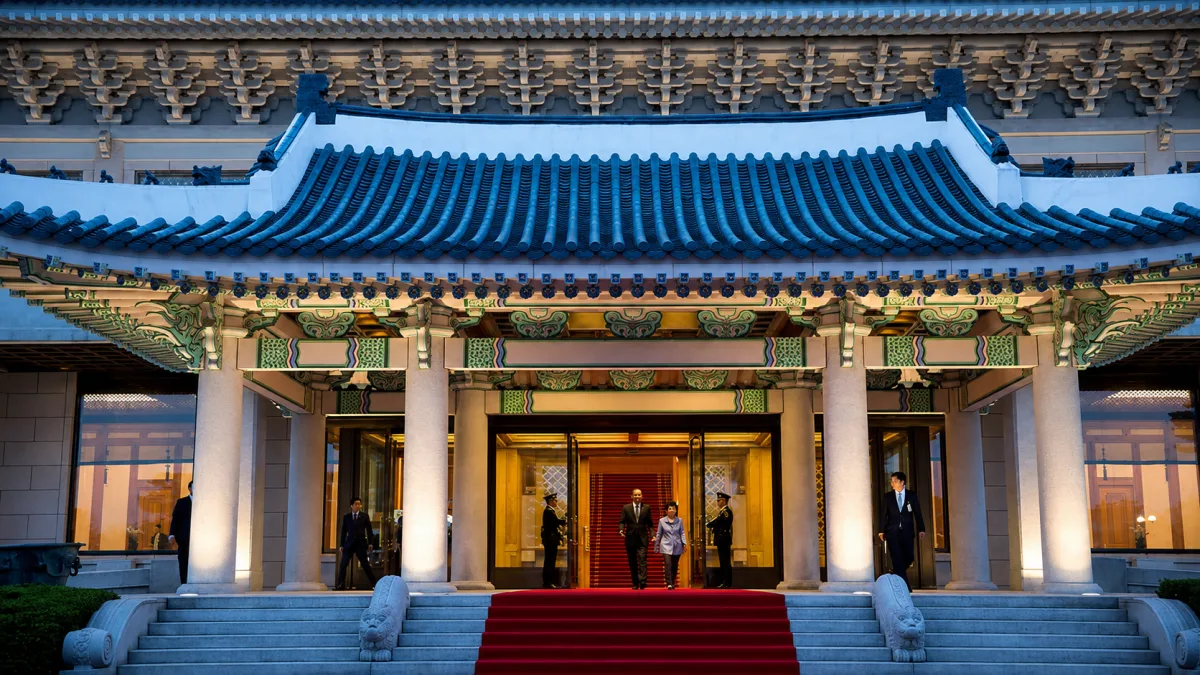
The public bet was a success. On its twenty-five hectares, the estate opened what only a privileged few had seen: the large official hall with blue tiles, transformed into a museum of presidencies; the state rooms and their chandeliers; the State Guest House (Yeongbingwan), with granite columns, where welcome banquets were held; Nokjiwon Garden; the traditional Sangchunjae pavilion, “eternal spring”, reserved for distinguished guests. Even the trails of Mount Bugaksan, closed for fifty-four years for safety reasons, reopened to walkers.
In three years, eight and a half million people have crossed the gates. People came there as a family, in hanbok, to photograph a grandeur long reserved for the elite. An observer then predicted that no future president would be able to go back, as the place was now “fully embraced by the public”. History would contradict him.
The “curse” that haunts the walls
It is impossible to understand the start of 2022 without evoking a stubborn belief. Since 1993, a geographer specializing in pungsu - Korean feng shui -, Choi Chang-jo, has maintained that the location of the Blue House was not conducive to the living: a place, he said, for spirits, not for men of power.
This reading could have remained confidential. The fate of Korean presidents gave it a disastrous resonance. Park Chung-hee narrowly escaped, in 1968, a commando of thirty-one North Korean soldiers who came to assassinate him - they reached about a hundred meters from the gates - before being shot dead by his own intelligence chief eleven years later. After him, the list of misfortunes grew longer: former presidents imprisoned, another tragically disappeared. From this sequence a superstition was born, which Chinese media popularized under the name “the curse of the Blue House”.
The Korean press has always considered this word “curse” to be a foreign invention: the local notion is not that of a spell, but of a “bad place” (흉지), a classic category of pungsu. The fact remains that this belief, deemed irrational, influenced a very real state decision: it was, by the admission of those around him, one of the reasons which pushed Yoon to flee the hill. Rarely has a geomancy moved a government.
The day the door closed
Then came the sudden turnaround. On December 3, 2024, Yoon Suk-yeol declared martial law - a measure that lasted only a few hours, until a quorum of deputies forced the military blockade and voted to repeal it. Dismissed immediately, he was dismissed by the Constitutional Court in the spring of 2025, then arrested again.
From the early election of June 2025 emerged a new president, Lee Jae-myung. However, he had a clear intention: to return to Cheong Wa Dae, and thereby erase the legacy of his imprisoned predecessor. The mechanics started. On August 1, 2025, the Blue House closed its doors to the public “for work”, in reality to prepare for the return of power. On December 8, the transfer of the presidential office officially began. On December 29, 2025, it was completed: Lee took up his post in the residence, the first president to join Cheong Wa Dae since his predecessor, in May 2022.
The return scene was organized like a coronation. At midnight, the presidential flag with the two phoenixes was raised on the pediment, a signal that the palace was once again becoming the official seat of power. The guards saluted the procession; the president held a tea meeting with his advisors, inspected the newly renovated underground crisis management bunker, and accepted the credentials of an ambassador. In eight months, the museum had once again become a fortress.

Who owns a palace?
That’s the whole lesson of this round trip. For three years, South Korea carried out an experiment that few democracies have attempted: removing power from its historic place and returning this place to the people. Experience has shown that a president may not reside in the palace that awaits him. She also proved that a successor could undo everything.
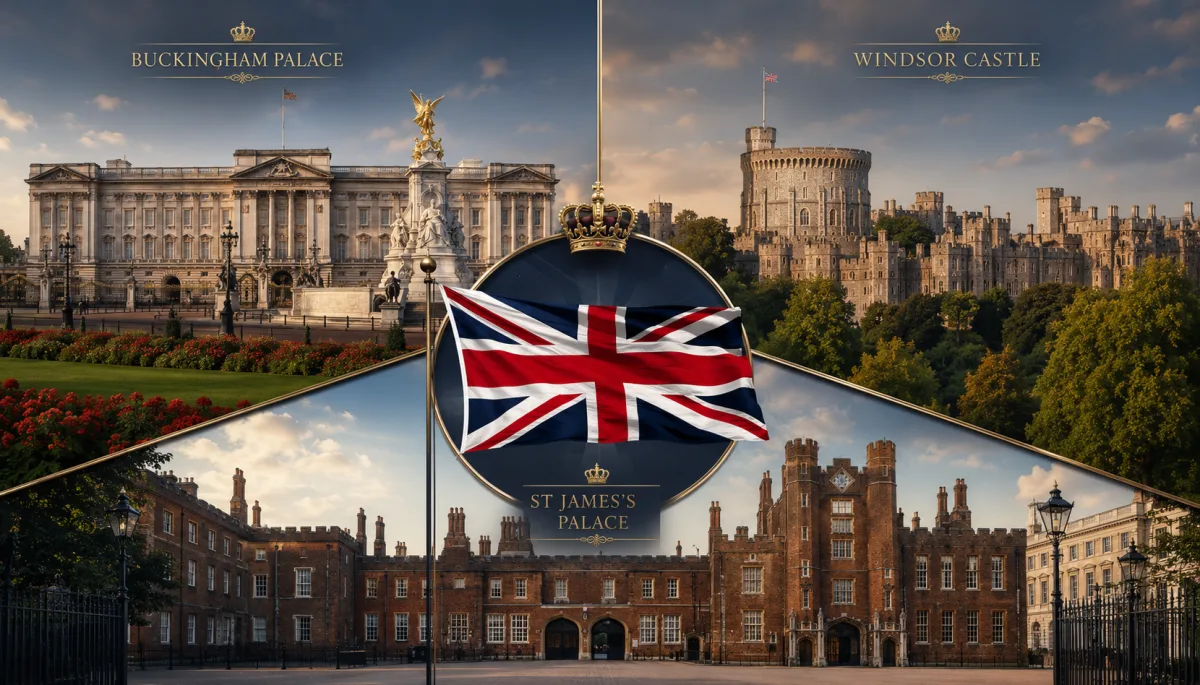
This is what radically distinguishes the Maison Bleue from its cousins. The White House, Buckingham, the Élysée never cease to be inhabited: they are not “opened” to the people, because the people never dislodge power there.
Cheong Wa Dae, for its part, will have been in turn headquarters, museum, then headquarters again, according to the alternations and the settling of scores.
Its door is not a stable threshold: it is a political barometer.
Cheong Wa Dae in brief
- Place.
Seoul, Jongno district, behind Gyeongbokgung Palace, at the foot of Mount Bugaksan. * Name.
“Pavilion with blue tiles”, after the approximately 150,000 blue ceramic tiles on the roof of the main building. * Domain.
About 25 hectares. Main buildings: Official Hall (Bon-gwan), Presidential Residence, State Guest House (Yeongbingwan), Sangchunjae Pavilion, Press Hall (Chunchugwan), underground crisis bunker. * Function.
Seat of the South Korean presidency from 1948 to 2022, then again since the end of 2025.
Chronology of a parenthesis
- March 20, 2022.
Yoon Suk-yeol announces the transfer of the presidential office to Yongsan. * May 10, 2022.
Inauguration ; opening of the Blue House to the public, a first in 74 years. * 2022-2025.
Around 8.5 million visitors. * December 3, 2024.
Yoon declares martial law; it is lifted in a few hours. Dismissal then resignation by the Constitutional Court. * June 2025.
Lee Jae-myung elected. * August 1, 2025.
Closed to the public “for works”. * December 29, 2025.
Official return of the presidential office to Cheong Wa Dae.
Conclusion
The Blue House will remain like the palace which learned, in three years, to speak two languages: that of transparency, when eight million curious people were allowed in, and that of sovereignty, when the crowds were expelled to seat a head of state again.
Between the two, nothing has changed under the blue tiles, neither the chandeliers, nor the columns. It was the intentions that were lost. A people believed they were receiving a palace as an inheritance; he had only obtained a long visitation right. On Bugaksan Hill, power had never really moved: it waited, patiently, for people to come and get it.
FAQs
Can we visit the Blue House in 2026? No. After opening to the public from May 2022 to summer 2025, Cheong Wa Dae was closed on August 1, 2025, then became the official headquarters of the South Korean presidency again on December 29, 2025. It is no longer a freely accessible tourist site.
Why was the Blue House opened to the public? President Yoon Suk-yeol, elected in 2022, considered the palace a symbol of an “imperial presidency” cut off from the people. He moved his office to the Ministry of Defense in Yongsan and opened Cheong Wa Dae to “return power to the people.”
Why did power return there? After the martial law crisis of December 2024 and the dismissal of Yoon, the new president Lee Jae-myung, elected in June 2025, chose to reinstall the presidential office in the Blue House, in particular to turn the page on the previous presidency.
Where does the name “Maison Bleue” come from? From the approximately 150,000 blue ceramic tiles that cover the roof of the main building. In Korean, Cheong Wa Dae means “blue tile pavilion”. The name was made official in 1960.
What is the “curse of the Blue House”? A belief, popularized by foreign media, that the site brings bad luck to its occupants, with several Korean presidents having met a tragic fate. It is based on a reading of pungsu (Korean feng shui) and was among the arguments for the departure of 2022.
What is the history of the site before 1948? A royal garden during the Joseon dynasty, it became the residence of the governor general during the Japanese occupation, before being chosen in 1948 as the seat of the presidency of the young Republic of Korea.
Meta description: In May 2022, a South Korean president returned the Blue House to the people; At the end of 2025, power returned. Story of a three-year interlude and what it reveals about the Korean presidential palace.