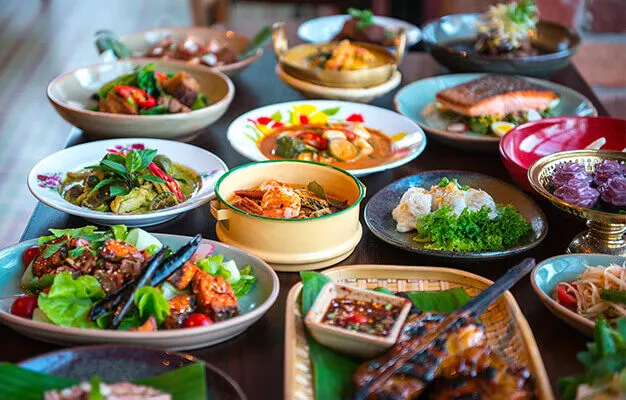
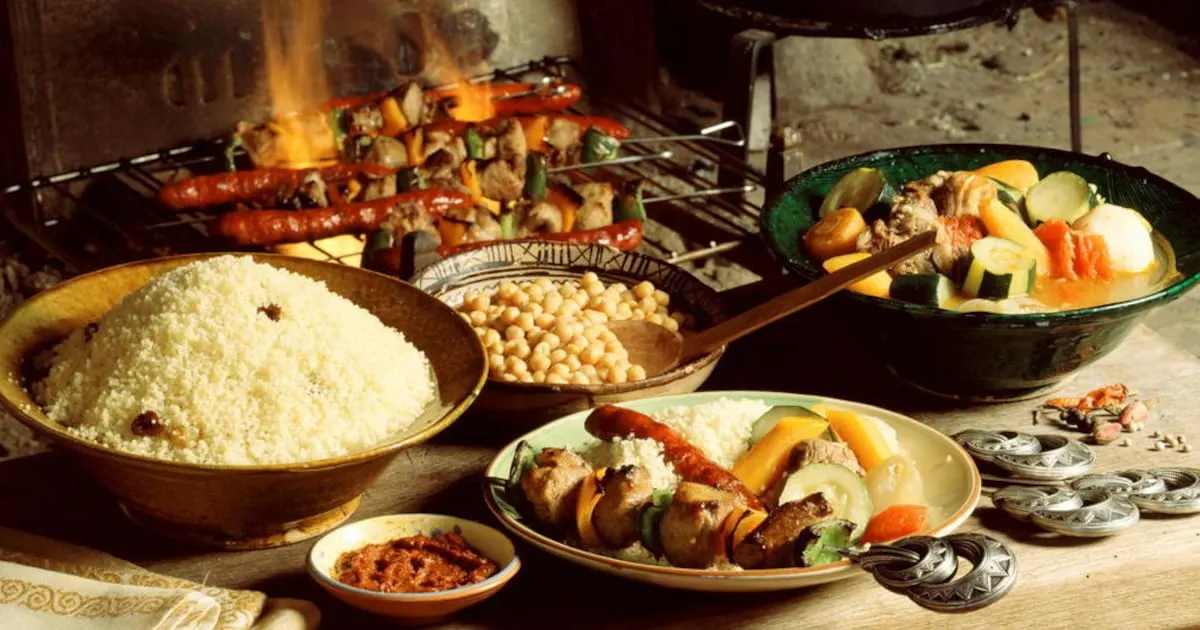
Couscous: a common dish, rival stories
On December 16, 2020, the decision was made by videoconference, due to the pandemic.
The UNESCO Intangible Heritage Committee inscribes couscous in the name of four countries at once: Algeria, Morocco, Mauritania and Tunisia.
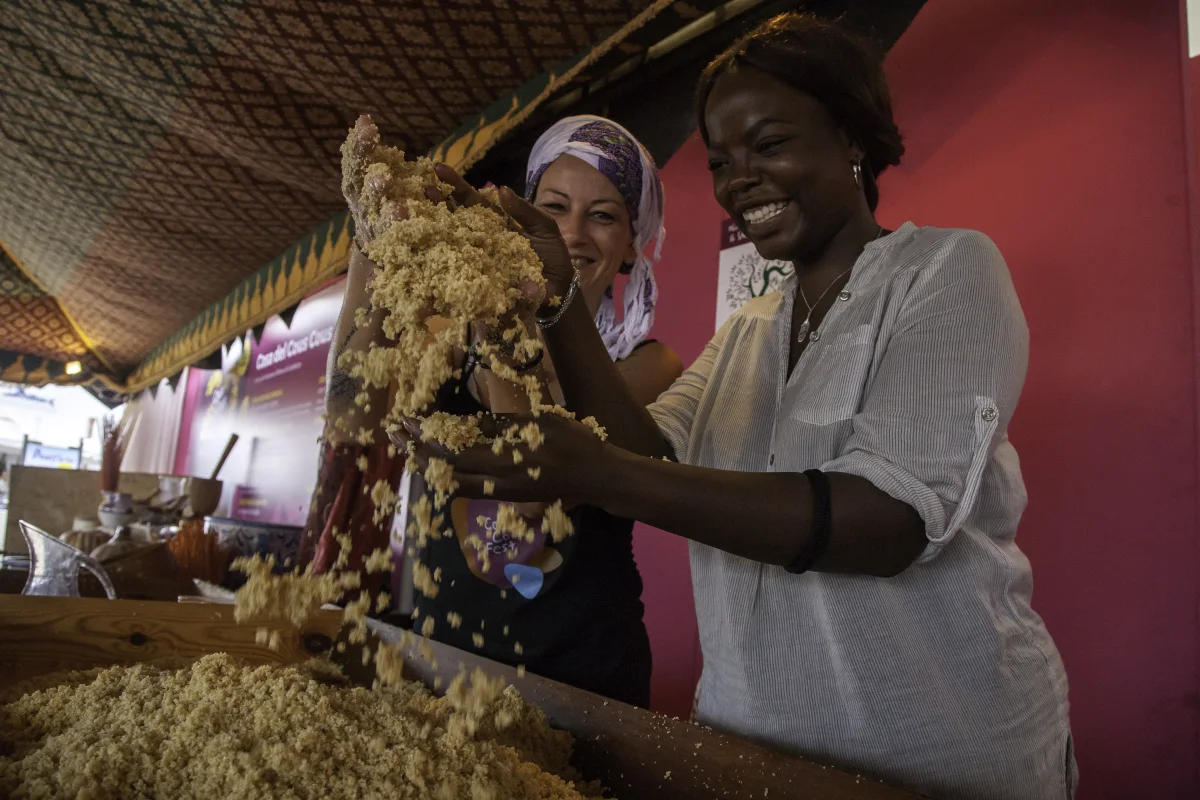
No official recipe, no designated inventor. Only gestures, utensils and ways of receiving, recognized as a common good. The next day, in Algiers, we roll the semolina in front of the photographers.
Six years have passed, and a lot has changed between the capitals of the Maghreb.
The file has not changed: four names on the same sheet, around a dish that each tells in their own way.
Story of a shared heritage
Habib Bourguiba is given a definition of the Maghreb that no geographer would have dared: he stops where we stop eating couscous. The formula has the merit of not forgetting anyone. She also has the fault of not deciding anything, and that is undoubtedly why she survived.
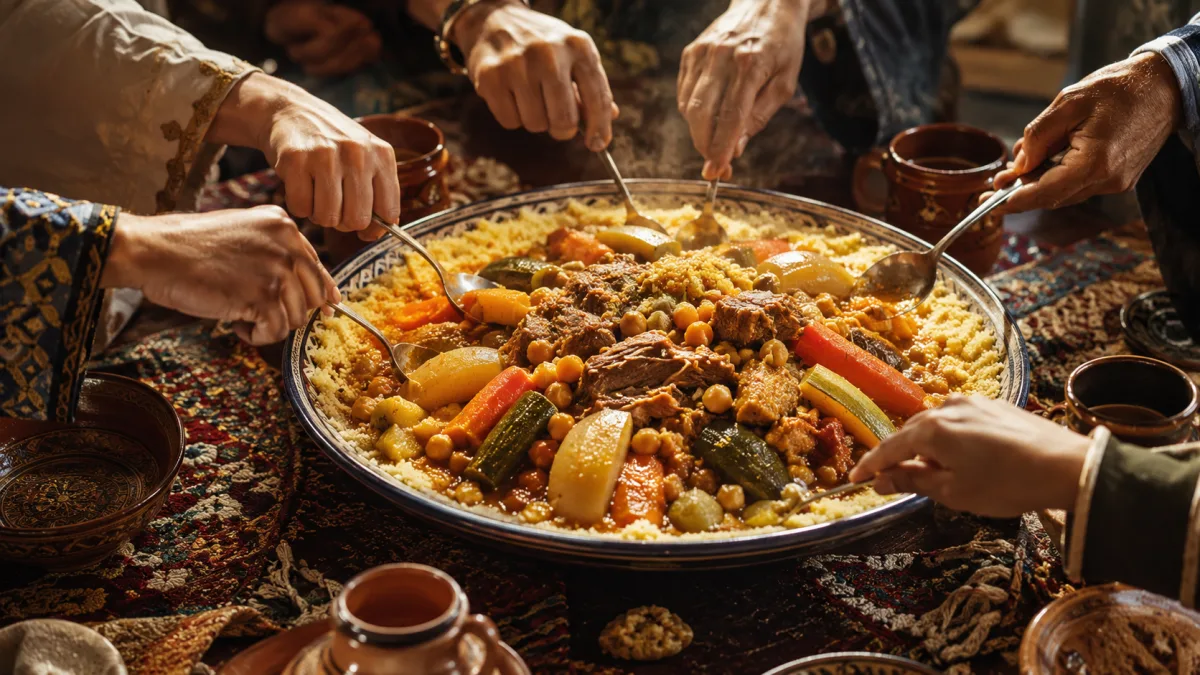
Ask ten families how it is prepared, and you will get ten definitive answers. Two steam passes or three. Fish on the coast, lamb inland. Sweet for some holidays, never for others. The only point of agreement concerns the hand that rolls the semolina: it knows before the eye when the grain is ready.
Four signatures for one dish
The idea seems simple. It took two years to get it into shape. Between 2018 and 2019, four heritage administrations are working on the same form, each with its own inventories, photographers and letters of support. In Rabat, the Association of Chefs of Morocco wrote in January 2019 that it “fully supports” a multinational candidacy. In Algiers, the National Center for Prehistoric, Anthropological and Historical Research is filming the presentation film. The photographs arrive from Rabat, Tunis and Nouakchott. The file is filed in Paris on March 29, 2019.
On December 16, 2020, the Committee adopted it by videoconference. Audrey Azoulay, Director General of UNESCO, hails “a real diplomatic success”. She doesn’t exaggerate. Re-reading the sheet today means understanding how we obtain the signature of four states who do not agree on everything. The text speaks of semolina, tools, potters and shared meals. He never says where the dish comes from. It was written so that no one loses.
The UNESCO text was written so that no one loses
The file holds, the speeches move
Eight months later, on August 24, 2021, diplomatic relations between Algiers and Rabat were severed. The sky closes, the gas pipeline that crossed Morocco to Spain stops. The land border had already been closed since 1994.
Couscous quickly comes back into discussions. In November 2021, barely appointed, the Moroccan Minister of Culture, Mehdi Bensaid, mentioned on television a “Morocco label” for the dish. The service responsible for working on it is the one which had prepared, two years earlier, the Moroccan part of the joint application. In June 2025, in front of Algerian deputies, the Minister of Communication, Mohamed Meziane, in turn affirmed that couscous appeared in Algeria.
None of that made it to the plug. None of the four countries has asked UNESCO to modify it.
The battle has moved elsewhere. In December 2025, in New Delhi, the Committee inscribed the Moroccan caftan and, during the same session, agreed to Algeria adding the caftan to the name of an element inscribed the previous year. The two capitals each salute a victory, and neither is wrong: UNESCO does not arbitrate origins, it registers requests. An Algerian file on zellige will be examined in December.
UNESCO does not arbitrate origins. She records requests.
Eight centuries of archives, no certificate
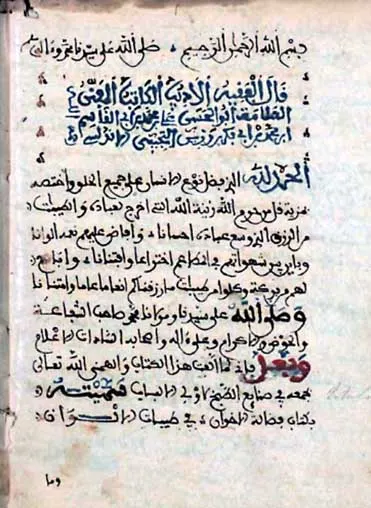
Those looking for a birth certificate in the archives leave disappointed. The oldest known recipe appears in a 13th century collection, compiled under the Almohads, whose empire extended from Andalusia to Tripolitania. She specifies that in Marrakech, we call this couscous fityānī. At the same time, Ibn Razīn al-Tujībī, born in Murcia and settled in Tunis, described several varieties. An Andalusian who writes in Tunisia about a dish named in Marrakech: difficult to draw a flag from it.
The oldest material clue comes from the least talked about country in this dispute. In Tichitt, in southeastern Mauritania, archaeologists have unearthed pierced shards, dated around 700 to 400 BCE, which they believe to be likely couscous pots. The very first were undoubtedly woven from plant fibers, and esparto has not survived three thousand years.
Since then, the dish has never stopped traveling. Sicily dedicates a festival to him every September, in San Vito Lo Capo.
In December, in Xiamen, the four countries will also meet side by side on two other applications, devoted to henna and braided plant fibers. Bourguiba was perhaps right: the Maghreb extends as far as couscous is eaten. He didn’t say we would eat it at the same table. The UNESCO sheet shows all four of them there.
By the editorial staff of Intendance Palace · 05/08/26 · Updated on 03/10/26
Sources and credits
Institutional sources
- UNESCO, Intangible Cultural Heritage,
, registered in 2020, with the consent of the communities of the four countries. * UNESCO,
, December 16, 2020. * UNESCO,
“The traditions of couscous at UNESCO, an example of international cultural cooperation”
, press release dated December 16, 2020. * UNESCO,
, New Delhi, December 2025 (change in the name of the Algerian element of 2024). * UNESCO,
“The Moroccan Caftan: art, traditions and know-how”, file no. 02077
, registered in 2025. * UNESCO,
examined in Xiamen (zellidje, no. 2280; henna, no. 2447; Al Saafiyat and vegetable fibers, no. 2282). * British Library, via Qatar Digital Library,
Ibn Razīn al-Tujībī, Fiḍālat al-khiwān, Or 5927, ff. 101r-204v
.
Press, by country
- Algeria: TSA,
“Common Maghreb project to have couscous included in the heritage of humanity”
. * Morocco: As Is,
“Maghreb couscous becomes UNESCO intangible heritage”
, December 16, 2020. * Tunisia: La Presse de Tunisie,
“Couscous inscribed on the list of intangible cultural heritage”
, December 17, 2020. * Mauritania: Cridem,
“Maghreb couscous becomes UNESCO intangible heritage”
. * Young Africa,
“Algeria breaks diplomatic relations with Morocco”
, August 24, 2021. *Middle East Eye,
“Couscous at UNESCO: the Moroccan Minister of Culture stirs the seeds of discord”
, November 28, 2021. *The New Arab,
“Algerian official accuses Morocco of stealing couscous”
, June 16, 2025.
Specialized sources
- Amina Mettouchi and Mohamed Kherbouche (CNRS, LLACAN),
“Couscous, from the Green Sahara to the Berber world”
, 2021 (Tichitt,
seksu
, Ibn Baṭṭūṭa). * Véronique Pitchon,
“Is Maghreb cuisine just a simple story of couscous? »
, L’Harmattan, 2020 (Almohad collection, Ibn Razīn). * Sylvie Durmelat,
, 2022 (basketry, medieval shards). * Nawal Nasrallah (ed. and trans.),
Best of Delectable Foods and Dishes from al-Andalus and al-Maghrib
, Leiden, Brill, 2021.
Image credits
- Main image: Billal Bensalem / NurPhoto via Getty Images, ref. 1230181399.
- Illustration: image generated by artificial intelligence for Intendance Palace.
- Image 1: Photo Mucem / Jean-Pierre Martinon, C. Martinon, inv. Ph.2007.34.4.
- Image 2: British Library, Or 5927, f. 101r, via Qatar Digital Library, public domain.
- Image 3: Antonio Melita / Pacific Press / LightRocket via Getty Images, ref. 849917684.